


Let me tell you something that caught me completely off guard.
A friend of mine runs a mid-sized fintech startup, and last year he got slapped with a regulatory warning that nearly derailed his entire operation. Not because he was doing anything shady — his product was solid, his intentions were good — but because his compliance process was essentially held together with spreadsheets and good intentions.
The fine wasn’t catastrophic. The reputational hit? That lingered.
That conversation stuck with me, and I spent the next several months digging into how neobanks — the lean, digital-first banks disrupting traditional finance — actually manage compliance without burning through their entire budget or grinding product development to a halt. What I found was surprising. There are practical, tactical moves that genuinely reduce risk fast, and most teams either don’t know about them or assume they’re too expensive to implement.
So let’s get into it. These aren’t theoretical frameworks pulled from a textbook. These are real patterns I’ve seen work.
1. Automate Your KYC Refresh Cycles Before Regulators Ask
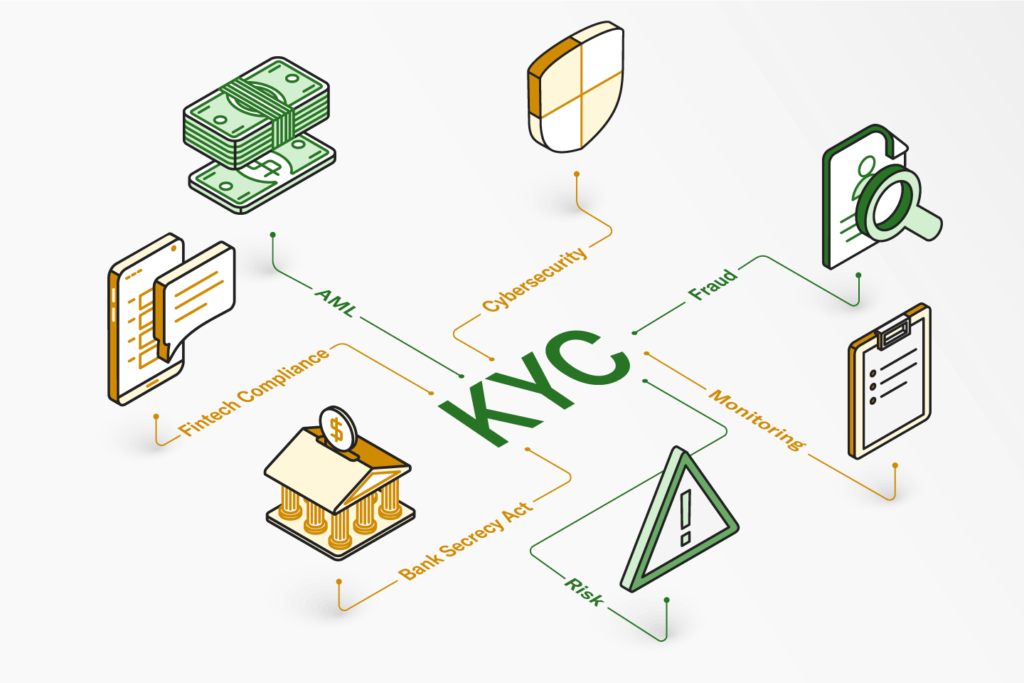
Know Your Customer (KYC) isn’t a one-time checkbox. That’s the mistake a lot of neobank teams make early on — they nail the onboarding KYC, celebrate, and then forget that customer profiles need to be updated as risk profiles change.
Most regulators now expect periodic KYC refresh, especially for higher-risk customers. If you’re waiting for an audit to discover your customer data is 18 months stale, you’re already in trouble.
Here’s what works:
Set tiered refresh schedules based on customer risk levels. Low-risk retail customers might need a refresh every 2-3 years. High-risk accounts — business customers, politically exposed persons (PEPs), or users in high-risk jurisdictions — should be refreshed annually or even more frequently.
Platforms like Jumio, Onfido, and Sumsub all support automated re-verification workflows. You can trigger document re-upload requests automatically, track completion rates, and flag non-compliant accounts without a single manual review step.
The unexpected benefit? Your fraud rate drops too. Stale KYC data is also a vector for account takeover and identity fraud.
One mistake I’ve seen: teams automating the notification but not the consequence. If a customer ignores your re-verification request and nothing happens, you’ve actually created a documented compliance gap. Build in account restriction logic after a set window — usually 30-60 days.
2. Map Your Transaction Monitoring Rules to Actual Risk Typologies
This one sounds obvious, but I’ve sat in enough product calls to know that most neobanks start with generic, off-the-shelf transaction monitoring rules that were designed for traditional banks.
Generic rules create two problems: they miss actual risk, and they generate enormous false positive volumes that bury your compliance team in noise.
I talked to a compliance officer at a digital wallet company who told me their team was manually reviewing over 400 alerts a day — and only 3-4 of those were genuinely suspicious. That’s not compliance. That’s chaos.
The hack here is to tune your rules against your actual customer base and product type.
For example, if your neobank primarily serves gig workers or freelancers, you’ll naturally see irregular, high-variance income patterns. A rule that flags “unusual transaction frequency” based on salaried employee benchmarks is going to light up constantly — for no good reason.
Build a simple typology matrix:
| Risk Typology | Relevant Customer Segment | Suggested Rule Adjustment |
|---|---|---|
| Structuring / Smurfing | All retail users | Flag cash-equivalent transactions just under reporting thresholds |
| Third-party payments | Gig/freelance workers | Adjust peer-to-peer thresholds upward with time-pattern checks |
| Rapid fund movement | Business accounts | Monitor velocity within 24-48 hour windows |
| Geographic anomalies | Travel-heavy users | Combine geo-mismatch with device fingerprint signals |
| Shell company indicators | SME/business customers | Cross-reference against beneficial ownership data |
Tools like ComplyAdvantage, Sardine, and Unit21 allow you to build custom rule sets on top of their engines. The time investment to tune these properly upfront saves hundreds of hours of manual review downstream.
Speaking of digital security — if you’re also thinking about the broader security posture of your neobank infrastructure, 7 Must-Do Security Audits of Neobanks & Digital Wallets You Should Never Ignore is worth reading alongside your compliance work.
3. Implement a Regulatory Change Management Process (Even a Lightweight One)
Regulation moves fast. In the neobank space, it moves especially fast because regulators are still figuring out how to handle digital-first financial products.
I’ve seen teams get blindsided by a policy update from their central bank or financial regulator that required product changes within 90 days — and they only found out about it through a Twitter thread someone shared in Slack.
That is not a compliance strategy.
A regulatory change management process doesn’t need to be complicated. Here’s a lightweight version that actually works for smaller teams:
Step 1: Designate a “regulatory radar” owner. This is one person (or one team if you’re larger) whose explicit job is to monitor regulatory developments. Not the CPTO. Not the legal counsel when they have time. One person, with a calendar reminder.
Step 2: Set up structured feeds. Subscribe to official regulator RSS feeds, newsletters from your primary jurisdiction, and services like Clausematch or Ascent RegTech that aggregate and summarize changes automatically.
Step 3: Create a simple impact assessment template. When a change is identified, the owner fills out a one-page doc: What’s changing? When does it take effect? What products or processes are affected? Who needs to act?
Step 4: Route it through product and legal in parallel, not sequentially. The traditional approach — legal reviews, then hands to product — is too slow. Run them simultaneously.
Step 5: Track it in your project management tool. Jira, Linear, Notion — whatever you use. Regulatory changes need to live in the same system as your other work, or they’ll fall through the cracks.
This whole process can be maintained by one person spending about 2-3 hours a week. The cost of not having it? Potentially catastrophic.
4. Build a Sanctions Screening Layer That Actually Catches Real Matches
Sanctions screening is one of those compliance functions that teams either over-invest in or dramatically under-invest in. Both extremes create problems.
Over-investing means you’re doing full manual review on every fuzzy-matched name, which creates bottlenecks and doesn’t scale. Under-investing means you’re running basic name matches against OFAC or UN lists and thinking that’s sufficient.
Here’s the reality: name-only screening against static lists is 2015 compliance thinking.
Modern sanctions exposure comes from:
- Ownership structures (is your customer owned by a sanctioned entity?)
- Jurisdictional exposure (are they transacting through a sanctioned country, even indirectly?)
- Vessel and trade finance screening (if you serve businesses involved in trade)
- Adverse media (sanctions designations sometimes lag actual risk by months)
The practical hack here has two parts.
First, layer your screening. Use a primary screening provider like Refinitiv World-Check, Dow Jones Risk & Compliance, or LexisNexis for structured sanctions data. Then add an adverse media layer — Moody’s or ComplyAdvantage both offer this — to catch emerging risk before formal designation.
Second, build smarter fuzzy matching thresholds. Most platforms let you set a match confidence score. A 70% match on a common name in a non-high-risk jurisdiction probably doesn’t need the same response as a 70% match on an unusual name from a high-risk country. Segment your response workflows accordingly.
A compliance consultant I know was helping a neobank that had configured their screening tool at a 95% confidence threshold — which sounds rigorous, but was actually missing a significant proportion of real matches because their customer names were transliterated from non-Latin scripts. Lowering the threshold and adding transliteration logic caught the gaps.
For teams thinking about the broader infrastructure security that underpins compliance, 5 AI Tools That Are Ultimate for Neobank & Digital Wallet Security Audits covers some of the tooling overlap well.
5. Create an Internal Audit Trail That Regulators Can Actually Navigate

Here’s something nobody really talks about until it’s too late: the quality of your compliance documentation matters almost as much as the compliance itself.
I’ve spoken with founders who did everything right — solid KYC, tuned transaction monitoring, proper sanctions screening — and still had difficult examination experiences because their documentation was disorganized, incomplete, or required three different systems to reconstruct a single decision history.
Regulators aren’t just checking whether you did the right thing. They’re checking whether you can prove you did the right thing, consistently, over time.
The hack here is to design your audit trail for the examiner, not for yourself.
What does that mean in practice?
Make decisions timestamped and attributed. Every risk decision — a transaction that was cleared, an account that was flagged, a KYC exception that was approved — needs to show who made it, when, and based on what information.
Store the context, not just the outcome. It’s not enough to record “account approved.” Store the risk score at the time, the documents reviewed, the rule set that was applied. Regulators want to see the reasoning, not just the conclusion.
Create a unified case management system. If your compliance evidence is split between your KYC tool, your transaction monitoring platform, a shared drive, and someone’s email inbox, you have a documentation problem. Platforms like Hummingbird, Verafin, or even a well-structured instance of Notion or Confluence can serve as a compliance case management hub.
Run a mock examination annually. Pick a random sample of 20-30 compliance decisions from the past year and try to reconstruct the full audit trail from your documentation alone. If you can’t do it cleanly in under an hour, your examiner definitely can’t.
Here’s a quick self-assessment table to run through quarterly:
| Documentation Element | Status Check |
|---|---|
| KYC decision records with timestamps | ✅ / ❌ |
| Transaction monitoring alert dispositions | ✅ / ❌ |
| Sanctions match review notes | ✅ / ❌ |
| Regulatory change impact assessments | ✅ / ❌ |
| SAR filing records and supporting evidence | ✅ / ❌ |
| Staff training completion records | ✅ / ❌ |
| Policy version history | ✅ / ❌ |
If you’re getting more ❌ than ✅, that’s your next project.
Common Mistakes That Undo All of This
Before I wrap up, I want to flag a few things I’ve seen teams do that undermine even good compliance programs:
Treating compliance as a launch blocker rather than an ongoing function. You get compliant enough to go live and then the process stalls. Compliance is continuous. The risk landscape keeps changing.
Relying entirely on your banking partner’s compliance. If you’re a fintech operating on a bank-as-a-service (BaaS) model, your sponsor bank has compliance obligations — but so do you. Regulators are increasingly holding fintechs accountable independently of their bank partners.
Not training your non-compliance staff. Your customer support team, your product managers, your engineers — they all make decisions that have compliance implications. If they don’t understand the basics, gaps appear in unexpected places.
Assuming your current setup scales. What worked when you had 10,000 customers will break at 500,000. Compliance infrastructure needs to be reviewed for scalability regularly, not just reactively when things break.
The Bigger Picture
Compliance in neobanking isn’t really about avoiding fines, even though that’s the obvious motivation. The teams that do it well treat it as a product discipline — something that gets refined iteratively, informed by data, and owned across the organization, not just by the compliance department.
The five things I’ve walked through — automated KYC refresh, tuned transaction monitoring, regulatory change management, intelligent sanctions screening, and audit-ready documentation — won’t make you perfectly compliant overnight. Nothing will. But they will meaningfully reduce your exposure quickly, which is exactly what a growing neobank needs.
My friend with the regulatory warning? He rebuilt his compliance stack over about six months using a combination of Sumsub, Unit21, and a surprisingly well-organized Notion workspace. His next examination went smoothly.
That’s the goal. Not perfection. Just being genuinely prepared.
If you’re also thinking about the security side of your digital banking infrastructure — which really does go hand-in-hand with compliance — check out 9 Proven Neobank & Digital Wallet Security Audits for Total Protection. It covers the audit side in a way that complements everything we’ve talked about here.
Want to go deeper on protecting your neobank infrastructure? Read: 12 Best Practices in Evaluating Systems for Neobank & Digital Wallet Security Audits
Sonnet 4.6