


If you strip away the glossy interfaces and frictionless onboarding, neobanks are, at their core, high-speed data engines moving money across invisible rails. That makes them attractive—not just to customers, but to attackers who thrive on speed, scale, and small cracks in complex systems.
What experienced operators learn—often the hard way—is that security is not a feature you “add.” It’s something you weave into every layer: product decisions, engineering habits, operational workflows, and even customer experience.
This piece explores seven lesser-known (but widely used) security “hacks” that seasoned professionals quietly rely on. These are not shortcuts in the risky sense. They’re leverage points—practical, sometimes counterintuitive tactics that deliver outsized protection when implemented correctly.
understanding the evolving threat landscape
Before diving into the tactics, it helps to recognize what has changed.
Attackers today are not lone actors poking at login screens. They operate like startups—testing, iterating, and scaling. They use automation, social engineering, credential stuffing, and API exploitation.
Table: common neobank threat vectors in 2026
| Threat Type | Description | Typical Entry Point |
|---|---|---|
| Credential Stuffing | Using leaked credentials at scale | Login APIs |
| Account Takeover (ATO) | Hijacking user accounts | Weak authentication |
| API Abuse | Exploiting poorly secured endpoints | Public APIs |
| Social Engineering | Manipulating users or support staff | Customer service channels |
| Synthetic Identity Fraud | Creating fake identities with real data | Onboarding systems |
The lesson: defenses must be dynamic, layered, and often invisible to users.
- invisible multi-factor authentication (adaptive mfa)
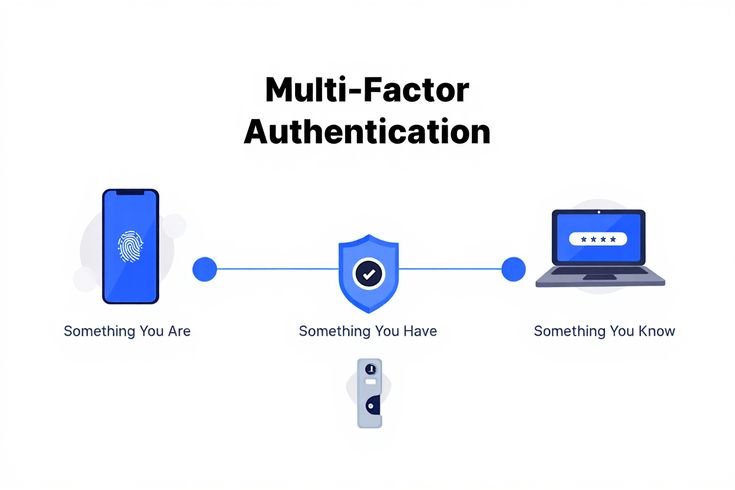
Traditional MFA adds friction. Experts reduce friction by making MFA adaptive—triggered only when risk increases.
Instead of asking every user for a one-time code, the system evaluates context:
- Device fingerprint
- Location consistency
- Behavioral patterns
- Transaction type
If everything looks normal, the user flows through. If something feels off, additional verification kicks in.
Chart: adaptive MFA decision flow
User Login → Risk Engine Evaluation →
Low Risk → Seamless Access
Medium Risk → OTP Prompt
High Risk → Biometric + Step-Up Verification
Table: adaptive vs static MFA
| Feature | Static MFA | Adaptive MFA |
|---|---|---|
| User Experience | Always interrupted | Mostly seamless |
| Security Level | Moderate | High |
| Context Awareness | None | Strong |
| False Positives | Higher | Lower |
This approach quietly blocks many attacks without annoying legitimate users.
- transaction fingerprinting beyond device data

Most systems track devices. Experts go deeper by fingerprinting transactions themselves.
What gets analyzed:
- Typing speed and rhythm
- Swipe patterns
- Transaction timing habits
- Amount patterns
For example, a user who always sends money in small amounts during the evening suddenly initiates a large transfer at 3 AM from a new pattern. Even if credentials are correct, the system flags it.
Table: behavioral signals used in transaction fingerprinting
| Signal Type | Example Indicator | Risk Insight |
|---|---|---|
| Timing Behavior | Unusual login hour | Possible compromise |
| Input Patterns | Fast/robotic typing | Bot activity |
| Transaction Style | Sudden high-value transfer | Fraud attempt |
| Navigation Flow | Skipping usual steps | Scripted interaction |
This layer is subtle but powerful—it catches what passwords cannot.
- decoy accounts and honeypots inside production
This one sounds unusual, but it’s widely used in advanced environments.
Security teams create fake “decoy” accounts or endpoints that no real user should ever access. If someone interacts with them, it’s almost certainly malicious.
Examples:
- Hidden API endpoints
- Dummy admin accounts
- Fake high-value wallets
Chart: honeypot detection logic
Attacker Probes System → Interacts with Hidden Asset → Immediate Alert → Automated Containment
Table: benefits of honeypots
| Benefit | Explanation |
|---|---|
| Early detection | Identifies attackers quickly |
| Low false positives | Legit users never trigger them |
| Insight generation | Reveals attacker behavior |
| Automated response | Enables rapid containment |
It’s like placing silent alarms in places only intruders would go.
- breaking internal systems on purpose (chaos security testing)
Borrowed from reliability engineering, this technique involves intentionally disrupting systems to test resilience.
Instead of waiting for attackers, teams simulate them.
Examples:
- Shutting down authentication services
- Injecting fake malicious traffic
- Testing rate limits under stress
Table: chaos testing scenarios
| Scenario | Objective |
|---|---|
| API overload | Test rate limiting |
| Auth service failure | Validate fallback mechanisms |
| Fraud spike simulation | Stress test monitoring systems |
| Data leak simulation | Test incident response |
This practice exposes weaknesses that traditional audits often miss.
- micro-segmentation of infrastructure
Rather than treating infrastructure as a single network, experts divide it into tightly controlled segments.
Each segment:
- Has its own access rules
- Communicates only when necessary
- Is isolated from others
If one part is compromised, the attacker cannot move freely.
Table: segmentation model example
| Segment | Access Control | Risk Level |
|---|---|---|
| User Data | Strict, encrypted access | High |
| Payment Engine | Limited internal access | Very High |
| Analytics Layer | Read-only access | Medium |
| Dev Environment | Restricted, monitored | Medium |
This “zero trust” mindset assumes no part of the system is inherently safe.
- real-time fraud war rooms
When something suspicious happens, speed matters more than perfection.
Top neobanks maintain “war room” protocols—rapid response setups where cross-functional teams act immediately.
Participants:
- Security engineers
- Fraud analysts
- Customer support
- Legal/compliance
Chart: incident response timeline
Alert Triggered → War Room Activated → Investigation → Containment → User Notification → System Patch
Table: response time benchmarks
| Stage | Ideal Timeframe |
|---|---|
| Detection | Seconds |
| Initial Response | < 5 minutes |
| Containment | < 30 minutes |
| Resolution | Hours |
Preparedness reduces damage dramatically.
- security built into product design (secure by design)
Perhaps the most underrated “hack” is this: don’t bolt security on later—design it from the start.
Examples:
- Limiting transaction sizes by default
- Adding cooling-off periods for new payees
- Requiring re-authentication for sensitive actions
Table: product-level security controls
| Feature | Security Benefit |
|---|---|
| Transaction limits | Reduces fraud impact |
| Delayed withdrawals | Allows fraud detection |
| Device binding | Prevents unauthorized access |
| Activity notifications | Alerts users instantly |
When product and security align, protection feels natural rather than forced.
bringing it all together: layered security model
No single tactic is enough. The real strength lies in layering.
Visual structure:
User Layer → Authentication → Behavior Analysis → Transaction Monitoring → Infrastructure Security → Response Systems
Each layer compensates for weaknesses in others.
Table: layered defense overview
| Layer | Key Control |
|---|---|
| User Access | Adaptive MFA |
| Behavior Monitoring | Transaction fingerprinting |
| System Traps | Honeypots |
| Infrastructure | Micro-segmentation |
| Testing | Chaos engineering |
| Response | War rooms |
| Product Design | Built-in safeguards |
This is how experts think—not in features, but in systems.
common mistakes beginners make
Even with the best intentions, teams often fall into these traps:
- Overcomplicating security early
- Ignoring user experience
- Relying only on passwords
- Delaying incident response planning
- Treating security as a one-time setup
Security is a process, not a milestone.
practical implementation roadmap
Phase 1: essentials
- Enable MFA
- Set transaction limits
- Monitor basic activity
Phase 2: enhancement
- Add behavioral analytics
- Implement segmentation
- Train response teams
Phase 3: advanced
- Deploy AI detection
- Introduce honeypots
- Run chaos tests
Timeline chart:
Month 1–2 → Basics
Month 3–6 → Expansion
Month 7–12 → Advanced systems
Gradual implementation prevents overwhelm and ensures stability.
sample security dashboard metrics
Tracking the right metrics is critical.
Table: key security indicators
| Metric | Meaning |
|---|---|
| Failed Login Attempts | Potential attack signal |
| Suspicious Transactions | Fraud detection rate |
| Response Time | Incident handling efficiency |
| False Positive Rate | System accuracy |
| User Complaints | Experience vs security balance |
These metrics help refine both protection and usability.
faqs
- what is the most effective neobank security measure
There is no single measure. A layered approach combining authentication, monitoring, and response systems is most effective. - does stronger security always mean worse user experience
Not necessarily. Techniques like adaptive MFA improve security while keeping the experience smooth. - how do neobanks detect fraud in real time
Through automated monitoring systems, behavioral analytics, and AI-driven anomaly detection. - are small neobanks more vulnerable to attacks
They can be, especially if they lack resources. However, smart design and prioritization can significantly reduce risk. - how often should security systems be tested
Continuously through automated checks, with periodic deep testing such as penetration tests and chaos simulations. - can users play a role in improving security
Yes. Educating users about phishing, strong passwords, and safe practices adds an important layer of defense.
final thoughts
Security in neobanking is no longer about building higher walls. It’s about building smarter systems—ones that observe, learn, and respond in real time.
The seven “secret hacks” outlined here are not magic tricks. They are disciplined practices, refined through experience, that quietly strengthen the backbone of modern financial platforms.
For beginners, the goal is not to implement everything at once. It’s to understand the philosophy behind these practices: assume risk, reduce exposure, detect early, and respond fast.
Do that consistently, and security stops being a bottleneck. It becomes a competitive advantage.