
In a neobank, security isn’t just a backend concern—it’s the product itself. Every login, every API call, every transaction is a potential entry point for attackers. That’s why security audits are not occasional exercises; they are continuous processes supported by specialized tools.
The modern neobank stack is complex: cloud infrastructure, mobile apps, APIs, third-party integrations, and compliance frameworks all intersect. No single tool can cover everything. Instead, the most resilient organizations build a layered audit toolkit—each tool focusing on a different dimension of security.
This article explores ten of the most effective security audit tools used across fintech and neobanking environments. Along the way, you’ll find structured tables, comparison charts, and practical insights to help you understand how these tools fit into a real-world security strategy.
- Tenable Nessus
Tenable Nessus is often the starting point for many security audit programs. It focuses on vulnerability scanning—identifying weaknesses in systems before attackers do.
What makes it powerful is its extensive plugin library, which continuously updates to detect new vulnerabilities across operating systems, applications, and devices.
Key strengths:
- Deep vulnerability scanning
- Compliance checks against benchmarks (CIS, DISA)
- Broad infrastructure coverage
Informational Table: Tenable Capabilities
| Feature | Description | Benefit for Neobanks |
|---|---|---|
| Vulnerability scanning | Detects system weaknesses | Prevents exploitation |
| Compliance auditing | Benchmarks against standards | Regulatory readiness |
| Plugin updates | Continuous threat intelligence | Up-to-date protection |
For neobanks, Nessus acts as an early warning system.
- Rapid7 InsightVM
Rapid7 InsightVM goes beyond scanning—it provides context. Instead of just listing vulnerabilities, it prioritizes them based on real-world attack scenarios.
Its “attacker’s-eye view” helps teams understand how vulnerabilities can be chained together.
Informational Chart: InsightVM Workflow
| Stage | Function | Outcome |
|---|---|---|
| Discovery | Identify assets | Full visibility |
| Assessment | Scan vulnerabilities | Risk identification |
| Prioritization | Rank threats | Focused remediation |
| Integration | Connect with workflows | Faster fixes |
This tool is particularly useful for fast-growing neobanks with complex infrastructures.
- Qualys VMDR
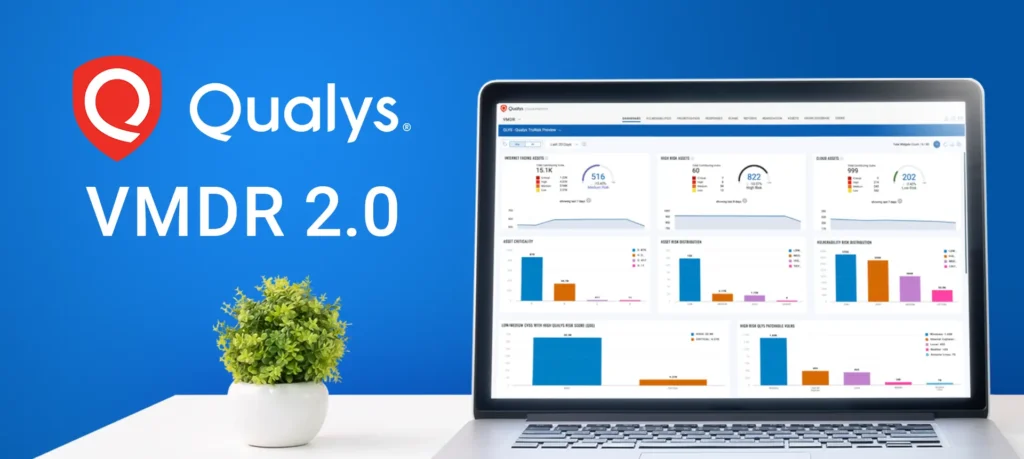
Qualys VMDR is a cloud-native platform that integrates asset discovery, vulnerability management, and remediation into a single system.
Its standout feature is real-time visibility across all assets, combined with a risk-scoring engine that helps prioritize fixes.
Informational Table: Qualys Advantages
| Capability | Description | Impact |
|---|---|---|
| Asset discovery | Identifies all systems | Eliminates blind spots |
| Risk scoring | Prioritizes vulnerabilities | Efficient resource use |
| Cloud-native design | Scales easily | Ideal for neobanks |
Qualys is particularly effective for API-heavy, cloud-based banking platforms.
- CoNetrix Tandem
Unlike pure scanning tools, CoNetrix Tandem focuses on structured cybersecurity assessments and compliance readiness.
It allows institutions to store evidence, track progress, and compare assessments over time—making audits more organized and defensible.
Informational Chart: Assessment Workflow
| Step | Action | Benefit |
|---|---|---|
| Self-assessment | Evaluate controls | Identify gaps |
| Evidence upload | Attach documentation | Audit readiness |
| Reporting | Generate reports | Faster compliance |
For neobanks dealing with regulators, this tool bridges the gap between security and documentation.
- Invinsense
Invinsense is a unified platform designed specifically for fintech environments. It combines detection, compliance, and remediation into one ecosystem.
Its strength lies in offering real-time monitoring alongside compliance support, which is crucial for regulated institutions.
Informational Table: Invinsense Features
| Feature | Function | Value |
|---|---|---|
| Real-time detection | Monitor threats continuously | Immediate response |
| Compliance support | Align with regulations | Simplified audits |
| Managed services | Expert oversight | Reduced internal burden |
This type of platform reduces the need for multiple disconnected tools.
- Lynis
Lynis is a lightweight, open-source tool focused on system auditing and hardening. It scans configurations, logs, and system settings to identify weaknesses.
It is widely used in Unix-based environments and helps administrators strengthen system defenses.
Informational Chart: Lynis Use Cases
| Area | Function | Outcome |
|---|---|---|
| System scanning | Analyze configurations | Identify weaknesses |
| Hardening advice | Recommend fixes | Improved security |
| Compliance checks | Validate settings | Audit support |
Lynis is ideal for startups or teams with limited budgets.
- Tiger Security Tool
Tiger is one of the older but still relevant security audit tools. It performs system checks such as file permissions, patch levels, and user activity.
Its modular design allows targeted audits across different system components.
Informational Table: Tiger Capabilities
| Function | Description | Benefit |
|---|---|---|
| File system checks | Detect permission issues | Prevent unauthorized access |
| User audits | Identify dormant accounts | Reduce insider risk |
| Patch analysis | Highlight missing updates | Improve system hygiene |
While basic compared to modern tools, it still plays a role in layered security.
- OWASP ZAP
OWASP ZAP is a widely used open-source tool for testing web application security. It helps identify vulnerabilities such as SQL injection and cross-site scripting.
Informational Chart: ZAP Capabilities
| Feature | Purpose | Outcome |
|---|---|---|
| Automated scanning | Detect common vulnerabilities | Faster testing |
| Manual testing tools | Advanced analysis | Deeper insights |
| API testing | Secure endpoints | Safer integrations |
For neobanks with mobile and web interfaces, this tool is essential.
- Snyk
Snyk focuses on securing the development lifecycle. It scans dependencies, code, and containers for vulnerabilities.
This is particularly important for neobanks using open-source libraries.
Informational Table: Snyk Coverage
| Area | Protection Type | Benefit |
|---|---|---|
| Code | Static analysis | Early detection |
| Dependencies | Vulnerability scanning | Reduced supply chain risk |
| Containers | Image security | Safer deployments |
Security that starts in development reduces downstream risks.
- Drata
Drata automates compliance monitoring and audit preparation for frameworks like SOC 2 and ISO 27001.
It integrates with systems to continuously track compliance status.
Informational Chart: Compliance Automation
| Function | Description | Outcome |
|---|---|---|
| Continuous monitoring | Track compliance in real time | دائم readiness |
| Evidence collection | Automate documentation | Faster audits |
| Reporting | Generate compliance reports | Reduced manual effort |
For neobanks, this tool reduces the operational burden of compliance.
Product Comparison Table
| Feature / Tool | Tenable Nessus | Rapid7 InsightVM | Qualys VMDR | Lynis | Snyk |
|---|---|---|---|---|---|
| Primary focus | Vulnerability scanning | Risk prioritization | Cloud security | System auditing | Dev security |
| Automation | High | High | Very high | Medium | High |
| Best for | Infrastructure | Large environments | Cloud-native systems | Small teams | Developers |
| Cost level | Medium | High | High | Low | Medium |
Building a layered security stack
No single tool can secure a neobank. The real strength comes from combining them:
Layered Security Model
| Layer | Tool Examples | Purpose |
|---|---|---|
| Infrastructure | Tenable, Qualys | Detect vulnerabilities |
| Application | OWASP ZAP | Secure apps |
| Development | Snyk | Prevent coding flaws |
| Compliance | Drata, Tandem | Audit readiness |
| Monitoring | Invinsense | Real-time protection |
This layered approach ensures that gaps in one area are covered by another.
Insights from real-world discussions
Developers and fintech teams often rely on a mix of automated tools and manual reviews. One common approach is combining static analysis, dependency scanning, and configuration audits to cover multiple risk layers efficiently.
Another practical insight is to use automated tools first, then bring in human auditors for deeper analysis—especially for business logic vulnerabilities.
These insights reflect a broader truth: tools are essential, but they work best when combined with human expertise.
Frequently Asked Questions (FAQs)
- What is the most important security audit tool for neobanks?
There is no single “most important” tool. Vulnerability scanners like Tenable or Qualys are foundational, but they must be complemented by application, compliance, and monitoring tools. - Are open-source tools like Lynis enough for security audits?
They are useful, especially for smaller teams, but larger neobanks typically require enterprise-grade tools for scalability and compliance. - How often should security audits be conducted?
Continuous monitoring is ideal, with formal audits conducted quarterly or annually depending on regulatory requirements. - Can automated tools replace human auditors?
No. Automated tools identify technical issues, but human auditors are needed for complex scenarios like business logic flaws and risk interpretation. - What is the biggest mistake when choosing audit tools?
Relying on a single tool instead of building a layered security stack is a common mistake. - How do these tools support compliance?
Many tools include compliance mapping, reporting, and evidence collection features that align with frameworks like ISO 27001 and SOC 2.
In the end, security audit tools are not just about finding vulnerabilities—they are about building confidence. Confidence that systems can handle growth, withstand attacks, and protect users in an environment where trust is everything.