
Your Money Lives Online, but Does It Have to Be at Risk?
Consider the last time you used money. Was it last week? Last month? For millions of people, the physical wallet has been replaced altogether by digital wallets and neobanks. Chime, Revolut, Cash App and PayPal are among the most high-profile companies to offer apps with such a feature because they’re holding real money — your money. And that means they’re targets.
Hackers don’t sleep. Fraudsters get smarter every year. So how do neobanks and digital wallet businesses ensure that your money remains safe?
There’s an answer to that, and it has something to do with a thing called a security audit. It sounds like a fancy phrase, but it’s essentially just an in-depth check-up — sort of like going to the doctor for something more thorough than your basic physical exam.
In this piece, you’ll get an in-depth education on 6 of the biggest types of neobank and digital wallet security audits, why they matter so much and how these protect you every single day. No tech degree needed.
What Is a Security Audit for a Neobank, Really?
A security audit is an official review of a company’s systems, processes and data protection efforts. For neobanks and digital wallet providers, that means verifying every door, window and crawl space in their digital infrastructure.
These audits are performed by experts in cybersecurity — either internal teams or outside firms hired specifically to find weaknesses.
Here is an easy way to understand it:
Imagine an alarm system that you have in your house. A security audit is akin to bringing in a professional to test every lock, sensor and camera to ensure that nothing can get through — not even things you didn’t realize were broken.
Neobanks are processing tens of billions of dollars in transactions. They house personal data, bank account numbers and Social Security information. A single violation can shatter customer trust and erase years of effort.
That’s also why these audits are not optional — they’re obligatory.
Why Neobanks Pose Greater Risks Than Traditional Banks
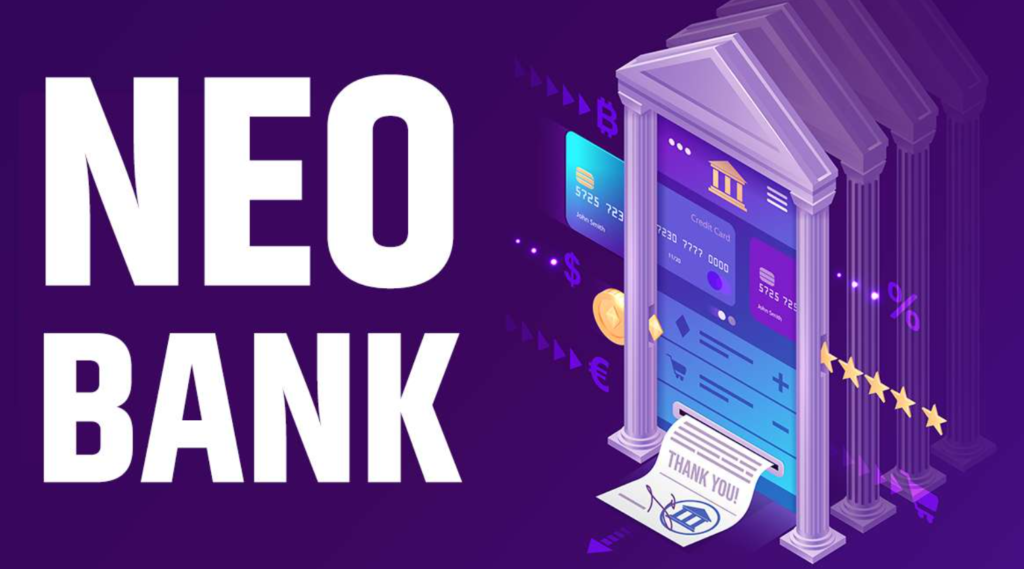
Traditional banks have physical branches, face-to-face verification and decades of security protocols. Neobanks are 100% digital. No branches. No tellers. Everything happens through an app.
That creates unique risks:
| Comparative Factors | Traditional Banks | Neobanks & Digital Wallets |
|---|---|---|
| Physical branch verification | Yes | No |
| 24/7 digital access | Limited | Always on |
| App-based attack surface | Low | High |
| Speed of product updates | Slow | Very fast |
| Regulatory history | Long | Still developing |
Neobanks also update their services more frequently, so new security holes can crop up more readily. That’s precisely why it’s crucial to conduct regular, deep security audits.
Audit #1 — The Penetration Test (Ethical Hacking)
What Is a Pen Test?
The easiest way a company can hack its own products is to pay ethical hackers to do it for them, which is known as a penetration test or “pen test.” These are certified cybersecurity experts who happen to think just like the bad guys — although they’re operating for the good side.
Their role is to break in before the crooks show up.
During a pen test for a neobank or digital wallet, they will:
- Attempt to log into accounts with stolen or guessed credentials
- Review the code of the app for bugs
- Try hacking into data in transit between the app and servers
- Verify if backend systems can be accessed without permission
Why That’s Important for Digital Wallets
Payment apps are particularly in need of pen testing because cybercriminals continually change their tactics. A pen test provides neobanks with a practical snapshot of what an active-use attack would look like — today, not two years ago.
Experts write a detailed report after the test. It reveals all of the vulnerabilities they discovered, how critical each one is and what the company needs to do to fix them.
The Scale of Risk
Financial applications rank among the most targeted by hackers globally, according to cybersecurity research. Pen tests catch flaws before the criminals do — and that’s the time they’re desperately needed.
Audit #2 — The Code Review (Static Application Security Testing)
Poring Over Each and Every Line Like a Detective
When developers write a neobank app, they’re penning thousands of lines of code. Tiny bugs can hide deep inside that code, and tiny mistakes can lead to big security headaches.
A code review or a Static Application Security Testing (SAST) audit is when security experts inspect that code one line at a time for problems, long before the app even runs.
Think of it like proofreading — only not for typos and dangling participles but rather security holes.
What Code Reviewers Look For
When reviewing code for a digital wallet app, auditors look for things such as:
- Hardcoded passwords — A password written directly in the code by a developer, usually mistakenly so
- Unencrypted data storage — Sensitive information stored in a readable form rather than scrambled
- Broken authentication — When the login procedure has a deficiency that allows someone in without the correct password
- Injection vulnerabilities — Where bad actors insert damaging commands into a form or search field
Why This Audit Saves Money
It’s far less expensive to fix a security flaw before an app launches than it is after a breach occurs. The average cost of a data breach in financial services runs over millions of dollars, and that’s before the legal fees, customer compensation and damaged reputations are factored in.
A proper code review can easily catch this sort of thing. That’s money saved and customers safeguarded.
Audit #3 — The Compliance Audit (PCI-DSS, GDPR and SOC 2)

Rules That Protect Your Money
Neobanks and digital wallets experiment with their own security rules — though they must observe certain international and regional standards by law.
The most important ones include:
| Standard | What It Covers | Who It Applies To |
|---|---|---|
| PCI-DSS | Security of credit and debit card data | Any app processing card payments |
| GDPR | Privacy of personal data (EU users) | Businesses with customers in EU |
| SOC 2 | General security and privacy | SaaS and financial companies |
| ISO 27001 | Information security management | Worldwide enterprises |
What a Compliance Audit Actually Looks Like
A compliance audit is an in-depth examination to ensure that a neobank is following every rule it’s mandated to follow.
Auditors check things like:
- How long customer data is retained, and how it’s deleted
- Whether employees have access to only the information they should really be seeing
- How the company handles a security breach if one occurs
- Whether encryption complies with the law
The Consequences of Failing
Failing a compliance audit is no small matter. Companies could be heavily fined, forced to shut down and lose their license to operate. For a neobank, that could potentially spell customers losing access to their funds while its legal challenges are resolved.
Compliance audits are there to protect both the company and you.
Audit #4 — The API Security Audit
What Really Is an API and Why Does It Matter?
If you are unfamiliar with an API, here’s a quick explanation. An API (Application Programming Interface) is a bridge which allows one software application to communicate with another.
When your digital wallet goes out and gets the balance in your bank, it uses an API. When you pay someone through PayPal and it goes through Visa, that is API in action. These are your financial data’s bridges — and thus they are prime targets.
For more information on how fintech platforms manage these kinds of security challenges, check out this resource on digital finance security practices that breaks down complex topics in easy-to-understand language.
How Attackers Exploit Weak APIs
API attacks are among the fastest growing threats in fintech security. Common problems include:
- Broken object-level authorization — Where an adversary can, with the change of a number in the request, gain access to another user’s account data
- No rate limiting — Where cybercriminals can launch literally thousands of requests to an API and attempt to guess passwords or take over a system
- Exposed sensitive data — Where an API returns more information than it ought to, including individual users’ private information
What the Audit Covers
An API security audit sticks its finger in every connection point of a neobank’s ecosystem. That involves third-party payment processors, vendors that provide your credit score or ID verification.
The audit checks whether:
- Each API is properly authenticated
- Sensitive data is filtered out before being returned and sent back
- There is a limit to the number of requests that can be made
- APIs available for third-party partners are also secure
This is something a lot of neobanks neglect, since APIs always seem to be tacked on quickly during new feature launches. A weak API is an open door for attackers.
Audit #5 — The Infrastructure & Cloud Security Review
Where Your Money Actually Lives
Humans tend to think of their money as actually sitting in a secure vault somewhere. The reality? Data about your balance exists on servers — often cloud servers run by companies like Amazon Web Services, Google Cloud or Microsoft Azure.
A cloud and infrastructure security audit tests if those servers and systems are configured safely.
What Auditors Examine
The infrastructure audit covers many technical fields. In plain terms, they look at:
- Who has access to what — Do any employees have access privileges they don’t really need? That’s a risk.
- How data is backed up — If a server crashes or gets attacked by ransomware, will the company be able to recover your data?
- Network encryption — Are internal communications encrypted? Are firewalls properly configured?
- Cloud misconfiguration — A misconfigured cloud bucket (storage area) can inadvertently make millions of records public on the internet
Real-World Example
A significant cloud misconfiguration at Capital One resulted in data being disclosed on more than 100 million customers. Capital One is not a neobank, but it illustrated how one misstep in configuring the cloud could lead to devastating results. Fully cloud-based neobanks aren’t exposed to this risk alone — they face it multiplied by a hundred.
That kind of misconfiguration would have been caught immediately by an infrastructure audit.
According to the OWASP Cloud Security Project, cloud misconfiguration remains one of the top threats to any digital financial platform.
The Multi-Layer Defense Check
A good infrastructure audit will also scrutinize whether neobanks have a series of defenses — what security professionals describe as “defense in depth.” If one layer fails, the next takes it up. Auditors ensure that these layers are there and functioning as they should be.
Audit #6 — The Social Engineering & Insider Threat Audit
The Human Element Is the Greatest X Factor
Here’s a reality that may surprise you: the most complex technical security solution in existence can be rendered worthless by one employee clicking on the wrong link.
Social engineering attacks aim to exploit humans, not machines. A hacker could phone a customer support representative claiming to be an executive and request system access. They could send an official-looking phony email to personnel, duping them into giving away login credentials.
This sort of audit is all about testing whether the humans inside a neobank are as secure as its technology.
What the Audit Looks Like in Action
Social engineering audits are the closest thing to real-world simulation. The security companies used to do the audit could:
- Send mock phishing emails to staff and find out who clicks
- Call the help desk by impersonating an employee or customer and see if reps can be tricked
- Attempt physically entering office spaces by tailgating through a secure door
- Test whether it’s more effective to have employees report suspicious activity versus keeping quiet because they’re embarrassed
Insider Threat Detection
In addition to outside manipulation, there’s also the threat posed by a malicious insider — an employee who purposefully steals or leaks data. This area of the audit ensures that:
- Abnormal access patterns are flagged (such as downloading 3,000 records at midnight)
- Access is disabled immediately for departing staff
- The company monitors its own systems adequately for abnormal activity
Why This Often Gets Neglected
Some companies pour money into technical audits and forget about their people. The result? An almost perfectly locked digital door with a human being holding it open for thieves, without even knowing it.
Neobanks that are serious about this audit invest in persistent security training for each and every employee — from the CEO to the lowest-ranking customer service rep.
How Frequently Should These Audits Take Place?
Security isn’t a one-time event. It’s ongoing. Here is a general guide for how frequently each type of audit should be performed:
| Audit Type | Suggested Frequency |
|---|---|
| Penetration Testing | Once a year, ideally every 6 months |
| Code Review | Every major release or update |
| Compliance Audit | Yearly (or as required by regulations) |
| API Security Audit | Quarterly or after any major integrations |
| Infrastructure / Cloud Audit | Every 6–12 months |
| Social Engineering Audit | Annually, with regular ongoing training |
The best neobanks don’t wait until something goes wrong. They audit everything, patch quickly and stay ahead of threats.
What to Look for as a Customer
It’s not necessary for you to do the audits yourself, but you can make intelligent decisions about which digital wallet or neobank to trust. Here are some green flags to be on the lookout for:
Security certifications — A company’s website may mention whether it is PCI-DSS compliant, SOC 2 certified or ISO 27001-certified. These mean they have been independently audited.
Bug bounty programs — Companies that reward ethical hackers for finding bugs in the open are demonstrating they’re serious about security.
Transparent incident reports — A neobank that promptly communicates when something goes wrong and how they fixed it is more trustworthy than one that says nothing.
Multi-factor authentication (MFA) — If your neobank needs another form of authentication aside from just a password to access the account, that’s already a good foundation for secure access.
Frequent security updates — Frequent app updates could mean the company is quick to patch its vulnerabilities.
The Bottom Line With Neobank Security Audits
Digital banking is the future. It’s quick, easy and increasingly the only way millions of people manage money. But that convenience is not without risk — and the businesses we place trust in know that security must be taken seriously enough to audit it, and do so regularly.
The 6 audits mentioned — penetration testing, code review, compliance auditing, API security, cloud infrastructure review and social engineering testing — contribute to a full picture of what it takes to keep a digital wallet platform truly safe.
No one audit is sufficient alone. True security comes from all of the above, plus running scans regularly and then doing something about what you find.
When you select a neobank or digital wallet, you aren’t just choosing a way to pay. You’re trusting a company to manage your financial life. Make that decision with your eyes wide open — and now you have the information to make it!
Neobank and Digital Wallet Security Audit FAQs
What is a neobank security audit in plain English? It’s a form of professional checkup of an entire digital system belonging to what is known as a neobank — those that operate solely online and have no traditional bank branches — to identify and fix any security vulnerabilities before they can be exploited by hackers.
Are neobanks safe to use? If a reputable neobank operates with standards such as scheduled security audits, certifications and compliance, it’s considered safe. Be sure they’re PCI-DSS compliant and support multi-factor authentication before you sign up.
Who audits the security of digital wallets? These are audited by both internal security teams and third-party cybersecurity companies. Because of that independence and objectivity, third-party audits are believed to provide a more accurate picture without bias coming into play.
How can I tell if my neobank has been audited? Check for a list of security certifications on their website, review its terms of service and privacy policy, and see if they release any transparency reports. You can also look to see if they have a bug bounty program.
What if a neobank does not pass an audit? The company gets a thorough report of what went wrong, and it must fix those problems. If they failed one standard or another, it could mean regulatory fines and suspension — or further mandatory audits.
Can security audits prevent all hacks? No system is 100% hack-proof. But regular, serious security audits slash the probability of a successful attack by closing known vulnerabilities before they can be exploited.
What type of security audit is most necessary for a digital wallet? There is no single most important audit — each of them covers a different attack surface. But penetration testing and compliance audits are frequently regarded as the most essential entry-level steps.
Are smaller neobanks audited as well? Yes. Regulatory compliance such as PCI-DSS applies to any business processing card payments no matter their size. Smaller neobanks can also be particularly susceptible because they don’t have as much money to spend on security.