
Your money is now living on your phone. No branch. No teller. Nothing but an app, a password, and trust.
Neobanks and digital wallets — freedom from banking hassles is around the corner. But that convenience has a hidden cost — most users have no idea how vulnerable their accounts really are.
Hackers don’t break down doors. They pass through the ones you left unlocked.
This guide lays out 12 security audits hardly anyone does. Each one is simple. Each one matters. And missing just one could leave your savings, your identity, and even your financial future in jeopardy.
Why Neobank Security Is a Special Beast
Traditional banks have vaults, armed guards, and years of federal oversight. Neobanks have firewalls, encryption chains, and a customer support chat.
That’s not a knock — many neobanks have world-class security. But they put more of the responsibility on you as a user. There’s no branch manager to call when things go wrong at 2 a.m.
The problem applies equally to digital wallets such as PayPal, Cash App, Venmo, Apple Pay, and Google Pay. They contain real cash and real card information. It only takes one security flaw and your balance will be gone in minutes.
The good news? Nearly all of these risks can be avoided altogether. You just need to know where to look.
Audit #1 — See What Permissions Your App Is Actually Using
Go to your phone settings right now. Locate your neobank or wallet app. Look at its permissions.
Can it use your microphone? Your contacts? Your location 24/7?
During setup, most users will simply tap “Allow” without a second thought. That’s understandable. But some apps want permissions they don’t really need — and that extra access exposes you to unnecessary risk.
What You Should Do
Crawl through every permission your financial app has. You have to ask yourself: is there anything this app actually needs in order to function?
Just one example: a banking app must have access to the camera in order to scan checks. It doesn’t require access to your contacts or microphone. If something doesn’t feel right, take it down.
- On iPhone: Settings → Privacy & Security → tap on each category
- On Android: Settings → Apps → the app → Permissions
Make this audit part of a quarterly routine.
Audit #2 — Scrutinize Every Connected App and Service

Many neobanks allow you to link other apps. Budgeting tools. Crypto platforms. Shopping rewards programs.
Each connection is a potential attack surface.
Think of it as though you were giving out house keys to imperfect strangers. Some are trustworthy. Some aren’t. And you may not even remember that you gave them a key.
The Step-by-Step Check
Sign in to your neobank or wallet. Locate the section titled “Connected Apps,” “Linked Accounts,” or “Authorized Services.” Review every single entry.
Ask: Do I still use this? Do I trust this company? Did I intentionally connect this?
Clear out anything you don’t recognize or use anymore. Then go and change your password, just in case.
| Commonly Connected Services | Risk Level |
|---|---|
| Budgeting apps (Mint, YNAB) | Low – Medium |
| Crypto exchanges | High |
| Unknown third-party apps | Very High |
| Shopping cashback tools | Medium |
| Freelance payment platforms | Medium |
Audit #3 — How Strong Is Your Password, Really?
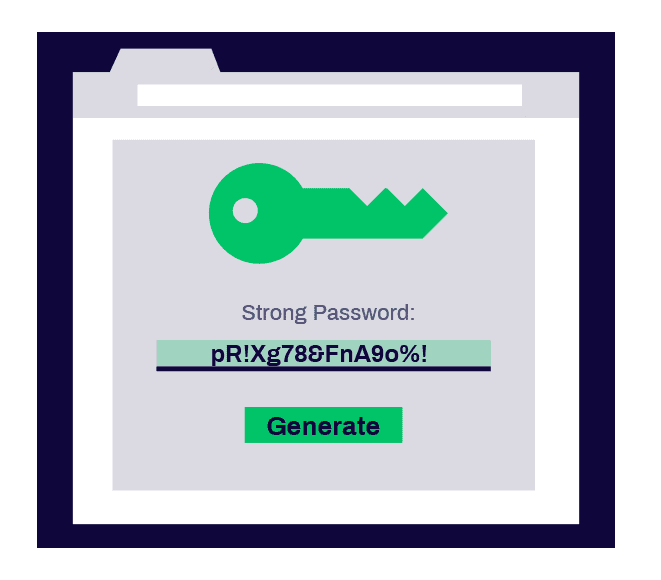
“Password123” is not a password. It’s an open invitation.
But even clever passwords can be broken. If your password is the same one you use for other websites, there’s a good chance it has already been leaked in a data breach — and you just don’t know it yet.
How to Check Right Now
Visit haveibeenpwned.com and enter your email address. This website will tell you if your email appeared in a known data breach. It’s free, safe, and eye-opening.
If your email address appears — and it likely will — change your neobank password right away. Use a password that is:
- At least 14 characters long
- A combination of letters, numbers, and symbols
- Completely unique to that one account
This is easy to do with a password manager such as Bitwarden or 1Password.
Audit #4 — Audit Your Two-Factor Authentication Setup
Two-factor authentication (2FA) adds a second step when you log in. Even if someone steals your password, it’s not enough to get in without that second code.
But not all 2FA is created equal.
SMS-based 2FA — in which a code is texted to your phone — is better than nothing. But it can be overridden through a tactic called SIM swapping, in which attackers trick your cellphone carrier into switching your phone number to their device.
Stronger Options to Use Instead
Switch to an authenticator app. Google Authenticator, Authy, and Microsoft Authenticator all generate time-based codes that can’t be intercepted through SIM swapping.
Look for it in your neobank’s “Security” settings or under “Two-Factor Authentication.” Use it if they offer an authenticator app option. If they provide only SMS, get in touch with their support and find out when more secure alternatives are on the way.
Audit #5 — Look at Your Active Login Sessions
The vast majority of people log onto their banking app on their phone, and that’s it. But many neobanks also work in your browser — and those sessions can hang around longer than you might expect.
If you ever logged in from a public computer, a hotel Wi-Fi network, or a borrowed device, that session might still be open.
Where to Find This
Find a tab in your account settings labeled “Active Sessions,” “Devices,” or “Login History.” You will be presented with a list of all devices that are currently logged into your account.
Review each one. If you do not recognize a device or location, sign it out right away. Then change your password and turn on 2FA if you haven’t already.
This is the audit most overlooked — and the one that may matter most.
Audit #6 — Go Through Your Transaction History, Line by Line
This one sounds obvious. It hardly ever gets done right.
The typical person checks their balance. They don’t read every transaction.
Fraudulent charges often start small. A $0.99 test charge. A $3.49 “subscription.” A tiny foreign transaction. These micro-charges are a way for criminals to test a stolen card before making larger purchases.
Build a Monthly Review Habit
Allocate 10 minutes at the end of each month. Go through every single transaction. Look for:
- Anything you don’t remember buying
- Services you didn’t subscribe to
- Small charges from unknown merchants
- Foreign transactions you didn’t make
Flag anything questionable right away using your app’s dispute or fraud report option.
Audit #7 — Review Your Notification and Alert Settings
Your neobank can inform you the instant anything happens with your account — if you allow it to.
For most users, push notifications are turned on for marketing emails and off for the alerts that really count.
Set Up These Alerts Right Now
Sign in to your neobank or wallet. Go to “Notifications” or “Alerts.” Make sure you have instant alerts turned on for:
- Every transaction over $1
- Login from a new device
- Password changes
- Large withdrawals or transfers
- Failed login attempts
Think of these alerts as a surveillance camera on your account. You’ll know the second something moves.
Audit #8 — Check If the App You’re Using Is the Real One
Fake banking apps exist. They look real. They feel real. They grab your login credentials the moment you type them.
This is known as a spoofed app, and it’s more common than many people realize — especially beyond official app stores.
How to Confirm You Have the Real App
Only download financial apps from the official App Store (iOS) or Google Play Store (Android). Never click a link in an email or text message that takes you to an app download.
Once installed, verify:
- The developer name matches the real company
- The app has plenty of reviews (thousands, not dozens)
- The reviews feel authentic, not generic or robotic
- The most recent update date is current
If you have even a kernel of doubt, delete the app and navigate directly to the company’s official website to find the right download link.
Audit #9 — Verify Your Recovery and Backup Options
What if you lose your phone tomorrow?
If your answer is “I don’t know,” that’s a problem. Account recovery is usually where security breaks down. Attackers know it too — they occasionally go after recovery paths because they are an easier target than the main login.
Secure Your Recovery Options
Log into your account. Locate the “Account Recovery” or “Security” section. Review:
- Your backup email address — does it still work? Is it secure?
- Your backup phone number — is it still yours?
- Security questions — are the answers something a stranger could potentially guess?
Change any outdated or weak recovery options now. Your recovery email should be just as secure as your main account — with a strong password and 2FA enabled.
Audit #10 — Scan the Network You Bank On
This one surprises people.
The security of your neobank app also relies on the place where you’re using it. Public Wi-Fi networks — in coffee shops, airports, hotels, or libraries — are not encrypted. Your data may be intercepted by anyone on the same network.
The Simple Rule
Never access your banking or financial apps on public Wi-Fi without a VPN (Virtual Private Network). A VPN will secure your internet connection, making it much harder for anyone to keep tabs on what you are doing.
Recommended VPNs for everyday use include Mullvad, ProtonVPN, and ExpressVPN.
Even better: use your mobile data instead of public Wi-Fi when banking. Your carrier’s data connection is far more secure than an open hotspot.
Audit #11 — Evaluate the Neobank’s Own Security Track Record
This is a place you trust with your money. Have you ever bothered to check if they truly deserve that trust?
This audit is about the institution itself — not just your account.
What to Look For
Search for your neobank’s name along with the words “data breach,” “security incident,” or “fraud complaints.” Check sources like:
- The CFPB complaint database
- The Better Business Bureau
- Tech news sites like TechCrunch or The Verge
- Reddit threads, where users share their real experiences
Also check: is your neobank FDIC insured (in the US) or do you have similar protection in your country? If the bank fails, your deposits are insured up to $250,000 by the FDIC. Not all fintech apps come with this protection built in — some offer it through partner banks.
| Security Factor | Where to Find It |
|---|---|
| FDIC or equivalent insurance | App’s website, “About” or “Legal” section |
| Past data breaches | Google search + CFPB database |
| Regulatory licenses | State banking regulator websites |
| Customer fraud complaints | BBB, Trustpilot, Reddit |
| Encryption standards | App’s privacy policy or security page |
If you want to stay updated on the latest fintech security news and digital finance tips, visit this resource for regularly updated guides on keeping your money safe online.
Audit #12 — Test What Happens If Your Phone Gets Stolen
Imagine your phone is gone right now. What can someone do with it?
If your phone doesn’t have a lock screen, or if your banking app isn’t locked behind its own separate PIN or biometric authentication, the answer is: everything.
Lock It Down
Set up a lock screen PIN or biometric (fingerprint or face ID) for your device. This is your front line of defense.
Then, within your banking app, check if there’s a setting to require a separate PIN or biometric sign-in even when the phone is already unlocked. Most decent neobanks offer this — make sure it is enabled.
Finally, learn how to remotely wipe your phone if it is lost or stolen:
- iPhone: Find My → select your device → Erase iPhone
- Android: Go to google.com/android/find → Erase Device
Practice this process before an emergency strikes.
How Often Should You Run These Audits?
| Audit | Recommended Frequency |
|---|---|
| App Permissions Review | Every 3 months |
| Connected Apps Check | Every 3 months |
| Password Strength Check | Every 6 months |
| 2FA Settings Review | Every 6 months |
| Active Sessions Check | Monthly |
| Transaction History Review | Monthly |
| Notification Settings | Once, then after any app update |
| App Authenticity Check | When installing or updating |
| Recovery Options Review | Every 6 months |
| Network Security Check | Ongoing habit |
| Institution Security Research | Annually or after news events |
| Phone Theft Protection Test | Every 6 months |
The True Cost of Not Doing These Audits
This isn’t fearmongering. These are actual patterns being repeated every single day.
Digital payment fraud losses in the United States alone totaled more than $10 billion in 2023. Most victims didn’t even know something was wrong until it was too late.
The scary part? The great majority of these breaches weren’t the result of sophisticated hacking. They occurred thanks to weak passwords, expired permissions, ignored alerts, and public Wi-Fi.
You don’t have to be a tech expert to protect yourself. You only need 30 minutes and this checklist.
FAQs
Q: Are neobanks safe to use as your main bank? Sure, lots of people keep their money at neobanks and never have a problem. The trick is finding one that’s FDIC insured (or has equivalent coverage), has strong security practices, and a spotless history. Combine that with the audits in this guide, and you’re in a good position.
Q: What’s the most common cybersecurity mistake made by neobank users? The number one mistake, and the most dangerous, is reusing passwords. If a password for one account is exposed in a data breach, hackers will try that same password everywhere — including your bank.
Q: Can someone hack my account just by knowing my email address? Not directly. But your email is often your username, and it’s used in password reset flows. If your email account is hacked, your banking account could follow. First, make sure your email is protected by a strong password and 2FA.
Q: Can I trust budgeting apps that are connected to my neobank? It depends on the app. Stick to well-known, established services. Look at what data they ask for access to. And go through those connections every few months and remove any you no longer use.
Q: What’s the best course of action if I see a transaction I did not make? Report it right away using the fraud or dispute feature on your app. Do not wait. Most neobanks allow a window — generally 60 days — within which you may dispute an unauthorized charge. The faster you act, the better your chances of recovering your money.
Q: Is it safer to use Apple Pay or Google Pay than a regular card? Yes, in many ways. These services use tokenization — they send a one-time code rather than your actual card number when you make a payment. That means even if the merchant’s system is hacked, your real card details stay safe.
Q: What is SIM swapping and how do I defend against it? SIM swapping is when a criminal contacts your phone carrier, pretends to be you, and gets your phone number transferred to a SIM card they control. To safeguard yourself, add a PIN or passcode to your mobile carrier account. This prevents anyone from making changes without that extra code.
Protecting Your Money Is a Habit, Not a One-Time Task
Security is not something you set up and then forget about. It’s an ongoing practice — like locking your door every night even though nothing bad has happened yet.
The 12 audits in this guide are not complicated. They don’t require a tech background. They just need a small amount of your time and a willingness to take your financial safety seriously.
Start with what sounds most pressing. Maybe your password needs updating. Perhaps you’ve never looked at your active sessions. Maybe right now you are banking on public Wi-Fi.
Pick one audit. Do it today. Then come back and work through the rest.
Your future self — and your bank balance — will thank you.