


Picture this: it’s the last week of the quarter, your internal review is due in four days, and someone just realized that half the audit documentation from the past three months is scattered across three different Google Drive folders, two email threads, and one person’s desktop who is currently on vacation.
I’ve been in that room. It’s not fun.
Internal reviews at neobanks and digital wallet platforms are genuinely different from audits at traditional banks. The pace is faster, the tech stack changes more frequently, and the teams are usually smaller — which means there’s less buffer when things fall behind. Over time, I picked up a handful of approaches that made these reviews significantly less painful and a lot more productive.
Here’s what actually works.
1. Build Your Audit Evidence Locker Before the Review Starts
The single biggest time sink in any internal review isn’t the actual analysis — it’s hunting down evidence. Log exports, API access records, transaction samples, policy documents, change logs. If you’re collecting all of this when the audit starts, you’ve already lost a day or two.
What changed everything for me was setting up what I started calling an “evidence locker” — basically a structured folder system that gets populated continuously throughout the quarter, not just at review time.
Here’s the simple structure I use:
Each team owns their folder and is responsible for dropping relevant documentation in as things happen — not at the end of the quarter. A configuration change gets made? Drop the before/after screenshot in Change-Management. A vendor renews their SOC 2 report? It goes straight into Vendor-Assessments.
When review time comes, the locker is already 70-80% populated. The remaining work is verification and analysis, not a document scavenger hunt.
Tools that help: Notion for smaller teams, Confluence for larger ones, or even a well-organized SharePoint. The tool matters less than the habit.
2. Standardize Your Control Testing Templates — And Actually Stick to Them
This one sounds obvious but almost nobody does it consistently.
When I first started doing internal reviews at a fintech, every auditor on the team had their own style. One person documented control tests in Word docs with narrative paragraphs. Another used a homemade Excel spreadsheet. A third kept notes in a personal Notion workspace that nobody else could access.
When it came time to compile findings, we were essentially translating between four different formats before we could even start reviewing the substance. That wasted hours every single cycle.
The fix: a shared control testing template that everyone uses — non-negotiable.
Here’s what a good neobank control testing template covers:
| Field | What to Include |
|---|---|
| Control ID | Unique reference number (e.g., AC-07) |
| Control Description | Plain-language description of what the control does |
| Control Owner | Person or team responsible |
| Testing Method | Walkthrough / Inquiry / Observation / Re-performance |
| Sample Size | How many transactions/records tested |
| Test Date | When testing was performed |
| Evidence Reference | Link or folder path to supporting documentation |
| Result | Pass / Fail / Exception |
| Exceptions Noted | Description of any gaps found |
| Remediation Owner | Who is fixing it |
| Target Resolution Date | Deadline for fix |
Once you have this template locked in and everyone uses it, compiling the final audit report becomes mostly copy-paste rather than original writing. That alone cuts review preparation time in half.
If you’re looking to sharpen the foundational structure behind these controls, the 7 Must-Do Security Audits of Neobanks & Digital Wallets You Should Never Ignore is a solid reference for what control areas deserve the most consistent attention.
3. Use Automated Log Analysis Instead of Manual Sampling
Here’s a mistake I made early on that I’m almost embarrassed to admit: I used to manually review transaction logs by pulling random samples in Excel and eyeballing them for anomalies.
For a neobank processing tens of thousands of transactions a day, that approach is about as effective as checking whether a swimming pool is clean by tasting one cup of water.
Automated log analysis tools changed my reviews completely. Instead of sampling, you’re analyzing the full population. Instead of looking for patterns manually, you’re setting rules and letting the system flag exceptions.
Tools worth using for this:
ACL Analytics (now Galvanize/Diligent) — Purpose-built for audit analytics. You can write scripts to test for duplicate payments, round-number transactions, after-hours activity, and unusual velocity patterns across the entire dataset.
IDEA (Interactive Data Extraction and Analysis) — Similar capability to ACL, slightly different interface. Many auditors prefer it for financial data specifically.
Python with Pandas — If your team has even basic data skills, a simple Python script can do population-level testing on CSV log exports. Not fancy, but highly effective.
A real example of what automated testing catches:
During one review, an automated script flagged 23 transactions that had been processed twice within a 90-second window — same amount, same merchant, same card. Manual sampling would never have found those. Turned out it was a retry logic bug in the payment processor integration, not fraud — but that’s exactly the kind of thing internal review is supposed to catch before a regulator does.
The time investment in setting up automated scripts pays back within the first review cycle. After that, you’re running the same scripts with updated data each quarter.
4. Timebox Your Stakeholder Interviews — and Send Questions in Advance
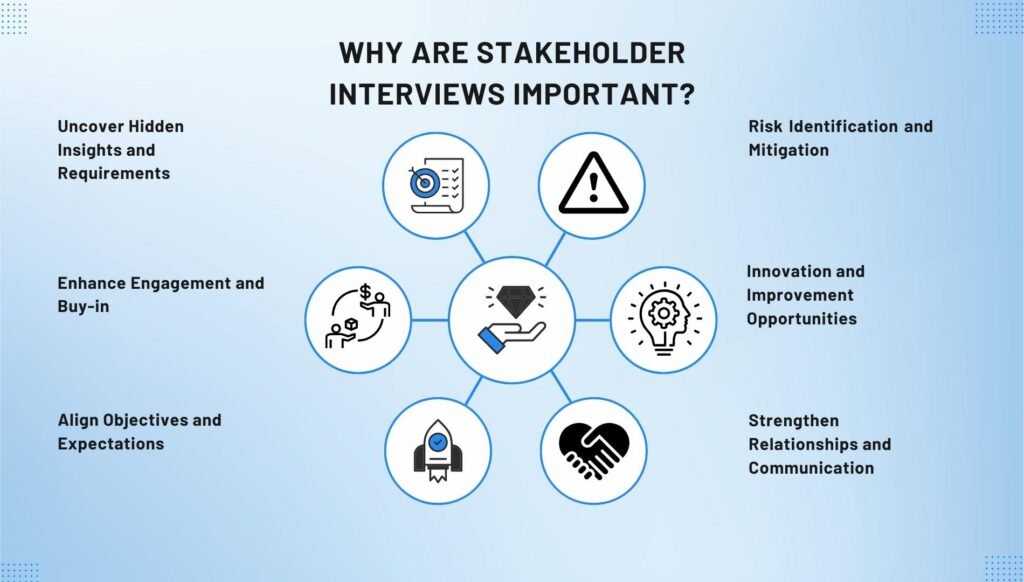
Stakeholder interviews are a necessary part of any internal review — you need to walk through controls with the people who own them, confirm that documented procedures match reality, and understand any changes that happened during the period.
But unstructured interviews are a massive time drain.
I once sat in a 90-minute “interview” with a payments team lead that covered his team’s entire product roadmap, three unrelated compliance concerns, and a fifteen-minute detour about why the office coffee machine was unreliable. We got maybe twenty minutes of actual audit-relevant information.
The fix is simple: send your questions at least 48 hours in advance, and timebox the meeting to 30-45 minutes maximum.
A good pre-interview question format for neobank controls:
- Walk me through how [specific control] works in your team’s day-to-day process.
- Has this control changed since our last review? If yes, when and why?
- Are there any known exceptions or gaps you’re already aware of?
- What evidence can you provide to demonstrate this control is operating effectively?
- Are there any upcoming changes that might affect this control next quarter?
When people receive these questions in advance, two things happen. First, they come prepared — which means the conversation is focused and efficient. Second, they often realize mid-preparation that they need to gather evidence, so they do it before the meeting rather than promising to send it later (and then forgetting for two weeks).
5. Implement a Rolling Risk Register Instead of a Point-in-Time Assessment
Traditional audit thinking treats risk assessment as something you do at the start of a review period — you sit down, evaluate the risks, assign scores, and then work from that list for the next three to six months.
That cadence doesn’t work well for neobanks.
A neobank might launch a new feature, onboard a new payment partner, or change a core API integration multiple times in a single quarter. Each of those events introduces new risks. If your risk register only gets updated when the audit cycle starts, you’re perpetually behind.
What works better is a rolling risk register — a living document that gets updated whenever a material change happens.
How to set this up practically:
- Link your change management process to your risk register. Every approved change request triggers a quick risk assessment question: “Does this change affect any existing controls or introduce new risks?”
- If yes, the risk register gets updated that week — not at the end of the quarter.
- Assign a single owner for the risk register (usually the Head of Risk or Internal Audit Lead) whose job includes keeping it current.
The payoff: when your internal review starts, you’re not doing a retrospective risk assessment. You’re validating a risk register that’s already been maintained in real time. The review becomes confirmation and testing rather than discovery.
This pairs well with understanding what 10 Must-Do Neobank Digital Wallet Security Audits for Risk Mitigation looks like in practice — because a rolling register needs to reflect those control areas continuously, not just at review time.
6. Create a Findings Tracker With Built-In Escalation Logic
One of the most frustrating parts of internal reviews isn’t finding issues — it’s watching the same issues reappear in the next review because nobody followed through on remediation.
This happens at almost every organization I’ve seen, and it’s almost always a process failure rather than a people failure. Findings get documented, sent out in a report, assigned to someone, and then… they drift. The auditor moves on to the next cycle. The assignee gets pulled into other priorities. Three months later, the review comes back around and the finding is still open.
The solution is a findings tracker with escalation logic baked in.
Here’s how I set one up:
Step 1: Every finding gets logged in a shared tracker (Jira, Asana, or even a dedicated spreadsheet) with four key fields: finding description, severity, owner, and target resolution date.
Step 2: Set up automatic reminders. If a High finding is still open 14 days before its target date, the owner gets an automated reminder. At 7 days, their manager gets CC’d. At the target date with no resolution, it escalates to the audit committee or equivalent.
Step 3: Track aging. Your tracker should show not just whether a finding is open or closed, but how long it’s been open. A critical finding that’s 90 days old with no progress is a different conversation than one that’s 15 days old with active remediation in progress.
Step 4: At the start of each new review, the first thing you do is check the prior-period findings tracker. Any open items automatically become findings in the new cycle — with a note that they’ve carried over. This creates accountability without requiring anyone to manually chase things down.
| Finding Age | Status | Escalation Action |
|---|---|---|
| 0–14 days | Active remediation | Owner responsible |
| 15–29 days (no update) | At risk | Automated reminder to owner |
| 30+ days (no update) | Overdue | Manager notified |
| Past target date | Escalated | Audit committee visibility |
| Carried over to next cycle | Repeat finding | Elevated severity automatically |
When people know their open findings will surface automatically in the next review — and will be flagged as repeat findings — the remediation rate improves noticeably. Not because people are lazy, but because structured accountability makes it harder for things to fall through the cracks.
For teams dealing with wallet and transaction-layer findings specifically, 9 Digital Wallet Neobank Security Audits to Protect Your Money covers some of the most common recurring control gaps worth building into your tracker proactively.
What I’ve Learned About Review Timelines
One more thing worth mentioning: most internal review timelines are unrealistic because they don’t account for the back-and-forth that actually happens.
A realistic internal review timeline for a neobank looks something like this:
| Phase | Realistic Timeframe |
|---|---|
| Planning & scoping | 3–5 business days |
| Evidence collection | 5–7 business days |
| Control testing | 7–10 business days |
| Stakeholder interviews | 3–4 business days |
| Findings documentation | 3–5 business days |
| Draft report & review | 4–5 business days |
| Management responses | 5–7 business days |
| Final report issuance | 2–3 business days |
| Total | ~6–8 weeks |
If your leadership is expecting a complete internal review in two weeks, that’s a conversation worth having — because compressed timelines produce compressed quality, and that creates its own risk.
The Honest Reality
None of these tips require expensive software or major organizational restructuring. Most of them are process adjustments that cost nothing except the willingness to be consistent.
The teams I’ve seen run the fastest, cleanest internal reviews aren’t the ones with the biggest budgets or the most sophisticated tools. They’re the ones who treat audit preparation as a continuous activity, not a quarterly scramble.
Start with one tip. Get the evidence locker running. Standardize the templates. Add the findings tracker. By the third review cycle, you’ll barely recognize how you used to do it.