

A fintech founder I spoke with last year told me something I haven’t forgotten. His neobank had passed two consecutive internal audits with flying colors. Clean reports, no major findings, everyone felt good about it. Then an external examiner came in and found a compliance gap that had been sitting unnoticed for 18 months — one that ultimately cost them over $2 million in remediation, regulatory fines, and the operational nightmare of fixing it under a deadline.
The audits weren’t fake. The auditors weren’t incompetent. The problem was subtler than that: the audits were built around the wrong assumptions, checked the wrong things, and missed patterns that only became obvious in hindsight.
That story isn’t rare. It’s actually pretty typical in the neobank space, where teams move fast, technology changes constantly, and audit practices often lag years behind operational reality. So let’s talk about the mistakes that actually cost money — not the obvious ones, but the ones that hide in plain sight.
1. Treating Audit as a One-Time Annual Event

This is probably the most expensive mistake on this list, and it’s also the most normalized. The audit gets scheduled, the team scrambles to pull documentation together, everyone survives the review, and then the organization exhales and goes back to normal until the same time next year.
The problem with that approach in neobanking specifically is the pace of change. A neobank might push dozens of product updates, onboard new third-party APIs, or change transaction processing logic multiple times between annual audits. Each of those changes introduces potential risk. If you’re only looking once a year, you’re flying blind for eleven months.
The shift worth making here is toward a continuous or rolling audit model. That doesn’t mean auditing everything constantly — it means building a cadence where different risk areas get reviewed on a rotating schedule throughout the year. Transaction monitoring controls reviewed quarterly. Access permissions reviewed every 60 days. Vendor risk reviewed semi-annually. This way, nothing waits twelve months to be scrutinized.
Tools like AuditBoard and TeamMate+ are built specifically for this kind of cadence management. They let you map risk areas to review frequency and track completion over time without everything piling up at once.
2. Underestimating Third-Party and API Risk
Neobanks run on integrations. KYC providers, payment processors, card issuers, fraud detection vendors, open banking APIs — the average neobank has more third-party dependencies than most people realize. And here’s the thing: when something goes wrong in one of those integrations, it’s your customers who are affected and often your regulatory liability that gets triggered.
The audit mistake I see repeatedly is treating third-party risk as a box-ticking exercise. The vendor fills out a questionnaire once a year, someone files it away, and nobody looks at it again until the next cycle. That’s not vendor risk management — that’s the appearance of vendor risk management.
What actually works is tiering your vendors by criticality and adjusting your audit depth accordingly. A provider handling customer identity verification or transaction processing should face a much more rigorous review than a marketing automation tool. For the critical tier, you want to be looking at their SOC 2 reports, their incident history, their data handling practices, and ideally running periodic control testing rather than just reading their attestations.
If you want to understand how neobank-specific vendor dependencies show up in security audits, this breakdown of 9 digital wallet security audits covers several relevant checkpoints around third-party controls.
3. Auditing Technology Controls Without Technical Expertise
Here’s an uncomfortable truth: a lot of neobank audit teams don’t have people who deeply understand the technology they’re auditing. They can review policies and procedures, they can interview staff, they can check whether documentation exists — but they can’t actually verify whether the technical controls described in that documentation are working correctly.
This creates a dangerous gap. A developer might tell you that API endpoints are properly authenticated and that sensitive data is encrypted at rest. An auditor without technical depth will record that and move on. An auditor who knows what they’re looking at will ask to see the implementation, check the configuration, and test whether the control actually behaves as described under edge conditions.
I watched this play out at a fintech where the security documentation stated that all customer data was encrypted using AES-256. What the audit never caught was that one legacy data pipeline — handling a subset of historical records — was still running without encryption because it predated the policy. Nobody lied. The policy was accurate for new systems. The audit just never went deep enough to find the exception.
The fix isn’t to turn every auditor into a developer. It’s to include technical specialists — security engineers, cloud architects, or qualified external consultants — in the audit process for technology-heavy reviews. Pair the domain knowledge of your audit team with the technical depth of someone who can actually open the hood.
4. Ignoring the Audit Trail for Internal Changes
Change management is one of those areas that sounds boring until something goes wrong. At that point, it becomes the most important thing in the room.
Neobanks make changes constantly — to code, to infrastructure, to transaction processing rules, to configuration settings. Every one of those changes is a potential point of failure and a potential vector for unauthorized activity. If your audit process doesn’t verify that changes are being properly logged, reviewed, and approved before deployment, you have a significant blind spot.
The specific mistake I see is assuming that because a change management policy exists, the policy is being followed. Those are two very different things. An audit should be testing whether the actual change history matches the documented approval process — not just confirming that the process is written down somewhere.
Here’s a simple framework for what a change management audit should verify:
Step 1: Pull a sample of production changes from your deployment logs over the review period.
Step 2: For each change, verify there’s a corresponding change request with documented approval from the appropriate authority.
Step 3: Check the timeline — was approval obtained before deployment, or after the fact?
Step 4: Look for any changes that appear in deployment logs but have no corresponding change request at all. These are your biggest red flags.
Step 5: Verify that emergency change procedures (for urgent hotfixes) were followed correctly and that post-deployment reviews occurred.
5. Weak KYC and AML Control Testing
This is where the truly expensive mistakes happen. KYC and AML failures are one of the most reliably costly compliance problems in financial services, and neobanks have had some very public examples of exactly this.
The audit mistake isn’t usually that teams skip KYC and AML entirely — it’s that they audit the process rather than the outcomes. They confirm that a KYC policy exists, that an AML system is in place, that staff have been trained. What they don’t do is test whether those controls are actually catching what they’re supposed to catch.
Effective AML audit testing means running your own scenarios through the detection system to verify it flags correctly. It means reviewing the sample of alerts that were cleared and checking whether the dispositions were well-reasoned. It means looking at the population of accounts that went through enhanced due diligence and verifying those reviews were substantive. It means checking whether your transaction monitoring rules are calibrated to current risk typologies or whether they’re two years out of date.
The regulator doesn’t care that you have a system. They care whether the system works. Your audit should be answering that same question — with evidence, not assertions.
For neobanks specifically, this guide covering 10 powerful security audit practices for fraud prevention touches on several overlapping controls relevant to AML testing.
6. Not Testing Incident Response Capabilities
Every neobank has an incident response plan. Very few of them have actually tested whether that plan works.
Audit teams regularly review the documented IR process, confirm it’s been updated, check whether staff know it exists. What almost never happens is an actual simulation — a tabletop exercise or a controlled test of specific response procedures — to see how the organization actually performs under pressure.
This matters because the gap between a plan on paper and a plan that works in a crisis is almost always larger than people expect. Who actually owns the decision to take a system offline during a live fraud event? How long does it actually take to notify regulators once a breach is identified? Does the communication chain function correctly when the incident happens at 2am on a weekend?
I’ve sat in on tabletop exercises where teams discovered, in real time, that they had three different people who all thought they were the primary incident commander. That’s a cheap lesson in a simulation. It’s an extremely expensive lesson during an actual incident.
Audit should be pushing for evidence that IR procedures have been tested — not just documented. Simulation results, lessons learned, and documented updates to the plan based on test findings are what that evidence looks like.
7. Overlooking Data Governance and Data Quality Controls
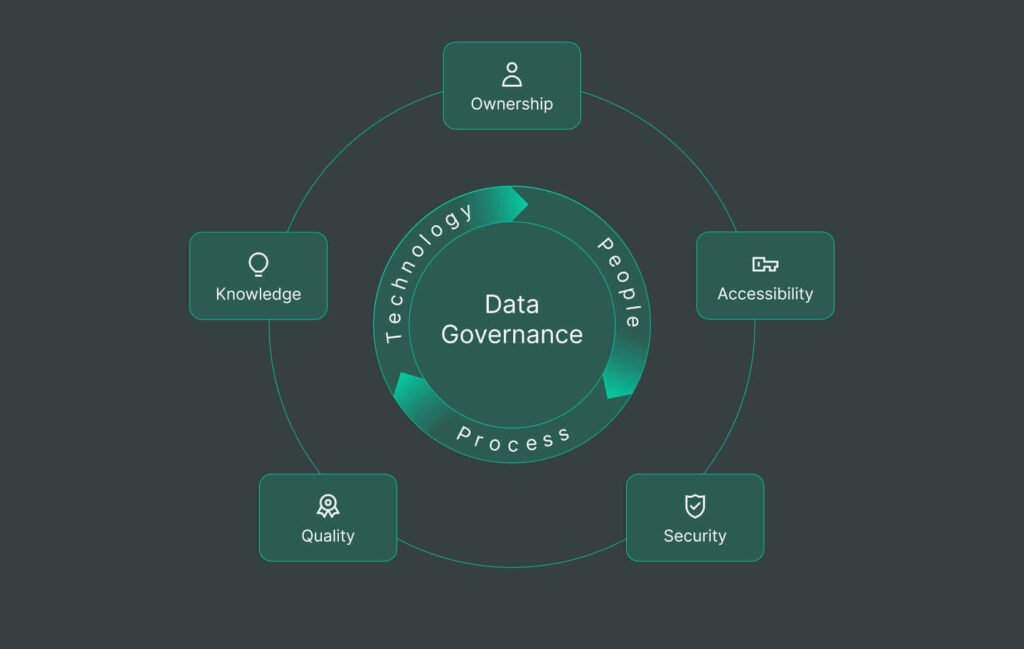
Here’s one that doesn’t get nearly enough attention in neobank audit circles: data governance. Specifically, the question of whether the data your compliance and risk systems are running on is accurate, complete, and properly controlled.
Think about what that actually means in practice. Your transaction monitoring system is making risk decisions based on customer data. If that customer data has errors — incorrect addresses, stale risk ratings, incomplete transaction history — the system is making decisions based on a flawed picture. Your audit of the transaction monitoring controls might come back clean, but if the underlying data is bad, the controls aren’t actually doing what you think they’re doing.
The specific audit gaps I see here: no testing of data completeness (are all expected records actually present?), no validation of data accuracy (do records match source systems?), and no review of who can modify core data fields and under what conditions.
Data lineage is another underexamined area — being able to trace where a key piece of data came from, what transformations it went through, and whether those transformations are correctly documented and controlled.
The following table gives a sense of the key data governance areas that neobank audits most commonly overlook:
V
visualize
V
visualize show_widget
https://10341f775c3fc4d8715d0f8095dd992d.claudemcpcontent.com/mcp_apps?connect-src=https%3A%2F%2Fesm.sh+https%3A%2F%2Fcdnjs.cloudflare.com+https%3A%2F%2Fcdn.jsdelivr.net+https%3A%2F%2Funpkg.com&resource-src=https%3A%2F%2Fesm.sh+https%3A%2F%2Fcdnjs.cloudflare.com+https%3A%2F%2Fcdn.jsdelivr.net+https%3A%2F%2Funpkg.com+https%3A%2F%2Fassets.claude.ai&dev=true
8. Failing to Close the Loop on Audit Findings
This last one might be the most frustrating to talk about, because it’s so preventable and yet it keeps happening.
An audit produces findings. Those findings get assigned to owners with remediation deadlines. And then… the follow-up doesn’t happen with any consistency. Deadlines pass, statuses go unupdated, and findings that were labeled “in progress” six months ago are still labeled “in progress” when the next audit cycle begins. Sometimes the same finding appears in three consecutive audit reports because nobody actually fixed it.
This isn’t hypothetical. I’ve reviewed audit tracking logs where over 40% of prior-cycle findings were still open past their original due dates. The audit function was working hard, finding real issues — and then watching them sit unresolved.
The structural fix is straightforward: findings need formal ownership, escalation paths, and independent verification of closure. Not self-certification by the team that owns the process. Independent verification — either by the audit team or a separate control testing function — that the remediation was implemented correctly and the control is now working.
Some audit management platforms like Workiva and AuditBoard have built-in finding lifecycle management that makes this easier, with automated reminders, escalation workflows, and closure sign-off requirements. But the technology is secondary to the culture. Leadership has to treat open findings as a live risk issue, not a paperwork backlog.
The Pattern Underneath All of These
Looking at these eight mistakes together, there’s a thread running through most of them: the gap between the appearance of audit rigor and the substance of it.
Policies documented but not tested. Controls described but not verified. Findings raised but not resolved. Processes audited but not outcomes. In each case, the audit function is doing work — real work, often a lot of it — but the work isn’t reaching the depth where it would actually catch the problems that cost millions.
The neobanks that avoid these traps tend to share a few characteristics. Their audit teams have genuine access to technical systems and technical expertise. Their findings get executive-level attention, not just compliance-team attention. And their audit function is seen as a source of insight about how the business is actually running, not just a regulatory obligation to get through.
That shift in how audit is positioned — from compliance checkbox to operational intelligence — is what separates the teams that catch problems early from the ones that find out about them from a regulator.
If you want a practical checklist to start closing these gaps, this guide on 12 best practices for evaluating neobank security audit systems is a useful complement to what’s covered here.
One more thing worth keeping in mind: audit mistakes compound. A weak change management process makes your data integrity harder to verify. Unresolved findings from last year make this year’s risk assessment less reliable. The cost isn’t always a single $2 million event — sometimes it’s a slow erosion of control quality that only becomes visible when something serious finally breaks through.
Starting with whichever of these eight mistakes is most recognizable in your own organization is the right move. Fix one thing properly and build from there.