

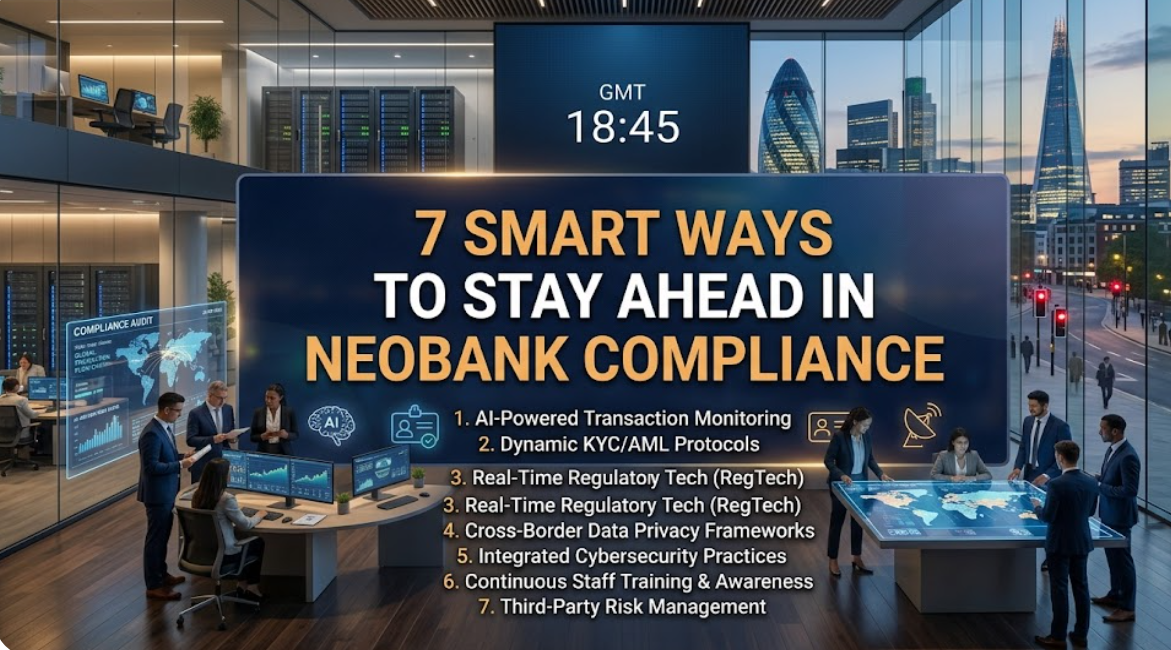
The rise of neobanks has reshaped the financial services landscape, turning what used to be a slow-moving industry into a fast-paced, innovation-driven environment. Yet, for all the sleek apps and seamless onboarding experiences, compliance remains the quiet backbone holding everything together. Ignore it, and even the most promising neobank can collapse under regulatory pressure. Master it, and you gain a competitive advantage that is difficult to replicate.
This article explores seven smart, practical ways to stay ahead in neobank compliance. Rather than treating compliance as a checkbox exercise, the focus here is on integrating it into the core of operations, culture, and growth strategy. Along the way, you’ll find tables and structured insights designed to make these concepts actionable rather than abstract.
way 1: build compliance into product design from day one

One of the most common mistakes early-stage neobanks make is treating compliance as something to “add later.” In reality, retrofitting compliance into an existing product is far more expensive and risky than embedding it at the design stage.
When compliance is integrated into product architecture, features such as onboarding, payments, and account management automatically align with regulatory expectations. This approach is often referred to as “compliance by design.”
Consider the onboarding process. If identity verification, fraud checks, and data privacy measures are baked into the flow, you avoid the need for disruptive changes later.
table: compliance-by-design vs retroactive compliance
| Aspect | Compliance by Design | Retroactive Compliance |
|---|---|---|
| Cost | Lower over time | High due to rework |
| User experience | Seamless | Often disrupted |
| Regulatory risk | Reduced | Elevated |
| Time to market | Faster in long term | Delayed due to fixes |
| Scalability | Strong | Limited |
Embedding compliance early also improves collaboration between product managers and legal teams. Instead of operating in silos, both groups align on shared goals, reducing friction and accelerating innovation.
way 2: invest in regtech and automation
Manual compliance processes cannot keep up with the scale and speed of modern neobanks. Automation is no longer optional—it’s essential.
Regulatory technology (RegTech) solutions help automate tasks such as transaction monitoring, reporting, and customer due diligence. These tools not only reduce human error but also allow compliance teams to focus on higher-value analysis.
chart: impact of automation on compliance efficiency
| Process Area | Manual Efficiency | Automated Efficiency |
|---|---|---|
| KYC verification | Medium | High |
| Transaction monitoring | Low | Very High |
| Reporting | Low | High |
| Fraud detection | Medium | Very High |
Automation also improves response times. For example, suspicious activity can be flagged in real time rather than days later, significantly reducing risk exposure.
However, adopting RegTech requires careful vendor selection. Look for solutions that are adaptable, scalable, and capable of integrating with your existing systems.
way 3: maintain proactive regulatory engagement

Many neobanks operate under the assumption that regulators are obstacles to innovation. In reality, regulators often welcome engagement, especially when it leads to better consumer protection.
Proactive communication with regulatory bodies helps you stay ahead of changes rather than reacting to them. This includes:
- Participating in regulatory sandboxes
- Attending industry consultations
- Maintaining open communication channels
By engaging early, you gain insights into upcoming rules and can adjust your strategy accordingly.
table: reactive vs proactive regulatory approach
| Approach | Characteristics | Outcome |
|---|---|---|
| Reactive | Respond after changes occur | Higher risk, rushed adjustments |
| Proactive | Engage before changes are implemented | Better preparedness, lower risk |
This approach also builds trust. Regulators are more likely to view your neobank as a responsible player, which can be beneficial during audits or licensing processes.
way 4: develop a culture of compliance across teams
Compliance is not just the responsibility of the legal or risk department. It must become part of the organization’s culture.
This means educating employees at all levels about regulatory requirements and their role in maintaining compliance. Training programs should be ongoing rather than one-time events.
A strong compliance culture has several benefits:
- Reduces internal errors
- Encourages ethical decision-making
- Improves accountability
chart: elements of a strong compliance culture
| Element | Description |
|---|---|
| Leadership support | Executives prioritize compliance |
| Training programs | Continuous employee education |
| Clear policies | Easy-to-understand guidelines |
| Reporting mechanisms | Safe channels for raising concerns |
| Accountability | Defined roles and responsibilities |
When employees understand why compliance matters, they are more likely to follow procedures and identify potential risks early.
way 5: leverage data analytics for risk management
Data is one of the most powerful tools in modern compliance. Neobanks generate vast amounts of data, from transaction histories to user behavior patterns.
By analyzing this data, you can identify risks before they escalate. For example, unusual transaction patterns may indicate fraud or money laundering.
Advanced analytics techniques, including machine learning, can enhance this process by detecting patterns that are not immediately obvious.
table: traditional vs data-driven risk management
| Method | Characteristics | Effectiveness |
|---|---|---|
| Traditional | Rule-based, static | Moderate |
| Data-driven | Dynamic, pattern-based | High |
Data analytics also supports better decision-making. Instead of relying on assumptions, compliance teams can base their actions on concrete insights.
way 6: stay updated with global regulatory trends
Neobanks often operate across multiple jurisdictions, each with its own regulatory framework. Staying informed about global trends is essential.
Regulations are constantly evolving, particularly in areas such as:
- Data privacy
- Anti-money laundering (AML)
- Digital identity verification
Monitoring these changes allows you to adapt quickly and maintain compliance in all markets.
chart: key areas of regulatory evolution
| Area | Trend |
|---|---|
| Data privacy | Stricter user consent requirements |
| AML | Enhanced monitoring standards |
| Open banking | Increased data-sharing obligations |
| Cybersecurity | Higher security benchmarks |
Subscribing to regulatory updates, joining industry groups, and collaborating with legal experts can help you stay ahead.
way 7: conduct continuous audits and stress testing
Compliance is not a one-time achievement. It requires continuous monitoring and improvement.
Regular audits help identify gaps and ensure that processes remain effective. Stress testing, on the other hand, evaluates how your systems perform under extreme conditions.
These practices provide valuable insights into potential weaknesses and allow you to address them proactively.
table: audit vs stress testing
| Aspect | Audit | Stress Testing |
|---|---|---|
| Purpose | Identify compliance gaps | Test system resilience |
| Frequency | Periodic | Scenario-based |
| Outcome | Process improvements | Risk mitigation strategies |
By combining both approaches, you create a robust compliance framework capable of adapting to changing conditions.
bringing it all together
Staying ahead in neobank compliance is not about following rules—it’s about anticipating them. The most successful neobanks treat compliance as a strategic advantage rather than a burden.
When you integrate compliance into product design, leverage automation, engage with regulators, build a strong culture, use data analytics, monitor global trends, and conduct continuous audits, you create a system that is both resilient and adaptable.
This approach not only reduces risk but also enhances trust, which is one of the most valuable assets in the financial industry.
faqs
- why is compliance so important for neobanks?
Compliance ensures that neobanks operate within legal frameworks, protecting both the institution and its customers. It also builds trust with regulators and users, which is essential for long-term success.
- what is the biggest compliance challenge for neobanks?
One of the biggest challenges is keeping up with rapidly changing regulations across multiple jurisdictions while maintaining a seamless user experience.
- how can small neobanks manage compliance effectively?
Small neobanks can leverage RegTech solutions, outsource certain compliance functions, and focus on building a strong compliance culture from the start.
- is automation enough to handle compliance?
Automation is a powerful tool, but it should complement human oversight. Complex decisions and strategic planning still require human expertise.
- how often should compliance audits be conducted?
Audits should be conducted regularly, depending on the size and complexity of the neobank. Many organizations perform them quarterly or annually, along with additional checks when major changes occur.
- what role does data play in compliance?
Data helps identify risks, detect fraud, and support decision-making. Advanced analytics can uncover patterns that improve overall compliance effectiveness.
By treating compliance as an evolving discipline rather than a fixed requirement, neobanks can not only survive but thrive in an increasingly regulated environment.