

Money never sleeps — and neither, it seems, do hackers.
As millions abandon traditional banks for neobanks and digital wallets, the stakes have never been higher around financial stability. Apps such as Revolut, Chime, Cash App and PayPal now harbor real money for real people. One vulnerability can cost people everything.
That’s why security audits exist. And there is a family of strong technologies behind every great security audit performing much of the heavy lifting.
This article breaks down the 11 technologies that you need to succeed in neobank and digital wallet security audits. Whether you’re a user who wants to play around with new payment platforms, a fintech startup founder or a developer working on the future of payments — this one is for you.
What Is a Neobank Security Audit, Exactly?
But before we get to the tech, let’s dispense with what we’re talking about.
A security audit is a thorough examination of an app or platform to identify vulnerabilities before attackers do. For neobanks and digital wallets, that includes scrutinizing everything — from how you sign in to your account to how your money zips between servers.
These are no longer optional audits. Regulators in the US, EU, UK and elsewhere now demand that financial apps demonstrate their security. Failing an audit can result in enormous fines, loss of banking licenses and a tarnished reputation.
The good news? The technology that helps protect your digital wallet is very advanced.
Let’s get into it.
1. Penetration Testing Tools — The Art of Ethical Hacking
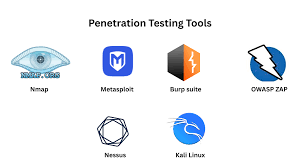
Penetration testing, or “pen testing,” is when security experts endeavor to hack into a system deliberately — with the owner’s permission — finding weak spots before the real hackers do.
How It Works in Fintech
Pen testers also rely on tools like Metasploit, Burp Suite and OWASP ZAP to replicate attacks in the wild. They attempt to break into login pages, steal session tokens and access unauthorized accounts.
For neobanks, this covers:
- Testing for mobile app (iOS & Android)
- API endpoint attacks
- Server-side vulnerabilities
- Social engineering simulations
Why It Matters
The average cost of a data breach in financial services rose to $5.9 million, according to an IBM report from 2024. Pen testing is catching the issues that cause those kinds of breaches before they occur.
At most neobanks, penetration tests are run at least two times a year. Some of them do it automatically, online.
2. Static & Dynamic Code Analysis — Reading the App’s DNA
You can’t defend what you don’t comprehend. This is when you need the code analysis tools.
Static Analysis (SAST)
Static Application Security Testing works its way through an app’s source code without executing it. It searches for known vulnerabilities, such as SQL injection hazards, insecure data storage and hardcoded passwords.
Popular tools include Checkmarx, SonarQube and Veracode.
Dynamic Analysis (DAST)
Dynamic Application Security Testing tests the app when it’s running. It monitors how the app acts in real time and catches problems that show up only when the code is out there.
SAST and DAST help the auditor assemble a full picture of your app’s security both inside and out.
| Type | When It Runs | What It Finds |
|---|---|---|
| SAST | Prior to deployment | Code-level flaws |
| DAST | At runtime | Behavior-based risks |
| IAST | During testing | Both combined |
IAST (Interactive Application Security Testing) is the latest layer, which merges all of these together in one pass.
3. Multi-Factor Authentication Verification — Proving You Are Who You Say You Are
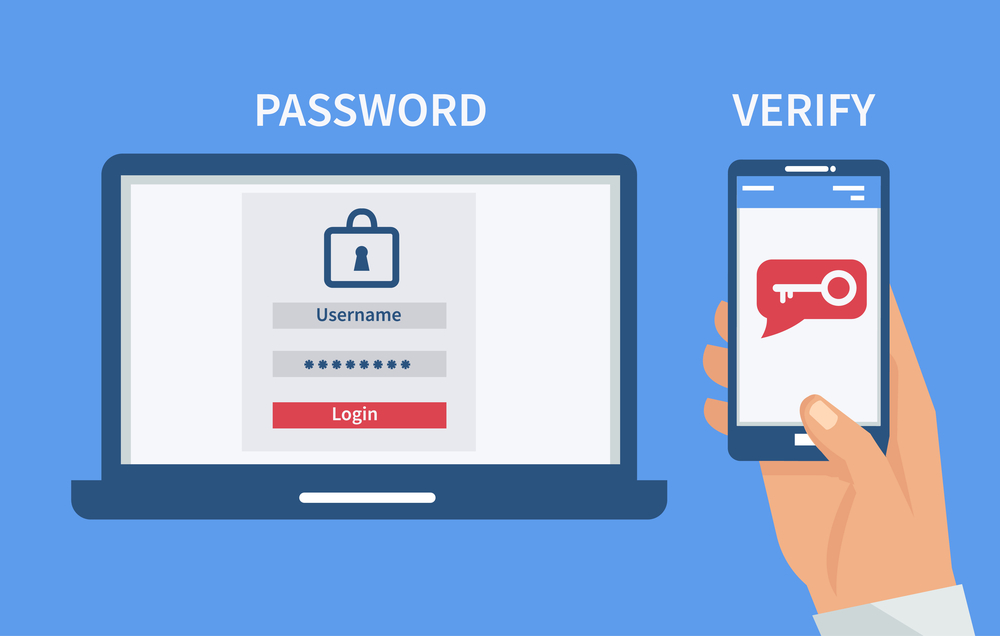
MFA is one of the most critical layers of security for any digital wallet. A lot of what security auditors spend test time on is whether MFA has been implemented properly.
What Gets Tested
Auditors check:
- Does the service require MFA for login and high-value transactions?
- Is MFA bypassable through account recovery flows?
- Are One-Time Passwords (OTPs) expiring fast enough?
- Is biometric authentication appropriately tied to device hardware?
The Weak Spots Audits Uncover
Many apps deliver one-time passwords via text messages — but such communications can be intercepted in SIM-swapping attacks. Auditors check to see whether the neobank offers stronger alternatives such as authenticator apps (Google Authenticator, Authy) or hardware keys (YubiKey).
Attackers will always find the loophole in the MFA setup, provided one exists. Auditors find it first.
4. Encryption Protocol Testing — Locking the Data Vault
Anything stored in a digital wallet — your name, account number, transaction history — must be encrypted. Security audits ensure that encryption is being done properly throughout the process.
Two Encryption Types That Come Under Audit
Encryption at rest safeguards data placed on a server or device. Auditors verify whether the app uses AES-256, which is considered the gold standard for security in data storage.
Encryption in transit secures data traveling between your phone and the bank’s servers. Auditors ensure the use of TLS 1.3, the newest and most secure transport protocol.
What Goes Wrong
Common issues auditors find:
- Obsolete encryption practices still in circulation (DES, RC4)
- Expired or misconfigured SSL certificates
- Unencrypted storage of sensitive data in app logs
- APIs communicating over HTTP instead of HTTPS
One misconfigured certificate can expose millions of users. Encryption testing ensures that never occurs.
5. API Security Testing — Protecting the App’s Central Nervous System
APIs (Application Programming Interfaces) are the invisible pipes that link your wallet app into the bank’s systems, third-party services and payment networks.
They are also among the most frequently targeted forms of attack in fintech.
What API Security Audits Are Looking For
- Broken authentication — Is it possible to view another user’s information by changing an ID in the URL?
- Rate limiting — Could attackers overwhelm the API with thousands of requests per second?
- Excessive data exposure — Does the API return too much data?
- Injection attacks — Is it possible to insert malicious code into the API?
Tools Used
Auditors leverage tools such as Postman, OWASP API Security Top 10 checklists and Apigee to test each endpoint.
In effect, the OWASP API Security Top 10 is the bible of API vulnerabilities — and it’s what auditors use to test the backend of a neobank once in production.
6. Threat Modeling Frameworks — Building a Map of Every Possible Attack
Threat modeling is a formal process in which security teams methodically brainstorm all the ways an attacker could compromise the platform.
Think of it like the game of chess. Before every play, you consider all possible plays your opponent could make.
Popular Frameworks Used in Neobank Audits
STRIDE — Identifies Spoofing, Tampering, Repudiation, Information Disclosure, Denial of Service and Elevation of Privilege threats.
PASTA — Process for Attack Simulation and Threat Analysis. This one is widely favored in financial services because it links threats to real business risks.
DREAD — Sorts threats according to Damage potential, Reproducibility, Exploitability, Affected users and Discoverability.
Why This Technology Is Underrated
Threat modeling is a term most users will never hear. But it’s also one of the most important aspects of a security audit. It helps teams establish priorities, directing resources against the threats that are most likely to inflict the greatest harm.
7. Real-Time Transaction Monitoring Systems — Watching Every Dollar Move
Here’s where AI and machine learning become heroes in the security of a neobank.
Real-time transaction monitoring systems scrutinize every transaction as it occurs. They search for patterns that appear to signal fraud, money laundering or a takeover of customer accounts.
How the AI Spots Problems
The system builds a baseline of what’s considered normal for each user. It’s learned your spending habits — where you shop, how much you spend, when you’re active.
When the system identifies something unusual — at 3 AM, say, a transaction from a foreign country is processed or your balance is suddenly emptied — it flags it for review.
What Auditors Check
During a security audit, testers verify:
- How quickly does the system identify anomalies
- Whether the false positive rates are credible
- How alerts to fraud teams flow
- Whether the system can be gamed by slow, patient attackers
Featurespace, Feedzai and NICE Actimize are among the market leaders in this area.
8. Cloud Security Auditing Tools — Securing the Infrastructure Behind the App
By and large, neobanks do not maintain their own data centers. They’re hosted on cloud platforms like AWS, Google Cloud or Microsoft Azure.
So cloud security is now an extremely important ingredient in every audit.
What Gets Examined
Auditors look at:
- IAM (Identity and Access Management) — Who gets to do what? Do admin accounts have strong controls around them?
- Misconfigured storage buckets — A surprisingly large number of breaches occur when cloud storage is mistakenly set to “public.”
- Network segmentation — Is the infrastructure effectively separated into different parts?
- Logging and monitoring — Are all access events being logged?
Key Tools
AWS Security Hub, Google Security Command Center, Prisma Cloud and Wiz are popular tools used to automate cloud security assessments.
Wiz, in particular, has become a darling of fintech for the fact that it can scan an entire cloud environment in minutes and generate a comprehensive risk report.
9. Compliance and Regulatory Scanning — Making Sure the Rules Are Followed
Security is about more than just stopping hackers. It’s also a matter of obeying the law.
Wherever they operate, neobanks are subject to a long list of regulatory requirements.
Major Regulations Affecting Neobanks
| Regulation | Region | What It Covers |
|---|---|---|
| PCI DSS | Global | Payment card data security |
| GDPR | EU | User data privacy |
| PSD2 | EU | Open banking and strong authentication |
| CCPA | California, US | Consumer data rights |
| SOC 2 | US | Service organization security controls |
How Auditors Use Scanning Tools
Compliance scanning tools such as Qualys, Rapid7 and Tenable automatically check systems against these regulatory frameworks. They produce in-depth reports that illustrate precisely where a neobank is following the rules — and where it isn’t.
For neobanks with a presence in more than one country, compliance scanning is not just convenient. It’s essential for survival.
10. Mobile Application Security Testing — Because the App IS the Bank
The mobile app is the entire banking experience for most neobank users. There isn’t a branch to walk into. There’s no ATM adorned with your bank’s logo.
That means mobile app security is a massive priority in every audit.
What Mobile Security Audits Cover
Binary analysis — Auditors decompile the app, searching for hardcoded secrets, insecure functionality or debug code left behind.
Runtime manipulation — Testers hook into the running app to manipulate its behavior, using tools such as Frida. Can they bypass the PIN screen? Can they intercept traffic?
Certificate pinning checks — Does the app verify it’s communicating with the real server, or can it be tricked by a fake one?
Jailbreak and root detection — Does the app refuse to run on compromised devices?
The OWASP Mobile Top 10
Just as with APIs, the OWASP Mobile Security Testing Guide (MSTG) provides auditors with a comprehensive checklist of everything that has to be thoroughly checked in a mobile banking app.
Any neobank worth its salt goes through this checklist before it launches — and again every time there is a significant update.
11. Behavioral Biometrics — The Hidden Layer of Security
This is probably the most interesting piece of technology on this list. And it is starting to become the norm in advanced neobank security audits.
What Are Behavioral Biometrics?
Behavioral biometrics record how you use your phone — not only who you are, but what you do.
This includes:
- How fast you type
- The way you grip your phone (angle, pressure)
- How you swipe and scroll
- Your average navigation path through the app
Why It’s So Powerful
Even if a hacker gets hold of your password and manages to get around MFA, they are unlikely to behave exactly as you do. They’ll type differently. They’ll navigate the app differently. The system notices.
Players such as BioCatch and Nuance focus on behavioral biometrics for financial services. In a security audit, testers check how accurately the system recognizes irregularities and how quickly it triggers alerts or step-up authentication.
The Privacy Balance
Auditors also ensure that behavioral data is collected and stored correctly, in line with privacy regulations. It’s a fine line between smart security and invasive surveillance — and neobanks need to walk it carefully.
How These 11 Technologies Work Together
No single piece of technology protects a neobank on its own. The real power comes from layering them together.
Think of it like a castle. You have walls (encryption), a drawbridge (MFA), guards patrolling the walls (transaction monitoring), scouts outside the walls (pen testing) and rules of engagement (compliance frameworks). Each layer protects the others.
A modern neobank security audit looks at all of these layers — not in silos, but as part of a whole. How do they interact? Do gaps in one layer get covered by another? Are there seams where two systems don’t quite connect?
This is the art of a good security audit.
If you want a deeper look at how modern banking platforms compare on safety and features, BankProfi is a great resource for researching and comparing neobanks and digital finance tools.
How Often Should Neobanks Run Security Audits?
This is a question auditors receive regularly.
The brief answer: more frequently than some folks realize.
| Audit Type | Recommended Frequency |
|---|---|
| Penetration Testing | At least every 6 months |
| Code Review | Every major release |
| Compliance Scanning | Quarterly |
| Cloud Security Review | Monthly automated, annual manual |
| Threat Modeling | Annually or after major changes |
Continuous monitoring tools run 24/7. But full, deep audits should regularly occur on a structured schedule.
Red Flags That a Neobank Takes Security Seriously
As a user, there are signs you can look for:
- The app supports authenticator apps or hardware keys — not just SMS codes
- The privacy policy clearly describes how your personal information is protected
- The neobank has published transparency reports or security certifications (SOC 2, ISO 27001)
- Bug bounty programs exist — meaning they pay researchers to find vulnerabilities
- The app has biometric login features that are linked with your device
If a neobank can’t satisfactorily address the most fundamental questions about its security posture, that’s an issue.
FAQs About Neobank & Digital Wallet Security Audits
Q: Are neobanks safe to use? In general, yes — particularly well-established companies that are subject to routine security audits and hold legitimate banking licenses or partner with licensed banks. Major players use the technologies covered in this article.
Q: What is unique about a neobank security audit compared with a standard cybersecurity audit? Neobank audits are specialized. They cover financial regulations (like PCI DSS and PSD2), mobile-first architectures, real-time payment systems and open banking APIs — things that a generic IT audit wouldn’t get into.
Q: Who audits neobanks for security? Typically a combination of internal security teams and third-party auditing firms. Companies like Trustwave, NCC Group and Bishop Fox specialize in financial services security audits.
Q: Can I trust a neobank that isn’t fully licensed? It varies by country and type of organization. Some operate under e-money licenses or do business in partnership with chartered banks. But any neobank that isn’t subject to some kind of regulatory oversight is a significant risk — stay away.
Q: What should I do if I think my digital wallet has been hacked? Freeze your account immediately through the app. Contact the neobank’s support team. Reset your password and MFA settings. Report transactions that seem suspicious so they can be investigated. The majority of neobanks have fraud protection in place that would compensate you for any unauthorized charges.
Q: Has a security audit ever failed? Yes — and that’s the point. Better to find vulnerabilities in a controlled audit than have them found by real attackers. A failed audit results in fixes. A successful attack is a catastrophe.
Conclusion: Security Is the Product
This is the reality of neobanks and digital wallets: if customers don’t feel secure with them, they won’t use them. And trust is based entirely on security.
The 11 technologies featured in this article — ranging from penetration testing and code analysis to behavioral biometrics and cloud security tools — are not extras. They are the foundation. They are the difference between a digital wallet that people can trust and one that ends up in tomorrow’s headline.
For neobanks, investing in strict security audits isn’t just a legal requirement. It’s a business strategy. It’s a commitment to users that their money, their data and their trust are taken seriously.
And for users? Understanding these technologies can help you make smarter decisions about where you park your money in a digital-first world.
Stay curious. Stay secure.