

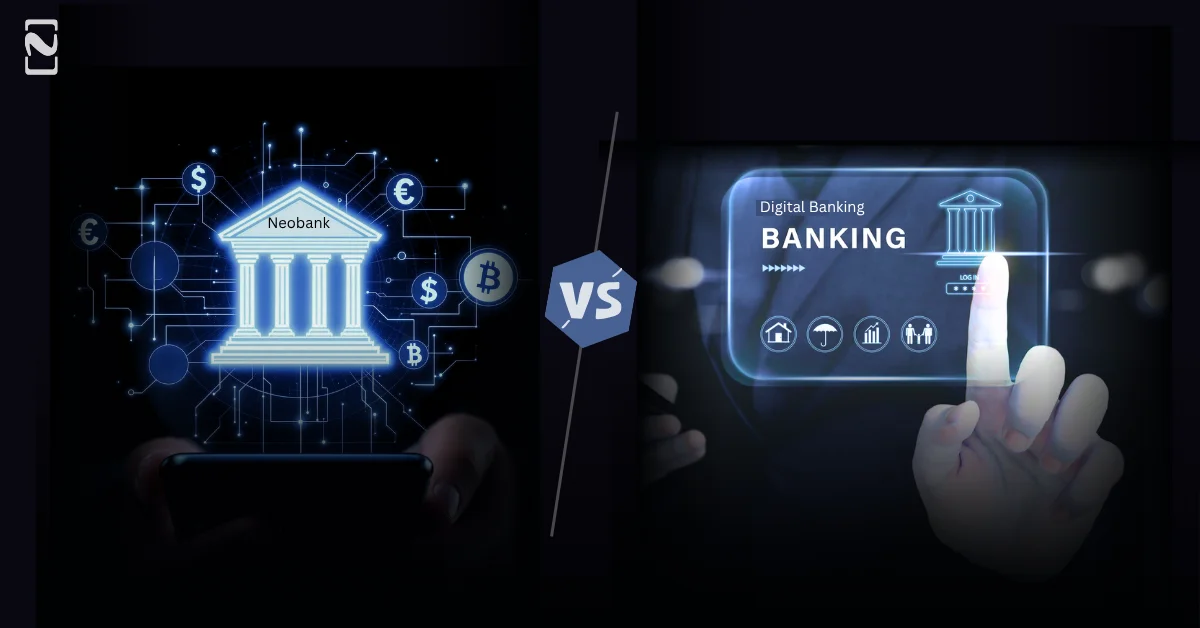
I still remember the first time I tried to open a neobank account. It took me about four minutes. No branch visit, no paperwork pile, no waiting three business days for “verification.” Just my phone, my face, and a few taps.
But here’s the thing nobody tells you upfront — behind that four-minute experience is an absolutely massive compliance machine working overtime. And that machine is changing fast.
I’ve spent the last couple of years closely following the neobank space — as someone who uses multiple digital wallets, tests fintech apps regularly, and has talked to compliance folks at a few startups. What I’ve noticed is that compliance isn’t just a legal checkbox anymore. It’s becoming a competitive advantage. The neobanks that get it right are pulling ahead. The ones that treat it like a burden are quietly disappearing.
So let’s talk about the seven trends that are genuinely reshaping how neobanks handle compliance — and why you should care even if you’re just a regular user trying to keep your money safe.
1. AI-Powered KYC Is Replacing the Old “Upload Your ID” Shuffle
Remember when verifying your identity meant uploading a blurry photo of your passport and then waiting 48 hours? Those days are mostly gone now — and honestly, good riddance.
Modern neobanks are using AI-driven KYC (Know Your Customer) systems that can verify a user’s identity in real time. We’re talking facial recognition matched against government databases, liveness detection to prevent spoofing, and document authentication that checks for tampering.
I tested this personally when I signed up for a new neobank account last year. The process involved a short video selfie, and the system flagged a lighting inconsistency in my background before approving me. It felt slightly intrusive — but also weirdly impressive.
The trend here isn’t just speed. It’s accuracy. These AI systems are catching fraud patterns that human reviewers would miss — like when someone submits a document with fonts that don’t match the issuing country’s standards.
Why this matters for you: Faster onboarding AND better fraud prevention. If your neobank still makes you wait days for ID verification, they’re behind the curve.
Common mistake neobanks make: Over-relying on AI without human escalation paths. When the AI rejects a legitimate user (it happens), there needs to be a real person available to fix it. Some neobanks don’t have this — and users end up locked out of their own accounts with no recourse.
2. Real-Time Transaction Monitoring Has Become the New Normal
This one surprised me when I first dug into it. Traditional banks typically reviewed suspicious transactions in batches — sometimes daily, sometimes weekly. Neobanks are now doing this in milliseconds.
Real-time transaction monitoring means every time you send money, receive a payment, or make a purchase, an automated system is scoring that transaction for risk. Is this amount unusual for your account? Is this merchant on a watchlist? Does this pattern match known money laundering behavior?
One neobank I looked into uses over 400 behavioral signals to assess each transaction. Four hundred. That’s not just “did this person send more than $10,000” — it includes things like time of day, device location, merchant category, and how the amount compares to your last 30 days of behavior.
Here’s a practical scenario: A friend of mine got flagged when she sent a large rent payment from a new device while traveling. Her account was temporarily frozen within 90 seconds. Annoying in the moment? Yes. But the same system would have caught it if someone had stolen her phone and tried to drain her account.
| Monitoring Approach | Speed | Accuracy | User Disruption |
|---|---|---|---|
| Traditional Batch Review | Hours/Days | Moderate | Low |
| Rule-Based Real-Time | Seconds | Moderate-High | Moderate |
| AI-Powered Real-Time | Milliseconds | High | Varies |
The trend is clearly toward AI-powered real-time — but it comes with the challenge of reducing false positives, which disrupt genuine users.
3. Open Banking Compliance Is Creating New Regulatory Headaches (and Opportunities)
Open banking — where you can share your financial data securely between different apps and institutions — is forcing neobanks to completely rethink their compliance frameworks.
In the EU, PSD2 has been pushing this for years. In the UK, the Open Banking Implementation Entity set standards that most banks now follow. And while countries like Pakistan and the UAE are earlier in this journey, the direction is clear globally.
The compliance challenge here is layered. Neobanks now have to:
- Verify that third-party apps requesting your data are authorized
- Ensure data is shared only with your explicit consent
- Maintain audit trails of every data-sharing event
- Comply with both banking regulations AND data privacy laws simultaneously
What I find fascinating is how this has pushed neobanks to actually improve their internal data hygiene. When you have to document every piece of data you share and why, you get really serious about knowing what data you actually have.
For a deeper look at how security audits connect to these compliance obligations, 7 Must-Do Security Audits of Neobanks & Digital Wallets You Should Never Ignore covers some of the specific checkpoints worth knowing about.
Practical tip: If you use a budgeting app connected to your neobank, go into your neobank’s settings and check which third-party connections are active. I bet most people have at least one they’ve forgotten about.
4. AML Programs Are Getting Smarter — and More Expensive

Anti-Money Laundering compliance used to be largely about checking names against sanctions lists. Now it’s evolved into a sophisticated, multi-layered discipline that’s consuming a significant chunk of neobanks’ operational budgets.
Here’s what modern AML looks like at a serious neobank:
Step 1 — Customer Risk Scoring at Onboarding Every new user gets a risk score based on their profile, location, and the use case they’ve declared for the account.
Step 2 — Ongoing Due Diligence It doesn’t stop at onboarding. If your behavior changes significantly — new income source, different geographic footprint, unusual transaction volume — your risk score updates.
Step 3 — Enhanced Due Diligence for High-Risk Users If you’re a politically exposed person (PEP) or you come from a high-risk jurisdiction, neobanks are required to apply additional scrutiny. This might mean requesting source-of-funds documentation.
Step 4 — Suspicious Activity Reporting When patterns trigger alerts that humans can’t dismiss, a Suspicious Activity Report (SAR) gets filed with the relevant financial intelligence unit — quietly, without your knowledge.
The interesting trend here is that smaller neobanks are increasingly relying on compliance-as-a-service platforms (like ComplyAdvantage, Sardine, or Unit21) rather than building this in-house. It’s leveling the playing field but also creating a new dependency.
Mistake I’ve seen: Neobanks that implement AML purely as a “check the box” exercise often end up either over-flagging innocent users or missing actual bad actors because their rules aren’t calibrated properly.
5. Embedded Finance Is Forcing Compliance Into New Territories
This is the trend that I think most people haven’t fully wrapped their heads around yet.
Embedded finance means financial products — bank accounts, loans, insurance, investments — are being integrated directly into non-financial apps. Your ride-hailing app offers you a wallet. Your e-commerce platform gives you a buy-now-pay-later option. Your payroll software comes with an instant-pay feature.
This creates a fascinating compliance puzzle: Who’s actually responsible for compliance when a fintech embeds banking services from a licensed neobank into their app?
The answer is usually “everyone involved, to varying degrees” — which is legally complicated and operationally messy.
Neobanks operating as Banking-as-a-Service (BaaS) providers have to perform compliance oversight not just on their own operations but on every partner using their infrastructure. That means auditing your fintech partners, monitoring their customer bases, and being responsible for violations that happen in someone else’s app.
I’ve spoken to a compliance officer at a mid-sized neobank who described this as “trying to be a regulator while also running a business.” Not easy.
The regulatory response to this is tightening up. The OCC, FDIC, and Fed in the US have all issued guidance in recent years making clear that the licensed bank — not just the fintech — bears ultimate regulatory responsibility.
For those interested in how audits play into this ecosystem, 10 Smart Neobank Digital Wallet Security Audits Tips for Dummies walks through some foundational checks that apply whether you’re the platform or the user.
6. Data Privacy Compliance Has Become Inseparable from Financial Compliance
Five years ago, a neobank’s legal team handled banking regulations, and a separate (often smaller) team handled data privacy. Today, those two worlds have fully collided.
The reason is simple: the core product of a neobank is data. Every transaction, every login, every behavioral pattern — it’s all data. And increasingly, regulators in most major markets are treating the mishandling of this data as a financial compliance violation, not just a privacy issue.
GDPR in Europe. CCPA in California. PDPA in Thailand. The Personal Data Protection Act in Pakistan (still evolving). These frameworks are now directly intersecting with banking regulations, creating double-layered obligations.
Here’s a real example of how this plays out:
A neobank wants to use a customer’s transaction data to offer them a personalized loan product. Sounds simple. But to do this compliantly, they need to:
- Have a lawful basis for processing that data under privacy law
- Ensure the credit decision model doesn’t inadvertently discriminate (financial regulation)
- Store the model’s outputs in a way that can be explained to the customer (explainability requirement under both privacy AND lending law in some markets)
- Allow the customer to opt out without losing core banking services
That’s four different regulatory dimensions from one business decision.
What smart neobanks are doing: Building “privacy by design” into their product development process from day one — not bolting privacy compliance on as an afterthought.
7. Regulatory Sandboxes Are Shaping Compliance Before Products Even Launch
This is perhaps the most strategically significant trend, and it’s one that gets surprisingly little attention outside of fintech circles.
A regulatory sandbox is a program run by a financial regulator that lets fintech companies test new products and services under relaxed regulatory requirements — but with close oversight. The UK’s FCA sandbox is probably the most famous example. The UAE’s ADGM and DIFC have their own. Even the State Bank of Pakistan has been developing sandbox frameworks.
What’s happening now is that compliance is being baked into neobank products before they ever reach the public — because companies are working directly with regulators to understand the rules as their products take shape.
This is a meaningful shift from the old model, where startups would launch fast, figure out compliance later, and then either adapt or get shut down.
The practical impact:
- Products are more likely to survive regulatory scrutiny long-term
- Compliance costs are lower because you’re not retrofitting
- There’s more trust between regulators and neobanks, which can lead to lighter-touch oversight over time
I think this is actually the trend with the most long-term significance for users, because it means the products reaching your phone have already been stress-tested against real regulatory requirements.
The downside: Sandboxes can slow innovation if the process is bureaucratic. Not every market has them, and the quality varies enormously.
Common Mistakes Neobanks Make With Compliance (And What You Can Learn From Them)
Since I’ve been talking about compliance trends, it’s worth addressing some of the patterns I’ve seen go wrong — because these directly affect you as a user.
Treating compliance as a one-time exercise. Regulations change. A neobank that was fully compliant in 2022 might have gaps in 2026 if they haven’t kept pace. Ask yourself: when did my neobank last update their terms of service? If it was years ago, that’s potentially a red flag.
Underinvesting in compliance staff. AI tools are incredible, but they need human oversight. Neobanks that run skeleton compliance teams to cut costs tend to have more user-facing problems — frozen accounts, delayed resolutions, poor escalation paths.
Ignoring cross-border complexity. If your neobank operates across multiple markets, compliance in one country doesn’t automatically satisfy requirements in another. Some neobanks learn this the hard way when they expand.
For users who want to do their own due diligence on the neobanks they use, 9 Digital Wallet & Neobank Security Audits to Protect Your Money is a practical starting point for personal-level security checks that complement institutional compliance.
A Quick Reference: The 7 Trends at a Glance
| # | Trend | What’s Driving It | User Impact |
|---|---|---|---|
| 1 | AI-Powered KYC | Fraud sophistication, regulatory pressure | Faster onboarding, fewer fake accounts |
| 2 | Real-Time Transaction Monitoring | AML requirements, fraud losses | Quicker fraud detection, occasional false positives |
| 3 | Open Banking Compliance | PSD2, data sharing regulations | Better app integrations, stronger data rights |
| 4 | Advanced AML Programs | FATF guidance, cross-border risks | Safer platform, potential account friction |
| 5 | Embedded Finance Oversight | BaaS growth, regulator scrutiny | More financial options in apps you already use |
| 6 | Data Privacy × Financial Compliance | GDPR, CCPA, growing global privacy laws | More control over your data |
| 7 | Regulatory Sandboxes | Proactive regulation, fintech maturation | Better-designed, more durable products |
Final Thoughts
Here’s what I keep coming back to: compliance used to be the thing that slowed neobanks down. Now it’s increasingly the thing that separates the serious players from the flash-in-the-pan startups.
The neobanks investing in real-time monitoring, AI-driven KYC, privacy-first architectures, and sandbox engagement aren’t just ticking boxes. They’re building infrastructure that makes them harder to disrupt, easier to trust, and more capable of scaling into new markets.
As a user, you can actually use this as a filter. Look at whether your neobank publishes transparency reports. Check if they’re licensed (not just registered) in the markets they operate in. See if they’ve participated in any regulatory sandbox programs. These aren’t just marketing signals — they tell you whether the compliance machine behind your four-minute account opening is actually working properly.
And if you want to go deeper on protecting yourself specifically — not just trusting that your neobank has it covered — 11 Best Neobank & Digital Wallet Security Audits for Maximum Safety gives you a solid checklist to work through at your own level.
The compliance landscape is changing fast. But honestly? It’s changing in a direction that’s mostly good for people who are paying attention.