
You locked the front door. Good.
But what about that side window you left open three years ago? That spare key you handed over to an app you didn’t even have a use for? The security system that went offline because you never updated it?
That’s what your neobank or digital wallet looks like to a hacker today — a house that has one door locked and six more wide open.
Most people breeze through the basics. They set a password. Perhaps they enable two-factor authentication. Now they feel they are out of the crosshairs, and let it go.
Hackers are counting on that.
The reality is that basic security hygiene amounts to the starting line. The advent of digital banking — and it’s growing rapidly — has given rise to cybercriminals that are better, more patient, and more agile. They’re no longer simply guessing passwords. They’re abusing APIs, stealing sessions, manipulating customer support teams and attacking seams between connected services.
According to the Federal Trade Commission, fraud losses in the US exceeded $10 billion in 2023, and digital payment fraud was among the fastest-growing categories.
That number is rising, not falling.
This guide is for those who want to move beyond the basics. Seven advanced neobank and digital wallet security audits that most users wouldn’t even consider. Each targets a real, documented attack method. Each provides you with an actual step to take right now.
Let’s get into it.
Who This Guide Is For — And Why Now Matters
You don’t have to be a cybersecurity expert to keep up with these audits. But you do have to care about your money.
This is a guide for users of neobanks and digital wallets, freelancers being paid through apps, small business owners, and anyone whose primary way of banking is on a phone.
Neobanks like Chime, Revolut, Monzo and Wise operate a different business model compared with traditional banks. They move fast. They connect to dozens of third-party services. Their entire infrastructure exists in the cloud, talking to the outside world all the time through APIs.
That’s powerful. It’s also a vastly larger attack surface than a traditional branch bank.
Digital wallets like PayPal, Venmo, Cash App, Apple Pay and Google Pay are even more deeply entwined with daily life. They’re a staple at coffee shops, for splitting dinner tabs, for receiving paychecks and for keeping card credentials in one place.
A single compromised account can cascade into multiple financial losses within minutes.
These seven audits are your defense against that.
The Threat Landscape: What Hackers Are Really Doing in 2025
Before you audit anything, it helps to know what you’re auditing against.
Here’s a look at the most prevalent attack methods being used to target neobank and digital wallet users:
| Attack Method | How It Works | How Common |
|---|---|---|
| Credential stuffing | Bots test leaked username/password combos across multiple sites | Very common |
| SIM swapping | Hacker convinces your carrier to move your number to their SIM | Growing rapidly |
| Social engineering | Hacker calls customer support pretending to be you | Increasingly common |
| API abuse | Exploiting vulnerabilities in app-to-app communication | Rising |
| Phishing (mobile) | Fake texts or emails that look like they’re from your bank | Extremely common |
| Account takeover via recovery | Hacker resets an account using a recovery email or phone | Common |
| Malicious app permissions | An app you downloaded quietly reads data from your financial app | Underreported |
One or more of these methods are directly targeted in each of the seven audits below.
Security Audit #1 — Map Every Entry Point Into Your Account
Most users think of their account as having one door — the login screen. In reality, it has many.
Count Your Connected Services
Open your neobank or digital wallet app. Go to settings. Look for connected apps, linked accounts or API access. Write down everything you see.
Each connected service is a potential attack surface. That includes:
- Budgeting apps like Mint or YNAB
- Crypto exchanges you linked once
- E-commerce platforms that saved your wallet
- Payroll or invoicing tools
- Browser extensions that can read your payment details
Now ask yourself honestly: do you still use all of these? If the answer is no, cut off access right away.
Check OAuth Permissions Carefully
OAuth is the system that lets you sign in to third-party apps using your main account. It’s convenient. It’s also a major security risk if not properly managed.
When you give an app OAuth access, it gets a token. That token can sometimes still be used to access your account even after you have changed your password. Some tokens simply never expire unless you manually deactivate them.
Step through each of your OAuth permissions. For each connected app, ask:
- Is this app still active and reputable?
- Do I still use it regularly?
- Does it really need the level of access it has?
Revoke anything that fails this check.
Active Sessions: The Attack Surface You May Forget
Your active sessions list displays every device and browser that has recently been used to log into your account. This is one of the most overlooked security checks in existence.
Go into settings. Look for “Active Sessions” or “Login Activity.” Review every single entry. Look for:
- Devices you no longer own
- Locations that don’t match your recent activity
- Browser types you don’t use
Log out of everything unfamiliar. Then turn on notifications for new logins so you get alerted the moment someone new tries to get in.
Security Audit #2 — Run a Full Identity Exposure Check
You can’t secure what you don’t know has been compromised. This audit is your chance to see exactly what personal data of yours is already drifting around on the internet.
Start With Your Email Address
Go to haveibeenpwned.com. Enter every email address you have ever used to sign up for financial services.
The site will show you which data breaches have included your email. It tells you what data was exposed in each breach — passwords, phone numbers, addresses, and even security question answers.
If your email has been part of a breach, assume that password is compromised. Change it everywhere you’ve used it.
Check Your Phone Number Too
Phone numbers are now often included in breach databases. Tools like DeleteMe and Privacy Bee can also reveal how widely your personal information — name, address, phone, email — has been spread across data broker sites.
Data brokers sell this information to anyone who pays. That includes social engineers who call your bank’s customer support line and pose as you.
Opt out of as many data broker databases as you can. It’s tedious but worthwhile.
Search Your Own Name Strategically
Try searching your full name combined with your city, email address or phone number. See what comes up. If public databases or people-search sites are displaying your home address and contact information, that’s the exact information a social engineer would use to pass a customer support security check.
The less publicly available your personal details are, the harder it is for a criminal to impersonate you.
Security Audit #3 — Stress-Test Your Authentication Stack
Two-factor authentication is not a single thing. It’s a category — and the quality within that category varies enormously.
Grade Your Current 2FA Setup
Use this grading scale to evaluate where you stand:
| 2FA Type | Grade | Reason |
|---|---|---|
| No 2FA | F | Password alone is not enough |
| SMS code | C | Vulnerable to SIM swapping |
| Email code | C+ | Only as secure as your email account |
| Authenticator app (TOTP) | B+ | Strong, offline code generation |
| Passkeys | A | Phishing-resistant, device-bound |
| Hardware key (YubiKey) | A+ | Nearly impossible to compromise remotely |
If you’re currently at C or below, that’s your first fix.
Switch to an Authenticator App Today
Google Authenticator, Authy and Microsoft Authenticator all generate time-based one-time passwords (TOTP) locally on your device. They don’t rely on your phone number. They can’t be intercepted by a SIM swap.
Go to your neobank or wallet security settings. Find the 2FA options. Switch from SMS to an authenticator app. It takes about five minutes.
Make sure to save your backup codes in a secure location — ideally in a password manager, or printed and stored somewhere safe offline.
Set Up Login Alerts as a Secondary Layer
Even with strong 2FA, you want to know the moment anyone attempts to log into your account. Enable email or push notifications for:
- Successful logins from new devices
- Failed login attempts
- Password change requests
- Recovery email or phone number changes
These alerts don’t stop an attack — but they can tell you one is happening in real time, giving you the window to act before serious damage is done.
For more guidance on securing your digital finances, visit BankProfi — a dedicated resource covering neobank tips, digital wallet safety, and smarter online banking habits.
Security Audit #4 — Lock Down Your Account Recovery Options
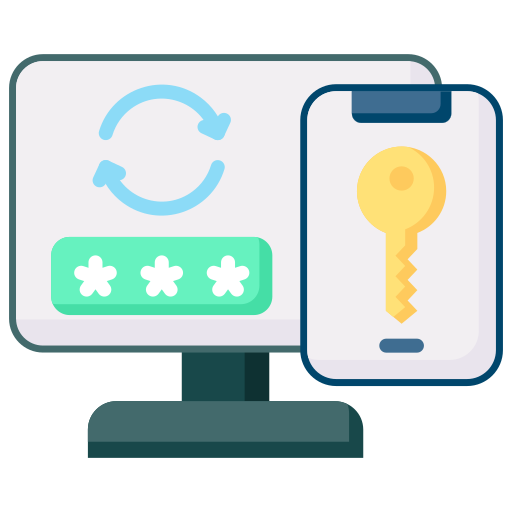
Here’s an uncomfortable truth: your account recovery options are often the weakest link in your entire security setup.
Password resets, identity verification calls, recovery emails — these were designed to help you get back into your account when you’re locked out. But they can also be used by an attacker to lock you out and get themselves in.
Audit Your Recovery Email
Your recovery email is essentially a master key. If someone controls it, they can reset your neobank password and take over your account.
Check that your recovery email:
- Has a strong, unique password
- Has its own authenticator-app-based 2FA enabled
- Is not the same email you use for everything else
- Has not appeared in any known data breaches
Consider creating a dedicated email address solely for account recovery purposes — one that you never use for anything else and don’t share with anyone.
The SIM Swap Vulnerability and How to Fight It
SIM swapping is one of the most devastating attacks targeting digital wallet users. A criminal calls your mobile carrier, pretends to be you, and convinces a customer service rep to transfer your phone number to their SIM card. Once they have your number, they can receive your SMS verification codes and reset almost any account linked to that phone.
Here’s how to make SIM swapping much harder:
- Call your carrier and add a port-out PIN or account passcode
- Request a “do not port” restriction on your number
- Switch to an eSIM if your carrier offers it — harder to physically swap
- Move away from SMS-based 2FA for financial accounts
Social Engineering: When the Hacker Calls Your Bank
Sophisticated attackers don’t always hack systems. Sometimes they simply call customer support and pretend to be you.
They use publicly available information about you — found on social media and data broker sites — to answer security questions. Then they request a password reset or an account action on your behalf.
The defense here is layered:
- Use obscure, fake answers for security questions (and store them in your password manager)
- Enable the highest security verification level your neobank offers
- Reduce the amount of personal information about you that is publicly available online
Security Audit #5 — Deep-Dive Your Device and Network Security
Your account lives on your phone. Your phone lives on networks. Both need to be secure.
Run a Full Mobile Security Assessment
Work through this checklist for every device you use to access your neobank or wallet:
| Check | iPhone | Android |
|---|---|---|
| OS fully updated | Settings → General → Software Update | Settings → System → Update |
| App fully updated | App Store → Updates | Play Store → Updates |
| Screen lock enabled (PIN/biometric) | ✓ Required | ✓ Required |
| No sideloaded apps | N/A | Check Unknown Sources setting |
| No jailbreak/root | Avoid | Avoid |
| Mobile security app installed | Optional | Recommended |
On Android, pay special attention to app permissions. Go into Settings → Apps and review permissions for every app. Any app that has access to SMS, contacts or storage that doesn’t strictly need it should be flagged.
Home Network Security Check
Your home Wi-Fi is more exposed than most people realize.
- Log into your router admin panel (usually 192.168.1.1 or 192.168.0.1)
- Change the default admin username and password if you haven’t already
- Make sure you’re using WPA3 or WPA2 encryption — never WEP
- Check for unfamiliar devices connected to your network
- Enable your router’s firewall if it isn’t already on
Also make sure your router firmware is up to date. Router vulnerabilities are a favorite entry point for sophisticated attackers targeting home users.
VPN Use: When It Matters and When It Doesn’t
A VPN encrypts your internet traffic. It’s essential on public Wi-Fi. On your secure home network, it’s less critical — but still useful for general privacy.
For financial apps specifically: never access your neobank or digital wallet on public Wi-Fi without an active VPN. Period.
Reliable paid options include ProtonVPN, Mullvad and ExpressVPN. Avoid free VPNs — the business model typically involves selling your browsing data, which defeats the purpose entirely.
Security Audit #6 — Review Your Financial Footprint and Permissions Map
This audit is about pulling back and looking at the big picture. Where does your financial data live? Who has access to it? What could go wrong if any single point was compromised?
Build a Personal Financial Permissions Map
Grab a piece of paper or open a notes app. List every service that has access to your neobank or digital wallet. Next to each one, write:
- What level of access does it have? (Read only? Can it initiate transfers?)
- When did you last actually use it?
- What happens to your financial data if this service gets breached?
This exercise is eye-opening. Most people discover they have 10 to 20 services with some level of access to their financial accounts — many of which they’ve completely forgotten about.
Audit Your Saved Payment Methods Everywhere
Your card details and wallet credentials are likely saved in dozens of places — Amazon, Uber, food delivery apps, subscription services, online shops, and more.
Every one of those saved payment methods is a potential exposure point.
Go through your most-used online accounts and review saved payment methods. Remove any cards or accounts that are no longer active. Remove saved payment info from sites you no longer use regularly.
This won’t just improve security. It’ll also help you catch forgotten subscriptions draining money every month.
Check What Data Your Neobank App Shares
Many neobanks use third-party analytics, marketing and support tools within their own apps. Your transaction data, login behavior and device information may be shared with these services.
Go into your neobank app’s privacy settings. Look for options related to data sharing, analytics or marketing preferences. Opt out of anything that isn’t strictly necessary for the app to function.
Security Audit #7 — Set Up Your Rapid Response System
The final audit isn’t about prevention. It’s about what happens when something goes wrong despite everything else you’ve done.
Speed is everything when your account is compromised. The faster you detect and respond, the less damage gets done.
Configure Your Full Alert Stack
Here is the complete alert setup every neobank and digital wallet user should have active:
| Alert Type | Where to Enable | Priority |
|---|---|---|
| Every transaction (any amount) | Neobank/wallet app | Critical |
| Large transaction threshold | Neobank/wallet app | Critical |
| New device login | Neobank/wallet app | Critical |
| Failed login attempts | Neobank/wallet app | High |
| Password/email change | Neobank/wallet app | Critical |
| New payee added | Neobank/wallet app | High |
| Data breach notification | haveibeenpwned.com alerts | High |
| Credit report change | Credit monitoring service | High |
You should enable every single one of these. Not most of them. All of them.
Set Your Financial Safety Limits
Most neobanks provide tools to cap daily transactions, limit transfer amounts and block international payments. These limits don’t just protect you from hackers — they also protect you from your own mistakes.
Recommended baseline limits:
- Daily spending limit: set based on your actual typical daily spend plus a reasonable buffer
- Single transfer limit: cap at the largest transfer you would realistically make in a single day
- International transactions: disable entirely if you rarely travel abroad
- Card freeze feature: know exactly how to use it before you need it
Write Your Own Breach Response Plan
This sounds dramatic. It’s not. It’s just a simple list you keep somewhere accessible:
- Freeze account or card via app
- Change your password immediately from a clean device
- Call fraud support line (save the number now, not after an incident)
- Contact your bank if a linked account is affected
- File a report with the FTC at reportfraud.ftc.gov
- Check your credit report for any unauthorized new accounts
Having this written down means you act fast and clearly during a stressful moment — instead of panicking and losing precious minutes.
Expert-Level Security Audit Master Checklist
Run through this at least every six months. After any security incident, run it immediately.
Entry Points
- [ ] All connected apps and OAuth permissions reviewed
- [ ] Unused third-party access revoked
- [ ] Active sessions cleared of unrecognized devices
Identity Exposure
- [ ] All emails checked on haveibeenpwned.com
- [ ] Phone number and personal data reviewed on data broker sites
- [ ] Personal information minimized on public platforms
Authentication
- [ ] 2FA upgraded to authenticator app or passkey
- [ ] Backup codes stored securely offline
- [ ] Login alerts fully enabled
Account Recovery
- [ ] Recovery email secured with its own strong 2FA
- [ ] Carrier SIM swap protection enabled
- [ ] Security question answers are fake and stored in password manager
Device and Network
- [ ] All devices and OS versions up to date
- [ ] Home router firmware updated and properly configured
- [ ] VPN active on any public Wi-Fi usage
Financial Footprint
- [ ] Personal financial permissions map created and reviewed
- [ ] Saved payment methods audited across platforms
- [ ] Neobank app data sharing settings reviewed
Rapid Response
- [ ] All alerts fully configured
- [ ] Spending and transfer limits set
- [ ] Breach response plan written and accessible
FAQs — Neobank and Digital Wallet Security Audits
Q: How frequently should I run these advanced security audits? Every six months is the minimum. Run an immediate audit after a data breach notification, a device change, a suspicious transaction, or any time you have shared account access with someone else.
Q: Are neobanks less secure than traditional banks? Not necessarily less secure — but exposed in a different way. Traditional banks have decades of infrastructure and strict regulatory oversight. Neobanks move faster and integrate more broadly, which opens up a larger attack surface. Your own security habits matter enormously either way.
Q: What’s the single most impactful thing I can do right now? Switch your 2FA from SMS to an authenticator app. It takes five minutes and closes off one of the most prevalent attack vectors targeting neobank users today.
Q: Can someone really impersonate me when calling my bank’s customer support? Yes. Social engineering attacks targeting customer support lines are well documented and more common than most people realize. Using fake answers for security questions — stored in your password manager — is a highly effective defense.
Q: Are budgeting apps that link to my neobank safe to use? It can be, but only if you actively manage those connections. Check what access each app has, revoke access to apps you no longer use, and make sure the app itself has a strong security reputation before connecting it.
Q: What do I do if I find an unauthorized transaction? Freeze your card or account immediately via the app. Report it using the in-app dispute or fraud reporting feature. Call the fraud support line. Don’t wait — speed is critical. Document everything.
Q: Do VPNs actually protect my financial data? On public Wi-Fi, yes — significantly. A VPN encrypts your connection so that anyone trying to intercept your traffic on that network can’t read it. On a secure private network, the benefit is smaller but still meaningful for general privacy.
Q: What happens to my money if my neobank itself gets hacked? The majority of reputable neobanks are FDIC-insured up to $250,000 per depositor in the US. This means your deposits are protected even if the neobank fails or is compromised at the institutional level. Always confirm your neobank’s insurance status before depositing significant funds.
The Mindset Shift That Changes Everything
Here’s the most important thing this guide can leave you with.
Security is not a destination. It’s a practice.
Every time you install a new app, connect a new service, buy a new phone or travel to a new country, your security profile changes. The audits you ran six months ago may no longer reflect your current situation.
Hackers don’t take breaks. They’re not waiting for you to feel complacent — they’re counting on it.
But here’s the other side of that: the vast majority of successful account compromises happen because of basic, preventable gaps. Reused passwords. SMS-based 2FA. Old sessions left open. Forgotten connected apps.
Run these seven advanced neobank and digital wallet security audits. Check everything. Fix what’s broken. Set up your alerts. Build your response plan.
You don’t have to be unhackable. You just have to be harder to hack than the version of yourself who never ran these checks.
That’s a gap worth closing today.