

A friend of mine joined a fintech startup a couple of years back — super excited, great product, solid funding. Six months in, they hit their first regulatory audit. What followed was three weeks of absolute chaos: missing documentation, inconsistent transaction logs, a compliance gap nobody had noticed, and a very stressed engineering team pulling all-nighters to patch things together before the deadline.
They survived it. But barely.
And here’s the thing — their situation wasn’t unique. Almost every neobank startup I’ve spoken to or read about goes through some version of that same scramble. The product gets built fast, the users start coming in, and then the audit shows up like an uninvited guest who notices every crack in the walls.
So let’s talk about the four audit challenges that genuinely trip up startup banks — not in a theoretical way, but the way they actually play out when you’re in the middle of building something real.
1. Keeping Up With Regulatory Compliance Across Multiple Jurisdictions
This one sneaks up on neobanks faster than almost anything else.
When you’re a startup operating in one country, compliance feels manageable. You map out your local requirements — whether that’s FCA regulations in the UK, FinCEN rules in the US, or RBI guidelines in India — and you build around them. But the moment you start expanding, even just into two or three markets, the compliance picture multiplies in ways that are genuinely hard to plan for.
Different countries have different rules around KYC (Know Your Customer), AML (Anti-Money Laundering), data residency, transaction reporting thresholds, and customer dispute resolution. What’s compliant in Germany might not meet the requirements in Singapore. And auditors in each jurisdiction are checking their own rulebook, not yours.
The challenge isn’t just understanding the rules. It’s documenting that you followed them — at every step, for every transaction, for every customer interaction.
What typically goes wrong at startup neobanks:
- Compliance policies get written once at launch and never updated as regulations evolve
- Teams assume their payment processor or banking-as-a-service partner handles compliance on their behalf (they don’t, not fully)
- There’s no single owner of the compliance function — it gets spread across legal, engineering, and operations with no clear accountability
A more workable approach:
Step 1: Map every market you operate in to its specific regulatory requirements. Build a living document — not a PDF that lives on someone’s desktop, but something in Notion, Confluence, or a dedicated GRC (Governance, Risk, Compliance) platform like Vanta or Drata.
Step 2: Assign a compliance owner for each jurisdiction. This doesn’t have to be a full-time hire initially — it can be a designated point person who owns the relationship with local regulators and tracks regulatory updates.
Step 3: Set calendar reminders tied to regulatory review cycles. Most financial regulators publish updated guidance on predictable schedules. Get ahead of it.
Step 4: Run internal pre-audits quarterly. Don’t wait for the external auditor to find gaps — find them yourself first.
The neobanks that handle this well tend to treat compliance infrastructure the same way they treat engineering infrastructure: something that needs ongoing investment, not a one-time setup.
| Jurisdiction | Key Compliance Framework | Common Audit Focus |
|---|---|---|
| United States | BSA / FinCEN / CFPB | AML programs, SAR filing, UDAP |
| European Union | PSD2 / GDPR / EBA | Strong authentication, data handling |
| United Kingdom | FCA / PSR | Consumer duty, fraud liability |
| India | RBI Digital Lending Guidelines | KYC, data localization |
| Singapore | MAS Notice | Technology risk, outsourcing |
2. Building an Audit Trail That Actually Holds Up

Ask any auditor what they want to see first and they’ll almost always say: show me your logs.
Transaction logs. Access logs. Change logs. System event logs. The complete, timestamped, tamper-evident record of everything that happened across your platform.
This is where a lot of neobank startups run into serious trouble — not because they weren’t logging things, but because their logging was inconsistent, incomplete, or stored in a way that auditors couldn’t easily interrogate.
I’ve seen cases where a startup had logs scattered across five different systems — AWS CloudWatch, a third-party analytics platform, their core banking software, a separate fraud detection tool, and a Slack channel where engineers manually posted system alerts. When auditors asked for a unified view of transactions flagged for suspicious activity over the past 12 months, the team had to manually piece it together from four different sources. It took two weeks. Auditors were not impressed.
The deeper issue here is that logging is usually an afterthought in the early days. Engineers focus on making the product work. Logging gets added reactively — when something breaks and they need to debug it — rather than proactively, as a compliance and audit asset.
What a solid audit trail needs to include:
- Every customer-facing transaction with timestamps, amounts, parties, and outcome
- Every access event — who logged into what system, when, from where
- Every configuration change to critical systems
- Every failed authentication attempt
- Every exception or override in automated compliance checks
Tools that help here: Splunk is the enterprise standard but pricey. For startups, Elastic Stack (ELK) gives you similar log aggregation capabilities at open-source pricing. Datadog is another popular choice among fintech teams that want something easier to set up than ELK without Splunk’s cost.
The key is centralization. All your logs need to flow into one place, and that place needs to be queryable by people who aren’t engineers. Auditors shouldn’t need a developer sitting next to them to pull basic reports.
If you’re curious about how these logging requirements connect to broader security audit frameworks, this guide on must-do security audits for neobanks and digital wallets is worth a read for additional context.
3. Managing Third-Party and Vendor Risk
Here’s something that catches a lot of neobank founders off guard: when auditors come in, they don’t just audit you. They audit your entire ecosystem.
Modern neobanks are built on top of a stack of third-party services. Banking-as-a-service providers like Synapse, Solarisbank, or Railsr. Cloud infrastructure on AWS or GCP. KYC verification tools like Jumio or Onfido. Payment processing through Stripe or Adyen. Fraud detection via providers like Sardine or Featurespace.
Every single one of those vendors is a potential audit finding.
Regulators want to know: did you do due diligence before onboarding these vendors? Do you have contracts with them that include data security obligations? Do you know where their servers are? Do you have a plan if one of them fails or gets breached?
The technical term for this is third-party risk management (TPRM), and it’s a formal audit category in most financial regulatory frameworks.
What typically happens at startups: a developer finds a great API, integrates it over a weekend, and it becomes a core part of the product. No security review. No vendor contract review. No data processing agreement. Just a great product decision that creates a compliance nightmare later.
A practical TPRM checklist for neobanks:
- Vendor inventory — Maintain a live list of every third-party service that touches customer data or financial transactions. Include what data they access and where it’s stored.
- Security questionnaires — Before onboarding any vendor, send them a standardized security questionnaire. SOC 2 Type II reports are the gold standard — if a vendor can’t provide one, that’s a red flag.
- Contractual protections — Every vendor contract should include data processing agreements, incident notification timelines (usually 72 hours under GDPR), and the right to audit.
- Ongoing monitoring — Vendor risk isn’t a one-time assessment. Set annual review cycles for critical vendors and monitor for security incidents (services like SecurityScorecard or BitSight do this automatically).
- Concentration risk — If a single vendor failure would take down your core banking operations, that’s a regulatory concern. Auditors will ask about your contingency plans.
The painful irony is that the vendors neobanks rely on most heavily — their BaaS providers — are often the hardest to audit. They don’t always give you full visibility into their security controls. This is exactly why your contract with them matters so much.
4. Stress-Testing Fraud Detection and Incident Response
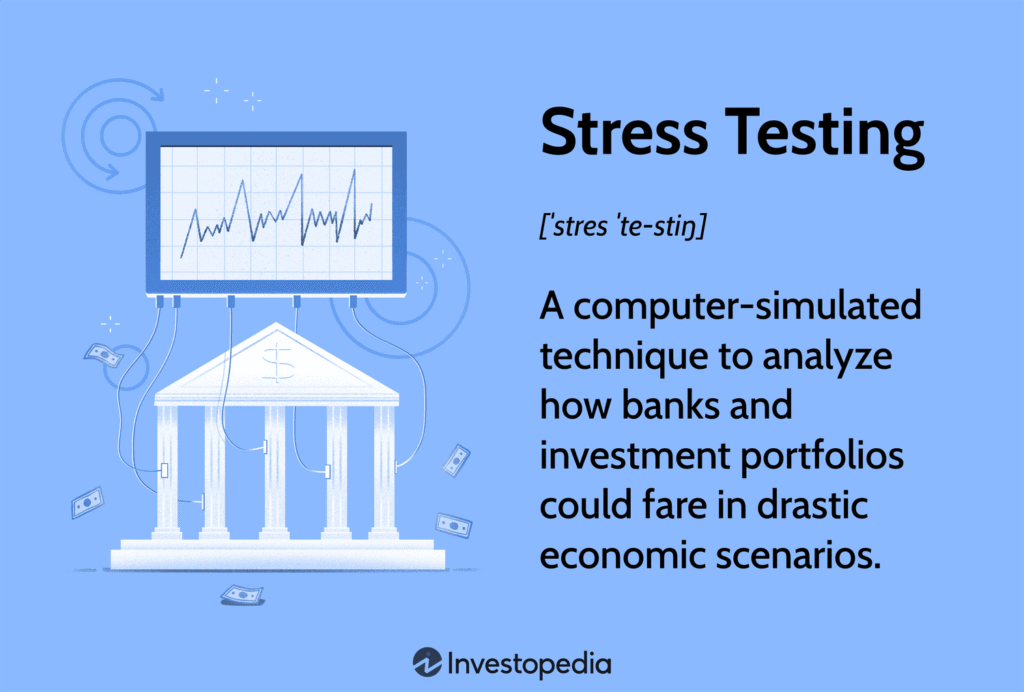
The fourth challenge is one that most startup banks know they should be doing but keep pushing down the priority list: actually testing whether your fraud detection and incident response systems work under pressure.
An audit isn’t just a documentation review. In mature regulatory environments, auditors increasingly want to see evidence that your systems perform as designed — not just that the designs look good on paper.
This means things like:
- Penetration testing results — Did you hire someone to try to break into your systems? When? What did they find? What did you fix?
- Fraud scenario testing — Can you demonstrate that your fraud detection catches synthetic identity fraud, account takeover attempts, and payment fraud at realistic rates?
- Incident response drills — If your core banking system went down at 3 PM on a Friday, what happens? Who gets called? How long does recovery take? Have you practiced that scenario?
Most early-stage neobanks have written incident response plans. Very few have actually run them. Auditors can tell the difference.
I read about one neobank that had a beautifully written incident response playbook — 40 pages, every scenario covered. During an audit simulation, the regulator asked them to walk through a mock data breach scenario in real time. It took the team 45 minutes just to identify who the incident commander was supposed to be, because the person listed in the plan had left the company eight months earlier and nobody had updated the document.
That’s the kind of thing that turns a routine audit into a formal enforcement action.
Building a fraud and incident response program that auditors actually respect:
Step 1: Schedule quarterly tabletop exercises. These are structured discussions — not full simulations — where the team walks through a specific scenario (account takeover, data breach, system outage) and identifies gaps in the response plan.
Step 2: Run annual penetration tests conducted by a qualified third party. Keep the reports. Show remediation timelines. Auditors want to see not just that you found vulnerabilities but that you fixed them.
Step 3: Track your key incident response metrics: Mean Time to Detect (MTTD) and Mean Time to Respond (MTTR). If you can’t measure these, you can’t improve them — and auditors will ask.
Step 4: Keep your incident response plan current. Assign someone to review and update it every quarter. Names change, systems change, processes change.
For a deeper look at how security checkpoints integrate with these testing requirements, these 9 key neobank digital wallet security checkpoints offer a useful framework to cross-reference against your own audit prep.
The Mistake Almost Every Startup Makes
If there’s one thread connecting all four of these challenges, it’s this: neobank startups consistently treat audits as events rather than processes.
An audit comes up on the calendar, everyone scrambles, gaps get patched just enough to pass, and then the organization goes back to building features until the next audit cycle. Rinse and repeat.
The banks that actually handle audits well — the ones where the auditor walks in and things are just organized — treat compliance and audit readiness as continuous operational functions. Not a fire drill. Not a quarterly panic. Just part of how the business runs.
That shift in mindset is honestly the most important thing a startup bank can do. The tools, the frameworks, the documentation — all of that follows naturally once the team genuinely internalizes that audit readiness isn’t separate from the product. It is the product, for a regulated entity.
| Challenge | Root Cause | Key Fix |
|---|---|---|
| Multi-jurisdiction compliance | Reactive policy management | GRC platform + designated owners |
| Weak audit trails | Siloed, inconsistent logging | Centralized log aggregation |
| Third-party vendor risk | Informal vendor onboarding | TPRM program with SOC 2 requirements |
| Untested incident response | Plans written, never practiced | Quarterly tabletops + annual pen tests |
One More Thing Worth Knowing
Audit challenges at neobanks aren’t signs of failure. They’re signs of growth. The startups that face these problems are the ones that got far enough to be audited — which means they built something worth regulating.
The goal isn’t to make audits disappear. It’s to get to a point where an audit is boring. Where the auditor walks in, reviews the documentation, checks the logs, runs through the checklist, and leaves with nothing dramatic to report.
Boring audits are the best audits.
Also worth reading: 11 Smart Neobank Digital Wallet Security Audits to Stop Data Breaches — a practical breakdown of security audit strategies that directly tie into the compliance and incident response challenges covered above.