
You check your bank balance. Everything looks fine.
But somewhere, a hacker is already banging on your account.
Digital banking has ensured an easy life for us. Send money in seconds. Split a bill with friends. Touch nothing to pay for groceries. Services like Revolut, Wise, Chime, Cash App, PayPal and Google Pay are integrated into the lives of hundreds of millions of people.
The problem? Most of us install these apps and never — seriously, ever — check in again.
No security reviews. No permission checks. No transaction monitoring. And blind faith in an app that holds their actual money.
That’s a dangerous game.
Scammers don’t always come with a bang. Sometimes it’s a $1.50 test charge. It could be a fake login page. But sometimes it’s an old linked app that silently exposes the lot.
This guide offers 12 quick neobank and digital wallet security checks for safe transactions — common-sense, no-jargon actions to take right now. No tech degree needed. All you need is a phone, a few minutes and the commitment to take your financial security seriously.
Let’s lock things down.
The Actual Price of Not Paying Attention to Your Digital Wallet Security
But before we review the audits, let’s consider what is at stake.
Digital payment fraud isn’t rare. It’s not something that happens only to other people. And it’s getting bigger every single year — with neobanks and digital wallets directly in the crosshairs.
| Stat | What It Means |
|---|---|
| $362 billion estimated fraud losses by 2028 | The problem is enormous |
| 80% of fraud begins with stolen credentials | Your password is the frontline |
| 1 in 5 users never checks connected apps | That’s an open door for attackers |
| Just 28% of users use two-factor authentication | Most have no backup protection whatsoever |
| 90% of phishing attempts go unreported | Users don’t know they’re targets |
Sources: Juniper Research, Google Security, Statista
Conducting security audits on neobanks and digital wallets for secure transactions is not paranoia. That’s just smart money management in a digital age.
Audit #1 — Revoke Every Device That Is Logged Onto Your Accounts
That is where every security review should begin.
Your neobank and wallet apps log details for every device that’s signed in. Hardly anybody has ever seen this list. That one mistake can cost them everything.
An old phone. A friend’s tablet that you logged into once. A laptop you no longer own. Each is a potential entry point for somebody who isn’t you.
Steps to Take Right Now
- Open any of these apps — PayPal, Cash App, Revolut, Chime, Venmo, Apple Pay or Google Pay
- Go to Settings → Security → Devices or Active Sessions
- Go through each device listed
- Remove anything unfamiliar or outdated right away
Red Flags to Watch For
- Devices in cities or countries that you’ve never visited
- Login timestamps at 2am or 3am when you were sleeping
- Device names you don’t recognize
Log out of everything suspicious. Change your password right after. This audit will take 5 minutes and is one of the strongest neobank and digital wallet security audits for secure transactions on this entire list.
Audit #2 — Rate Your Passwords Right Now
Most people’s passwords are embarrassingly weak.
“Fluffy2015.” “Myname123.” “Password!” Sound familiar?
And decent passwords are plagued by one deadly sin: they’re often reused everywhere. One that’s compromised on some random shopping site, and suddenly their Revolut account is sitting wide open.
This method of attack is known as credential stuffing — and it’s effective, because people reuse passwords constantly.
The Password Grading Table
| Password Type | Security Grade | Example |
|---|---|---|
| Name + birthday | F | John1990 |
| Common word + number | D | Summer123 |
| Random words, no symbols | C | BlueCatRiver |
| Mixed case + numbers | B | BlueCat!River7 |
| Long, unique, random | A+ | xQ7!mPz@kL92#wR |
What to Do Right Now
- Visit haveibeenpwned.com — enter your email and find out if your data was leaked
- If any account uses a reused password, change it today
- Install a password manager — Bitwarden (free) and 1Password (paid) are both good
- Use a different password for each financial account you own
No shortcuts here. Weak passwords are the number one reason for account takeovers in neobanking.
Audit #3 — Turn On Two-Factor Authentication Everywhere Possible
If passwords are the equivalent of a lock on your front door, two-factor authentication (2FA) is the deadbolt.
Even if a bad actor steals your password, 2FA means they still can’t get in without a second code — typically sent to your phone or generated by an app.
Most neobanks offer 2FA. Very few turn it on for you automatically. That job falls to you.
2FA Methods Ranked by Strength
| Method | Strength | Notes |
|---|---|---|
| No 2FA | None | Fully exposed |
| SMS text code | Low–Medium | Vulnerable to SIM swap attacks |
| Email code | Medium | Only as secure as your email |
| Authenticator app | High | Google Authenticator, Authy — best everyday option |
| Hardware key | Very High | YubiKey — best for high-value accounts |
| Biometric | High | Use in conjunction with another method |
How to Turn It On
- Navigate to Settings → Security → Two-Factor Authentication
- Opt for an authenticator app rather than SMS when available
- Scan the QR code displayed on screen
- Keep your backup recovery codes in a secure place — printed paper or a locked file
Repeat for every neobank and digital wallet you use. Do the same for the email account associated with each one.
One small step. Massive protection boost.
Audit #4 — Track Down Every Connected Third-Party App
Each time you connect an app that’s not directly run by your neobank or digital wallet, you give it a key.
Budget trackers. Crypto exchanges. Shopping tools. Subscription apps. Investment platforms. All of them beg for access — and many retain it long after you’ve forgotten they exist.
Every connected app is a backdoor. If that app is breached, your financial account may be exposed as well.
Where to Find Connected Apps
| Platform | Navigation Path |
|---|---|
| PayPal | Settings → Security → Manage Integrations |
| Venmo | Settings → Privacy → Linked Accounts |
| Cash App | Profile → Linked Banks |
| Revolut | Profile → Connected Apps |
| Google Pay | Google Account → Security → Third-Party Apps |
| Apple Pay | Settings → Wallet & Apple Pay |
Questions to Ask for Each App
- Do I still actively use this?
- Did I download it from an official source?
- Has there been any data breach reported on this company?
- Why does it need to link up with my financial account?
If you can’t confidently answer — cut off the connection. Including this review in your neobank and digital wallet security audits for secure transactions can eliminate hidden risks you didn’t even know existed.
Audit #5 — Roll Through 90 Days of Transactions With a Fine-Tooth Comb
Here’s something most people never do: actually read their transaction history.
Not just glance at it. Really read it.
Fraudsters often start small. A $0.99 charge to see if the card works. A $2.49 charge from a company with a vague name. They’re fishing. If you don’t pay attention, they go bigger.
What to Look For
| Transaction Red Flag | What It Could Mean |
|---|---|
| Charges under $2 from unknown merchants | Test charges — card details stolen |
| Duplicate charges for exact same amount | Double-billing scam or processing error |
| International transactions you didn’t initiate | Account access from abroad |
| Payments to unfamiliar contacts | Unauthorized transfer |
| Round-number withdrawals you don’t remember | Manual account access |
| Subscriptions you didn’t sign up for | Fraudulent enrollment |
What to Do If You Find Something Suspicious
- Screenshot it immediately — document everything
- Don’t ignore it hoping it will resolve itself
- Reach out to your neobank’s fraud support team via the official app — not a link in an email
- Use the in-app card freeze feature while you investigate
- Dispute the transaction through the platform’s official dispute process
- Change your password and turn on 2FA if you haven’t already
Monthly transaction reviews are one of the most effective neobank and digital wallet security audits for secure transactions that you can build into a routine.
Audit #6 — Harden Your Account Recovery Settings
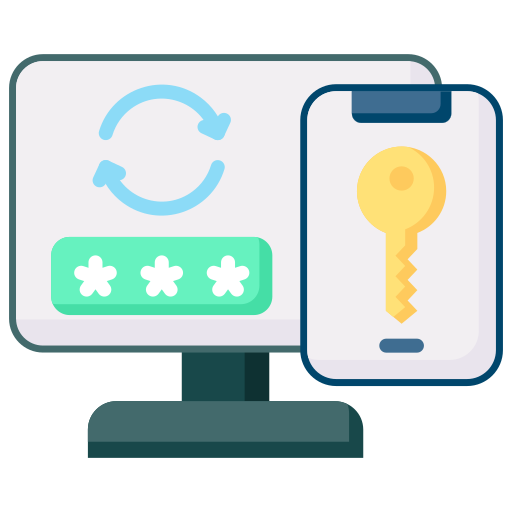
Your account recovery options are usually the weakest link in your entire security chain.
Think about it. If a hacker can’t breach your password or 2FA, they may try to reset the account entirely — using your recovery email, backup phone number or security questions.
If even one of those is outdated or guessable, the entire fortress crumbles.
Full Recovery Settings Checklist
| Recovery Setting | What to Verify |
|---|---|
| Backup email | Active, secure and protected with its own 2FA |
| Backup phone number | Still your current number — not an old SIM |
| Security questions | Answers aren’t guessable from social media |
| Recovery codes | Saved offline, not in your email drafts |
| Trusted contacts | People you still trust and can reach |
How to Protect Your Recovery Options
- Set your backup email to your most secure, private email address
- Use fake answers for security questions — but write them down safely
- Remove any phone numbers you no longer have access to
- Keep recovery codes in a physical location, not only saved on your phone
Your backup email is essentially the master key to all your accounts. Treat it like one.
Audit #7 — Do a Full App Permission Scan on Your Phone
Your neobank app is not just hanging out on the internet. It’s living on your phone — a device that also contains your contacts, location, camera, microphone, photos and more.
Most financial apps demand more permissions than they really need. And most people simply click “Allow” without giving it a second thought.
Permissions Neobank Apps Actually Need vs. Don’t Need
| Permission | Needed? | Reason |
|---|---|---|
| Camera | Yes | ID verification, check deposits |
| Notifications | Yes | Transaction alerts |
| Location | Sometimes | Fraud detection |
| Biometrics | Yes | Secure login |
| Microphone | No | No legitimate banking reason |
| Contacts | Rarely | Peer-to-peer payments only |
| Storage | Sometimes | Download statements |
| Bluetooth | No | Not needed for banking |
How to Check Permissions
On iPhone: Go to Settings → Privacy & Security → tap each category → review which apps have access → revoke anything unnecessary
On Android: Go to Settings → Apps → [App Name] → Permissions → toggle off anything that shouldn’t be there
If a banking app has access to the microphone or Bluetooth with no clear reason — revoke it now.
For more guidance on keeping your digital finances safe, BankProfi is a helpful resource worth bookmarking for ongoing tips and financial security insights.
Audit #8 — Check the Security of Your Email Account (It Controls Everything)
This is one that people forget all the time.
Your email is the hub of your digital financial world. Password resets, account confirmations, fraud alerts, statements — all of it flows through your inbox.
Once someone is in your email, they’re in everything else.
Email Security Audit Checklist
- Is your email password strong and unique?
- Do you have 2FA enabled on your email account?
- Have you checked your email’s active login sessions recently?
- Are there any forwarding rules that you didn’t set up? (Hackers sometimes add these silently)
- Is your email recovery phone number still current?
How to Check for Silent Email Forwarding Rules
- Gmail: Settings → See all settings → Filters and Blocked Addresses / Forwarding
- Outlook: Settings → Mail → Forwarding
- Yahoo: Settings → More Settings → Mailboxes
If you find a forwarding rule that you did not create — someone has been in your inbox. Remove it immediately and change your password.
This is one of the most overlooked neobank and digital wallet security audits for secure transactions. Your email security is your financial security.
Audit #9 — Verify Your Phone Plan Is Free From SIM Swap Vulnerability
SIM swap fraud is a significant and rising threat.
Here’s how it works: a criminal calls your mobile carrier, pretends to be you, and convinces them to transfer your phone number to a SIM card they control. From that moment on, they receive all of your SMS messages — including your 2FA codes.
It’s terrifyingly effective.
Signs You May Have Been SIM Swapped
- Your phone suddenly loses all signal
- You can’t make calls or send texts
- You receive a message saying your SIM card has been updated
- You start getting locked out of accounts
How to Protect Yourself
- Call your mobile carrier and request they put a SIM lock or port freeze on your account
- Set up a PIN or passcode that must be verified before any SIM changes can be made
- Switch from SMS-based 2FA to an authenticator app wherever possible
- Check if your mobile provider offers account takeover protection — many now do
This audit is especially important if you are using SMS codes for 2FA on your neobank and digital wallet accounts.
Audit #10 — Run a Phishing Awareness Sweep of Your Inbox and Messages
Phishing is an old trick — but it still works because it keeps getting more convincing.
Fake emails that look like PayPal. Fake Chime texts. In-app notifications that appear completely legitimate. One wrong click and your login details are gone.
Phishing vs. Real Bank Message — A Side-by-Side Comparison
| Feature | Phishing Message | Real Bank Message |
|---|---|---|
| Sender email | Misspelled or random domain | Official verified domain |
| Urgency | High — “Act now or lose access” | Calm and informational |
| Links | Redirect to fake sites | Direct to official domain |
| Request | Asks for password, OTP, card number | Never asks for full credentials |
| Attachments | Suspicious or unexpected files | Rarely sends attachments |
| Branding | Slightly off — wrong colors, logo | Consistent and professional |
Your Phishing Sweep Steps
- Go through your emails and SMS messages from the last 30 days
- Look for any messages claiming to be from your bank or wallet provider
- Hover over links (don’t click) — check if the URL matches the official domain
- Forward suspicious messages to your bank’s official fraud email
- Delete and mark as spam
Also: make sure you are signed up for real-time transaction alerts through your actual neobank app. Finding out the moment a charge happens is one of the fastest ways to catch fraud before it escalates.
Audit #11 — Review Your Biometric Login Settings
Fingerprint login. Face ID. These feel like the most secure — swift, personal and difficult to fake.
But biometric login can have blind spots if it’s not set up correctly.
Biometric Security Checklist
- Is biometric login enabled on all banking apps that support the feature?
- Did you accidentally register someone else’s fingerprint or face? (Check: Settings → Face ID/Touch ID → Enrolled Fingerprints)
- Does your phone’s screen lock activate within 30 seconds?
- Do your apps require biometric re-authentication after a period of inactivity?
- Does your phone store biometric data locally (safer) or in the cloud?
One Risk People Miss
Some phones offer a PIN bypass if biometric authentication fails too many times. If you have a weak PIN — such as 1234 or the year you were born — then biometric security doesn’t add much protection.
Set a strong alphanumeric passcode or PIN as your fallback. Make it something only you could know.
Audit #12 — Examine Your Public Wi-Fi Habits and VPN Use
The final audit is about how and where you access your accounts.
Public Wi-Fi — in coffee shops, airports, hotels and shopping malls — is a hacker’s hunting ground. Man-in-the-middle attacks allow cybercriminals to intercept data sent over unsecured networks. If you log into your neobank on public Wi-Fi without protection, your credentials can be captured in real time.
Safe vs. Risky Connection Habits
| Habit | Risk Level | What to Do |
|---|---|---|
| Using home Wi-Fi | Low | Keep your router password strong |
| Using mobile data (cellular) | Low | Generally safe for banking |
| Using public Wi-Fi with VPN | Medium | Acceptable if VPN is trusted |
| Using public Wi-Fi without VPN | Very High | Never do banking this way |
| Using someone else’s Wi-Fi | High | Avoid financial logins |
Quick Fixes
- Sign up for a trustworthy VPN — ProtonVPN or Mullvad are both privacy-focused options
- Never log into banking apps on open, passwordless public Wi-Fi
- Enable automatic lock on your phone so no one can access open apps when you step away
- Log out of financial apps at the end of each session when using any shared network
This audit finalizes your complete series of neobank and digital wallet security audits for secure transactions. Together, these 12 checks cover nearly every important aspect of digital financial risk.
Your Master Security Audit Schedule
Don’t allow these audits to be a one-off. Build them into a rhythm.
| Frequency | Audits to Run |
|---|---|
| Every week | Check transaction alerts, review any new notifications |
| Every month | Audit #1 (devices), Audit #5 (transactions), Audit #10 (phishing sweep) |
| Every 3 months | Audit #2 (passwords), Audit #4 (connected apps), Audit #8 (email security) |
| Every 6 months | Audit #3 (2FA), Audit #6 (recovery settings), Audit #7 (app permissions), Audit #11 (biometrics) |
| Immediately | After any suspicious activity, data breach notification or login from an unknown device |
Set calendar reminders. Treat this like a bill payment — something you do, on schedule, no excuses.
FAQs — Neobank & Digital Wallet Security Audits for Secure Transactions
Q1: What is the total time needed to complete all 12 security audits? Many of them can be done in 60 to 90 minutes if completed all at once. Each audit takes between 2 and 15 minutes. After you go through the whole process once, monthly upkeep takes far less time.
Q2: Do neobanks offer the same fraud protection as traditional banks? Many do, but this varies by platform and country. Some neobanks have FDIC or FSCS insurance, while others operate differently. Always read the fraud protection terms for your specific platform. Don’t assume full coverage.
Q3: Is it safe to keep large amounts of money in a digital wallet? Digital wallets are generally tools for convenience, not savings vehicles. For larger balances, a regulated neobank with deposit insurance is safer. Keep only spending money in wallets like Venmo and Cash App.
Q4: What is the number one security mistake neobank users make? Reusing passwords. It is the most widespread and among the most harmful habits. One compromise elsewhere can open every account that shares that password. Use a password manager and go unique on every single account.
Q5: Can I reclaim money stolen from a neobank or digital wallet? Sometimes — but not always. Act fast: freeze your account, report fraud promptly and document everything. Recovery depends on the platform, how quickly you respond and whether the transfer can be reversed. Speed matters enormously.
Q6: Are authenticator apps safer than receiving a text message code? Yes, significantly. SMS codes are vulnerable to SIM swap attacks. Authenticator apps generate codes directly on your device and are much harder to compromise. Switch to one if you haven’t already.
Q7: Should I use the same email for all my neobank accounts? Avoid it if possible. Using one email for everything means a single breach could expose all your accounts. At the very least, have a dedicated, highly secure email for all financial accounts — separate from your everyday inbox.
Q8: What should I do first after reading this article? Start with Audit #3 — turn on two-factor authentication for every financial account you own. It’s the quickest, highest-impact step you can take in under five minutes. Then work through the rest over the next few days.
Lock It Down — Your Money Is Worth the Effort
The truth is: most people will read this, nod along and then do nothing.
Don’t be most people.
The 12 neobank and digital wallet security audits for secure transactions in this guide are not complicated. You do not need a technical background. You just need to care enough to spend an hour protecting what you’ve worked hard to earn.
Check your devices. Strengthen your passwords. Turn on 2FA. Review your connected apps. Read your transactions. Secure your recovery settings. Audit your app permissions. Protect your email. Guard against SIM swaps. Spot phishing attempts. Lock down biometrics. Stop using public Wi-Fi unprotected.
Twelve steps. Real protection. Starting today.
The fraudsters are not waiting. They are conducting their own audits on your accounts at this very moment — searching for the gap you left open. Close it before they find it.
Start with Audit #1. Right now. Then keep going.
Your future self — and your bank account — will thank you.