

Your Digital Money Needs Real Protection
You likely pulled out your phone at some point today and checked the balance of your bank account. Perhaps you sent money through a digital wallet. Maybe you paid a bill without ever laying hands on even a single piece of cash.
And that’s the world we live in now.
Neobanks and digital wallets have made the handling of money easier — and faster — than at any time in history. But here’s the uncomfortable reality: every time your financial data passes through an app, it is at risk.
Cybercriminals are not slowing down. They’re becoming more sophisticated, better organized and more aggressive. In 2024, global cybercrime reached $9 trillion by itself. Financial applications are some of the most targeted platforms globally.
So what’s protecting your savings from a hacker? Security audits.
These are the thorough, systemic checkups that keep neobanks and digital wallets honest — and safe. In this piece, you’re going to learn the 6 greatest neobank and digital wallet security audits for digital safety, made simple enough for anyone to follow.
No confusing tech speak. No fluff. Just clear, useful information.
What a Security Audit Actually Does for Your Money
Before we jump into those 6 types, let’s clear the air on one thing.
A security audit doesn’t mean just scanning applications. It’s a meticulous, methodical survey of all the things that might possibly go wrong — before it actually does.
It’s like a full-body health check for a neobank’s digital systems. Doctors don’t wait for you to get sick before they perform tests. They monitor your blood pressure, cholesterol levels and other metrics constantly. Security audits work the same way.
They find hidden problems. They test defenses. They ensure the locks are locked.
Skipping audits for a neobank or digital wallet company is akin to running a restaurant without ever peering into the kitchen. Everything may be going along well on the surface — until it isn’t.
The Rapid Rise of Neobanks — And Why It Makes Security Harder
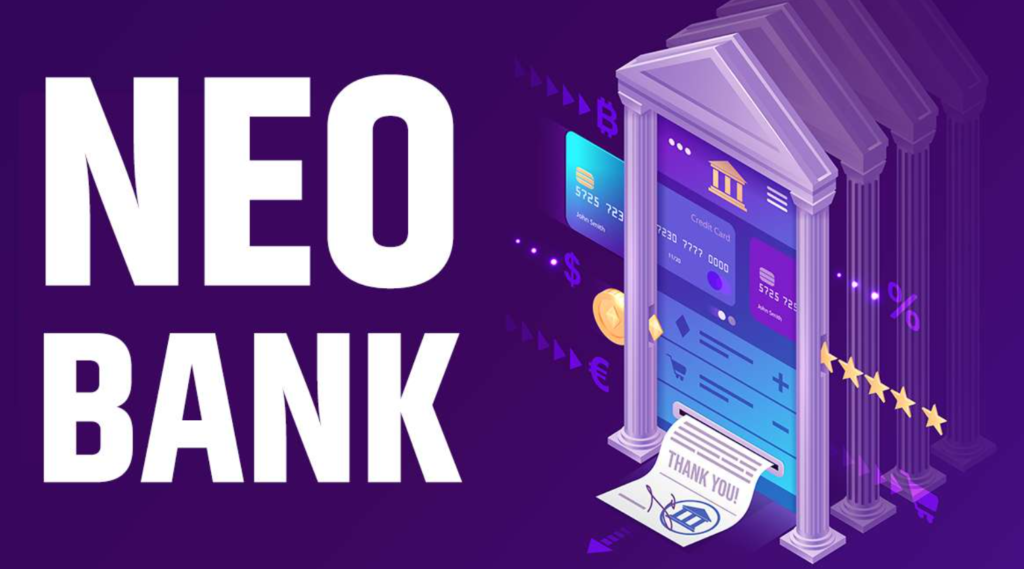
The past decade has seen neobanking become a phenomenon. Platforms such as Monzo, N26, Chime and Nubank have won hundreds of millions of users globally.
They have zero-fee accounts, make transfers in seconds and offer slick mobile apps. But what makes them strong also makes them weak — they exist entirely in the digital world.
No physical vaults. No in-person verification. No paper trail.
Every transaction, every login, every password reset is enabled by code running on servers. And code can have flaws. Servers can be misconfigured. People can be tricked.
Here is a quick comparison of security between traditional banks and neobanks:
| Security Factor | Traditional Banks | Neobanks & Digital Wallets |
|---|---|---|
| Physical identity checks | Yes — in person | Sometimes or never |
| Digital attack surface | Medium | Very high |
| Frequency of app updates | Slow | Constant |
| Customer support verification | Stricter | Often weaker |
| Regulatory oversight history | Decades-long | Still maturing |
| Cloud dependency | Partial | Nearly total |
One thing is evident from this table. Neobanks work in a far more exposed landscape. That’s precisely why neobank and digital wallet security audits for digital safety are not “nice to have” — they’re survival.
Audit #1 — Penetration Testing: Hiring Hackers to Stop Hackers

Breaking In on Purpose
Penetration testing — often called a pen test for short — is one of the most powerful security tools available today. The concept sounds almost too bold: hire professional hackers to break into your own systems.
But it works.
Certified ethical hackers, also known as penetration testers, use the same techniques real cybercriminals use. They scour a neobank’s digital infrastructure inch by inch, hoping to find open doors. The point is they report what they find, rather than abuse it.
What a Pen Test Actually Targets
In a pen test of a neobank or digital wallet platform, typical testers target:
- Login systems — Are they able to enter with bogus credentials, brute force guessing, or credential stuffing?
- Transaction flows — Can they intercept or amend an in-flight payment?
- Backend servers — Are there any internal systems exposed to the outside?
- APIs — Do apps and services leak data at the connection point?
- Mobile apps — Are there vulnerabilities limited to Android or iOS versions?
After the Test: The Report That Changes Everything
At the conclusion of a pen test, testers generate a full vulnerability report. It orders each of their findings by severity — from critical vulnerabilities that require immediate fixing to trivial lapses that can be tackled at a later date.
The neobank then tackles those gaps and fixes them before actual attackers discover them.
Penetration testing is perhaps the most straightforward of all digital wallet security audit methods, as it actively imitates a live attack against actual systems.
Audit #2 — Source Code Review: Catching Bugs Before They Become Disasters
The Hidden World Inside an App
Code is what makes every app you’ve ever used. Hundreds of thousands of lines of it. The bulk of that code is created by teams of developers moving fast, under pressure, hitting deadlines.
Mistakes happen.
A typo, a missed encryption step or an unintended data exposure — these small mistakes can result in gaping security holes. A source code review takes a close look at that code, methodically, and exposes those problems before the app even gets into users’ hands.
Static vs. Dynamic Code Analysis
There are two main methods for code review in the context of neobank security:
| Type | When It Runs | What It Checks |
|---|---|---|
| Static Analysis (SAST) | Before the app runs | Code structure, hardcoded secrets, insecure functions |
| Dynamic Analysis (DAST) | While the app runs | Real-time behavior, runtime errors, data flow issues |
Combined, these two methods provide security teams with a full picture of where the code is strong and where it is weak.
Common Code Problems in Fintech Apps
In code reviews of neobank and digital wallet apps, reviewers often find:
- Hardcoded API keys or passwords — Developer shortcuts that inadvertently make sensitive credentials viewable in the code
- Insecure data storage — Sensitive data stored in plain text rather than being encrypted
- Poor session management — Sessions left open for an excessive amount of time, or not completely terminated after logout
- Input validation failures — Fields that accept dangerous commands instead of filtering them out
All of that may sound technical, but the real-world implication is straightforward: a door left open to attackers.
Source code review is the audit that closes those doors before customers can even reach them.
Audit #3 — Regulatory Compliance Audit: Playing by the Rules That Protect You
Why Rules Actually Matter Here
Some people hear the word “compliance” and turn off. It sounds boring and bureaucratic. But when it comes to neobank and digital wallet security audits for digital safety, compliance is one of the most important lines of defense customers have.
These are the legal standards that governments and financial regulators force companies to follow. If a neobank flouts these rules, it risks crippling fines, loss of its operating license and, at the most serious level, being shut down.
That threat is what holds companies accountable.
The Big Four Compliance Standards
| Standard | Full Name | What It Protects |
|---|---|---|
| PCI-DSS | Payment Card Industry Data Security Standard | Credit and debit card transaction data |
| GDPR | General Data Protection Regulation | Personal data of EU residents |
| SOC 2 | Service Organization Control 2 | Data security, availability and privacy |
| ISO 27001 | International Security Standard | Overall information security management |
What Gets Checked in a Compliance Audit
In a compliance audit, an outside firm checks that the neobank is complying with each requirement of the relevant standards. This includes:
- How long customer data is retained — and how it’s destroyed when no longer needed
- Whether employees only use the data necessary for their specific job
- How promptly the company alerts users following a data breach
- Whether encryption levels match current legal specifications
- How vendor and third-party relationships are managed securely
Falling short in any part of this audit can prompt regulatory action. That pressure is exactly what incentivizes neobanks to invest heavily in getting it right.
Audit #4 — API Security Audit: Locking the Bridges Between Systems
APIs: The Invisible Highways of Your Financial Data
Most people have never even heard of an API. But if you use any digital wallet or neobank, you interact with dozens of them every single day.
An API — Application Programming Interface — is a connection point that allows different pieces of software to communicate. It’s what allows a neobank app to talk to your employer’s payroll system, your credit card network, your investment platform, or a third-party budgeting tool.
When data is exchanged between these systems, that information passes through an API.
And APIs have emerged as one of the most targeted attack surfaces in fintech. According to Gartner, API attacks became the most common method of web application attack globally by 2022 — and it’s only gotten worse.
The Most Dangerous API Weaknesses
An API security audit specifically hunts for vulnerabilities like:
- Broken object-level authorization (BOLA) — An attacker changes a number in a request and gains access to someone else’s account
- No rate limiting — No cap on login attempts, so password guessing can be performed without restriction
- Excessive data exposure — The API returns too much user information for the app to display
- Insufficient authentication — Requests can be made without properly checking who is asking
What the Audit Covers End-to-End
A thorough API security audit on a digital wallet platform goes beyond just the main app. It tests all integrations — including third-party services for identity verification, credit scoring, fraud detection and customer support tools.
This matters enormously. Even with a strong API from the neobank itself, a weak third-party API in their ecosystem poses an equivalent level of risk.
Audit #5 — Cloud Infrastructure Security Audit: Protecting the Servers That Hold Your Balance
Your Money Exists on a Cloud Server
Here’s what most banking customers don’t realize. When you check your balance on your phone, that number doesn’t reside on the device. It resides on a remote server — often controlled by Amazon Web Services, Google Cloud or Microsoft Azure.
Neobanks and digital wallets are virtually entirely cloud-based. Everything that makes them better than traditional banks — speed, scalability and flexibility — comes courtesy of the cloud.
But the cloud comes with serious security responsibilities. And when those duties go neglected or poorly configured, things can get bad, fast.
The Capital One Warning
In 2019, a misconfigured cloud firewall at Capital One resulted in the personal information of more than 100 million customers in the US and Canada being compromised. The attacker didn’t require high-level tools. They simply went through a door left open during a cloud configuration.
That breach cost Capital One nearly $300 million in penalties and settlements.
The risks are even higher for neobanks — which rely even more on the cloud than Capital One does. The OWASP Cloud-Native Application Security Top 10 describes precisely the kinds of vulnerabilities that cloud infrastructure audits are intended to detect.
What a Cloud Infrastructure Audit Examines
| Area Audited | What Auditors Look For |
|---|---|
| Access controls | Are permissions configured properly? Who has admin-level access? |
| Data encryption | Is stored data encrypted? Is data in transit protected? |
| Backup and recovery | Can the company recover data following an attack or failure? |
| Network segmentation | Are different systems appropriately isolated from one another? |
| Logging and monitoring | Are potentially anomalous activities being tracked in real time? |
| Third-party integrations | Are cloud tools from vendors also securely configured? |
Defense in Depth: The Multi-Layer Strategy
The finest cloud security audits also examine whether neobanks employ a “defense in depth” strategy. That means designing multiple layers of protection, so that if one fails, another catches the threat.
It’s the digital equivalent of a bank vault with an armed guard at the door, a camera in the hallway, a keypad on the room and a time-lock on the safe. Each layer adds expense — but also safety.
Audit #6 — Social Engineering & Insider Threat Audit: Testing the Human Side of Security
The Weakest Link Is Often a Person
All the technical security measures discussed so far have one thing in common. They all guard against attacks from beyond the corporate walls.
But what about threats from inside?
Social engineering attacks aren’t aimed at software. They target people. And people — even good, well-trained people — can be manipulated, misled and deceived.
A neobank might establish the most robust technical defenses in the world and still get breached because one customer support rep picked up a phone call from a convincingly fake executive.
This audit tests that human layer.
What Social Engineering Attacks Look Like in Fintech
| Attack Type | How It Works |
|---|---|
| Phishing emails | Fake emails intended to steal login credentials |
| Vishing (voice phishing) | Phone calls impersonating executives or regulators |
| Pretexting | Creating a fake scenario to extract confidential information |
| Tailgating | Following an employee into a secure area they shouldn’t be in |
| Baiting | Leaving infected USB drives in common office areas |
Running the Simulation
Social engineering audits involve controlled simulations by security firms. They may send out fake phishing emails to the entire staff and note who clicks. They could ring the IT help desk, posing as a panicked staff member locked out of their account.
None of it is malicious. It’s highly controlled and designed to show exactly how staff respond under pressure.
The results are often eye-opening. Even vigilant employees can be duped by a plausible-sounding scenario.
Insider Threat: The Employee Who Goes Rogue
The danger isn’t limited to outside manipulation. There’s also the threat from within — an unhappy employee, a compromised contractor, someone who intentionally leaks a customer’s details or siphons money.
This section of the audit examines:
- Access logs for abnormal usage patterns — such as downloading batches of records after hours
- Whether access is immediately revoked for departing employees upon resignation
- Whether users with privileged access are reviewed frequently and pared down
- How the company detects and reacts to internal data theft
The social engineering and insider threat audit is the most human-centric of all neobank and digital wallet security audits for digital safety — and often the most revealing.
How All 6 Audits Work Together
There isn’t one type of audit that covers everything. Each one looks at a different piece of the security puzzle. True digital safety comes from using all 6 — and using them regularly.
Here’s the complete audit stack at a glance:
| Audit Type | What It Protects | How Often |
|---|---|---|
| Penetration Testing | External attacks against live systems | Every 6–12 months |
| Source Code Review | Bugs and vulnerabilities in the app itself | Every major release |
| Compliance Audit | Legal and regulatory requirements | Annually |
| API Security Audit | Data flowing between integrated systems | Quarterly |
| Cloud Infrastructure Audit | Servers, storage and cloud configuration | Every 6–12 months |
| Social Engineering Audit | Human behavior and insider threats | Annually |
Combined, these 6 audits provide a 360-degree shield across a neobank’s operations. Skip one and you leave a gap. Cover all six and you’ve created a security posture that requires active, continuous effort to penetrate.
How to Tell If Your Neobank Takes Security Seriously
You don’t need a degree in cybersecurity to determine whether your neobank invests appropriately in digital safety. Here are some of the most useful signals to look for:
Published security certifications — PCI-DSS compliance, SOC 2 Type II reports and ISO 27001 certification are all publicly verifiable. If a neobank lists these, it means they’ve been independently tested.
A live bug bounty program — Companies that pay the public for finding and reporting bugs are actively inviting scrutiny. That’s confidence in their security — not fear of it.
Clear breach notification policies — Trustworthy neobanks tell you exactly when and how they will let you know if something goes wrong.
Multi-factor authentication as a default — If MFA is something you have to opt into rather than the standard, that’s a danger sign. Strong neobanks make it mandatory.
Frequent, transparent security blog updates — Companies that publicly discuss their security investments and improvements are taking it seriously.
For easy-to-understand breakdowns of how digital financial platforms keep your data safe, visit BankProfi for plain-language guides and updates on digital banking security.
Conclusion: Your Safety Starts With Knowing the Right Questions to Ask
The 6 ultimate neobank and digital wallet security audits for digital safety aren’t just internal corporate procedures. They are the systems that stand between your account and a breach.
Penetration testing finds the cracks before criminals do. Code reviews catch the developer mistakes that nobody noticed. Compliance audits ensure legal protections are in place. API audits lock the data highways. Cloud infrastructure audits secure the servers holding your balance. And social engineering audits make sure the people inside the company are as secure as the technology.
When all 6 are working together — and working consistently — they produce a level of digital safety that makes neobanks worthy of trust.
Now you know what those audits are, what they check and why each one counts. Use that knowledge. Ask questions of your digital bank. Look for the certifications. Demand transparency.
Because your financial safety isn’t solely their responsibility. It’s something you can actively protect by choosing the platforms that earn it.
FAQs — Neobank & Digital Wallet Security Audits for Digital Safety
What is the primary aim of a neobank security audit? A neobank security audit is a deep, professional examination of a digital bank’s systems, code and processes. Its mission is to uncover and fix vulnerabilities before real attackers find them — protecting both the company and its customers.
How frequently should neobanks conduct security audits? Different audits have different recommended schedules. Penetration tests and cloud audits should be conducted every 6 to 12 months. Code reviews occur with every major update. API audits should be conducted quarterly. Compliance and social engineering audits are usually conducted annually.
Is a digital wallet safer than a traditional bank account? Neither is automatically safer. Traditional banks have physical security advantages. Digital wallets and neobanks have a technological edge. The key difference is how aggressively each type of institution subjects itself to security audits and enforces those protections. Neobanks that run all 6 audit types regularly can be extremely secure.
What is the biggest security issue with neobank apps? API vulnerabilities and cloud misconfigurations are currently among the most prevalent and most dangerous weaknesses found in fintech platforms. Human error — from both developers and employees — also remains a persistent risk.
As a customer, can I request proof that a neobank has been audited? Yes. You can request your neobank’s SOC 2 Type II report, PCI-DSS certification or ISO 27001 accreditation. Reputable companies will either publish these or provide them upon request. If a neobank refuses to share any security documentation, that itself is a warning sign.
What does a failed compliance audit mean for neobank customers? Depending on the scale or degree of failure, the company may be fined, have its operations limited or even be suspended. In extreme cases, customer funds may be temporarily inaccessible. However, in most regulated markets, customer deposits are covered by deposit insurance schemes even if the neobank faces regulatory action.
Does a bug bounty program mean a neobank is safe? Yes — an active, public bug bounty program is a strong positive signal. It refers to the company’s open invitation for researchers to find and report vulnerabilities in exchange for a reward. This results in an ongoing, crowd-sourced security review that complements formal audits.
Why are social engineering audits more important than most people think? Because humans are the most unpredictable element in any security system. The most advanced technical defenses can be defeated if an attacker simply convinces an employee to grant access. Social engineering audits test for precisely that — and expose vulnerabilities that no firewall or encryption can fix.