

Your money is digital now. Your threats are too.
Each time someone taps a phone to pay for coffee, sends money to a friend or checks a balance on an app from his or her neobank — data is circulating. Transactions happen. And maybe, somewhere, someone is working to hack it all.
Neobanks and digital wallets have taken off. They’re fast, convenient, and borderless. But that growth has also made them one of the most heavily targeted sectors in all of cybersecurity.
Here’s what almost everyone overlooks: The solution to preventing it is not simply having the right tools. It’s an argument for using security audits the right way — effectively, intelligently and swiftly.
A security audit is not a one-time examination. It’s an ongoing process. And when it’s done well, it actually provides you with a road map for stopping the attacks before they start.
This article is dissecting 8 rapid, hands-on prevention tips out of running security audits on neobanks and digital wallets. These tips, for fintech founder to security analyst and the product manager in between, will guide you toward creating a more secure platform from day one.
Prevention Trumps Reaction Each and Every Time
It is expensive to respond to a breach. Preventing one is smart.
IBM’s annual Cost of a Data Breach Report estimated the average cost of a data breach in financial services reached over $5.9 million in 2024. That includes legal fees, customer compensation, regulatory fines — and the damage to your brand that’s almost impossible to value.
Neobanks are particularly susceptible as they rapidly scale. A startup that had 10,000 users six months ago could have 500,000 today. That pace can leave security behind.
Security audits will probably slow things down just enough to pose the right questions. Where are the gaps? What changed recently? What does our paper trail really say?
The 8 prevention tips below are based on these questions.
Prevention Tip 1 — Conduct Audits on a Rolling, Rather Than Once-a-Year Basis
Quit Treating Audits Like Yearly Physicals
For most companies, security audits are like dentist appointments. They dread them. They delay them. And then when it does happen, they’re just relieved it’s all over.
The problem with that strategy is the risk it presents to neobanks.
Cyber threats don’t care if it’s before, after or during your annual calendar. Your APIs are being attacked by bad actors every day. At least weekly, researchers discover new vulnerabilities. Your app updates — and every update can potentially bring new risks.
A Rolling Audit Schedule — The Shape of an Audit Work Plan
A rolling audit schedule divides this process into smaller and more frequent review points.
| Audit Type | Frequency | What It Covers |
|---|---|---|
| Micro audits | Weekly | API logs, login anomalies, failed transactions |
| Mid-level audits | Monthly | Access control reviews, patch status, rule updates |
| Full audits | Quarterly | End-to-end system and compliance review |
| Deep-dive audits | Annually | Third-party penetration testing, regulatory review |
The Prevention Win
When audits are frequent, your team builds muscle memory. They know what normal looks like. They spot abnormal faster. And that speed is everything in digital finance.
Prevention Tip 2 — Lock Down Your APIs Before They Leak Everything
APIs Are the Front Door Nobody Guards Properly
Neobanks run on APIs. Every feature — balance checks, transfers, KYC verification, notifications — passes through an API layer. That makes APIs both the engine of your platform and its biggest attack surface.
Security audits consistently reveal the same API problems. Exposed endpoints that weren’t documented. Old API versions still running in production. Missing rate limits that allow brute-force attacks.
What to Check During an API Security Audit
When you run a digital wallet security audit focused on APIs, these are the non-negotiables.
Authentication checks — Is every endpoint protected by OAuth 2.0 or a similar standard? Any endpoint without proper authentication is an open door.
Rate limiting — Can someone call your login endpoint 10,000 times in a minute? If yes, that’s a brute-force invitation.
Input validation — Are you sanitizing all incoming data? SQL injection and parameter tampering happen when you trust user input blindly.
Versioning control — Are deprecated API versions disabled? Old versions often have old vulnerabilities.
Logging — Is every API call being logged? No log means no audit trail.
The Prevention Win
One API audit can close more security gaps than months of general monitoring. It’s targeted. It’s fast. And the fixes are usually straightforward once you know what to look for.
Prevention Tip 3 — Map Every User Access Point and Cut What You Don’t Need
Too Much Access Is a Disaster Waiting to Happen
One of the most eye-opening parts of any neobank security audit is the access control review. Security teams often discover that employees — sometimes even former employees — have access to systems they should never have touched.
This is called privilege creep. It happens slowly. Someone gets temporary access to a system for a project. The project ends. The access stays.
The Principle of Least Privilege
Every security framework — from NIST to ISO 27001 — talks about the Principle of Least Privilege. It means every person and every system should only have access to exactly what they need. Nothing more.
During a digital wallet security audit, map out every access point.
| Access Category | Who Should Have It | Review Frequency |
|---|---|---|
| Core banking systems | Senior engineers only | Monthly |
| Customer data | Support and compliance | Monthly |
| Admin dashboards | Designated admins | Weekly |
| API keys | Developers only | Per project |
| Audit logs | Security team only | Read-only access |
The Prevention Win
Cutting unnecessary access dramatically reduces your insider threat risk. It also limits the blast radius if any one account gets compromised. If a hacker steals a low-level account, they shouldn’t be able to reach your core database.
Prevention Tip 4 — Use Real-Time Transaction Monitoring as a Prevention Layer
Don’t Wait for Fraud to Finish Before You Notice It
Traditional fraud detection was reactive. Someone committed fraud. The bank figured it out days later. The customer filed a complaint. Then the investigation began.
That model is completely broken for neobanks.
Digital transactions happen in milliseconds. Fraud can drain an account in minutes. By the time a weekly report flags it, the money is gone and the trail is cold.
How Audits Improve Transaction Monitoring
A security audit doesn’t just check your current monitoring setup. It stress-tests it.
Auditors simulate fraud scenarios. They test whether your system catches a user suddenly sending 20 transfers to new recipients in 10 minutes. They check if geographic anomalies trigger alerts — like a user whose phone is in Karachi logging in from an IP in Eastern Europe simultaneously.
These simulations reveal gaps in your detection logic. And closing those gaps is pure prevention.
Key Fraud Scenarios to Test in Every Audit
- Account takeover attempts via credential stuffing
- Unusual transaction velocity from a single account
- Multiple failed PIN or OTP attempts
- New device login followed immediately by a large transfer
- Transfers to accounts flagged in previous fraud cases
The Prevention Win
Real-time transaction monitoring, tuned through regular audits, can stop fraud mid-flow. Not after the fact — during the act. That’s the difference between a blocked transaction and a lost customer.
Prevention Tip 5 — Patch Vulnerabilities on a Priority System, Not Randomly
Random Patching Leaves Gaps Wide Open
Every neobank runs dozens of software components. Operating systems, databases, payment libraries, mobile SDKs, third-party integrations. Each one receives updates. Each update may fix a security hole — or introduce a new one.
Most teams patch when they have time. That’s the wrong approach. Security audits reveal that many breaches happen through vulnerabilities that had patches available for weeks or months — patches that nobody got around to applying.
Build a Vulnerability Priority System
The output of every security audit should include a prioritized vulnerability list. Not everything needs to be fixed today. But critical issues absolutely do.
| Priority Level | Response Time | Example |
|---|---|---|
| P1 — Critical | Within 24 hours | Remote code execution vulnerability |
| P2 — High | Within 7 days | Exposed admin panel |
| P3 — Medium | Within 30 days | Outdated SSL certificate |
| P4 — Low | Next release cycle | Minor misconfiguration |
| P5 — Informational | Document and review | Unused open ports |
The Prevention Win
Structured patching means no vulnerability stays open by accident. It’s disciplined, documented, and defensible — especially important during regulatory audits. For a broader look at how neobanks compare on compliance and security standards, BankProfi offers useful digital banking insights and platform comparisons worth bookmarking.
Prevention Tip 6 — Train Your Team Like Attackers Think

Your People Are the Last Line of Defense
No tool in the world compensates for a team member who clicks a phishing link or shares credentials over Slack.
The human element remains the number one cause of security incidents in financial services. Verizon’s Data Breach Investigations Report consistently shows that social engineering — phishing, pretexting, impersonation — plays a role in the majority of breaches.
Security audits should include a human risk assessment. That means testing your team, not just your technology.
What Human Risk Audits Look Like
Phishing simulations — Send fake phishing emails to employees. Track who clicks. Use results to build targeted training.
Social engineering tests — Have ethical hackers call your support team pretending to be customers. Test whether agents follow proper identity verification protocols.
Access behavior reviews — Check whether employees are accessing data outside of working hours or from unusual locations.
Password hygiene checks — Are team members using strong, unique passwords? Is multi-factor authentication enforced for every internal system?
Build a Security-First Culture
Training should not be a one-off annual event. Run quarterly micro-trainings — 15 minutes, focused on one topic. Make security awareness part of your onboarding process for every new hire.
The Prevention Win
A team that thinks like attackers doesn’t get tricked by them. Regular human risk audits build that mindset. They turn your biggest vulnerability into one of your strongest defenses.
Prevention Tip 7 — Audit Your Third-Party Vendors as Hard as You Audit Yourself
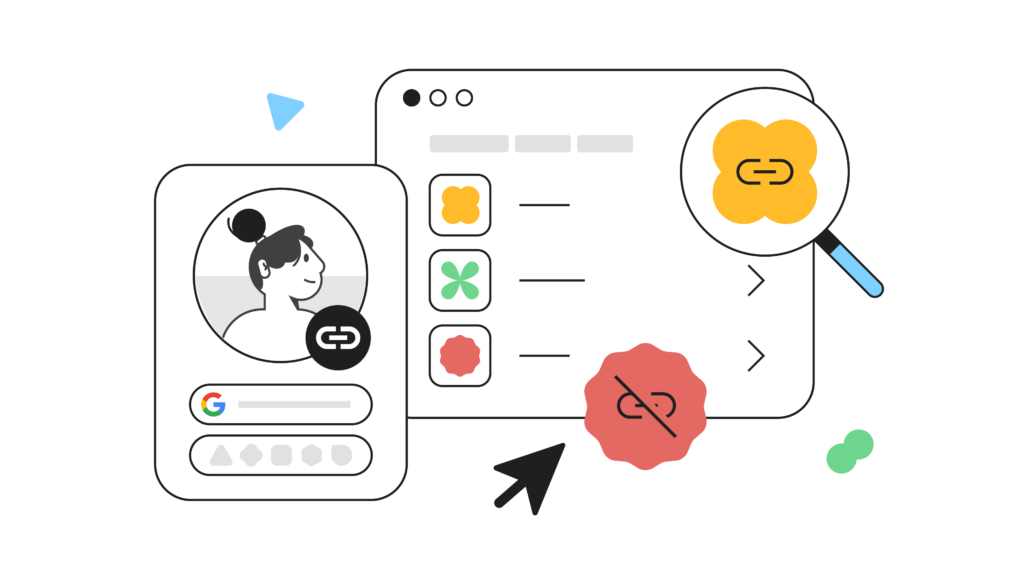
Your Security Is Only as Strong as Your Weakest Partner
Neobanks don’t operate alone. They rely on a web of third-party providers — KYC vendors, cloud providers, payment gateways, SMS services, fraud detection APIs, core banking software.
Every single one of those vendors is a potential entry point for an attacker.
In fact, some of the biggest financial data breaches in recent years came through third-party vendors, not direct attacks on the bank itself.
Third-Party Audit Checklist
When you include vendors in your digital wallet security audit, cover these areas.
| Audit Area | What to Check |
|---|---|
| Data access | What data does the vendor access? Is it the minimum needed? |
| Security certifications | Do they hold SOC 2, ISO 27001, or PCI DSS? |
| Incident response | What is their breach notification timeline? |
| Contract terms | Does your SLA include security obligations? |
| Subcontractors | Do they use sub-vendors? Are those audited too? |
| API security | How do their APIs connect to your systems? |
The Prevention Win
Auditing vendors annually — or before any new integration — ensures that your security perimeter extends beyond your own systems. You’re only as secure as the weakest link in your supply chain.
Prevention Tip 8 — Document Everything and Use Audit Trails as a Prevention Tool
An Audit Trail Is Not Just a Record — It’s a Warning System
Most people think of audit trails as something you look at after an incident. A record of what happened. A paper trail for regulators.
That thinking leaves prevention value on the table.
When audit logs are structured correctly and reviewed regularly, they become a live early warning system. Patterns emerge. Anomalies surface. And your team can act before damage occurs.
What a Good Audit Trail Captures
Every neobank security audit should verify that your logging setup captures all of the following.
- Every login attempt — successful and failed
- Every API call — including the endpoint, user, timestamp, and IP address
- Every transaction — initiated, completed, reversed, or blocked
- Every admin action — user role changes, configuration edits, data exports
- Every system event — server restarts, database queries, access requests
Use Logs Proactively
Set up automated alerts based on log patterns. Examples include more than five failed login attempts in two minutes, an admin account accessing more than 1,000 records in a single session, or a transaction reversal pattern that repeats across multiple accounts.
These alerts turn your documentation into a prevention engine. You’re not just recording history — you’re detecting the future.
The Prevention Win
Documentation done right is not paperwork. It’s protection. Every log entry is a potential early warning. Every audit trail is a line of defense.
Putting It All Together — Your Prevention Roadmap
Here’s a quick visual summary of all 8 prevention tips and what they protect against.
| Prevention Tip | Primary Threat It Stops | Effort Level |
|---|---|---|
| Rolling audit schedule | Missed vulnerabilities over time | Medium |
| API security audits | API exploits and data leaks | High |
| Access control mapping | Insider threats, privilege abuse | Medium |
| Real-time transaction monitoring | Fraud and account takeover | High |
| Structured vulnerability patching | Known exploit attacks | Medium |
| Team training and human risk audits | Phishing and social engineering | Low to Medium |
| Third-party vendor audits | Supply chain attacks | Medium |
| Audit trail documentation | Undetected breaches, compliance gaps | Low |
Neobank & Digital Wallet Security Audits — FAQs
What is a neobank security audit, exactly? A neobank security audit is a structured, methodical examination of all systems, processes and controls in place. It seeks out vulnerabilities, compliance gaps and weaknesses in your fraud prevention infrastructure. The objective is to uncover issues before attackers do.
What is the difference between a security audit and a penetration test? A security audit is an all-encompassing examination of policies, systems and procedures. Penetration testing is an active role-playing exercise, where ethical hackers attempt to break into your defense systems. Both are valuable. Many neobanks implement quarterly audits and annual penetration tests.
Would digital wallet startups really need security audits if they’re small? Absolutely. Smaller platforms are often less secure, precisely because attackers presume that their defenses are lower. Doing security audits early also helps to cultivate the right habits and documentation — which you’ll need when regulators come knocking later.
How long does a complete neobank security audit last? It really depends on how complex your platform is. A micro audit could last several hours. A quarterly mid-level audit might require a week. An annual audit, complete with third-party penetration testing, could require three to four weeks.
Which regulations mandate security audits for neobanks? PCI DSS mandates quarterly scanning and an annual penetration test. GDPR requires data protection assessments. SOC 2 requires continuous security monitoring. Most national digital banking regulators — including the FCA and RBI — also require that security reviews take place periodically.
What is the most common mistake neobanks make when it comes to security audits? Considering the audit as something to check off rather than an actual security improvement process. If audits are going to be conducted, they have to be applied where they can have a genuine effect — otherwise they are wasted effort. The worth is in the follow-through.
Can security audits really prevent all breaches? There is no tool or process that can ensure zero breaches. But routine, well-done security audits greatly mitigate your exposure. They fill known gaps and build a culture of continuous security improvement.
How much does a neobank security audit cost? Costs vary widely. Internal audits with existing tools can cost very little beyond staff time. Third-party audits and penetration tests conducted by specialized firms might cost a few thousand dollars for small platforms or a high six-figure fee for large enterprise assessments.
Closing Thoughts — Build the Habit, Block the Threat
Security is not a destination. It’s a discipline.
The neobanks and digital wallets that manage to stay safe are not necessarily the ones who spent the most money on tools. They’re the ones who made security part of their culture, their processes and their daily routines.
The 8 fast prevention tips in this article — rolling audit schedules, API lockdowns, access control mapping, real-time fraud monitoring, structured patching, team training, vendor audits and proactive documentation — form a complete prevention framework.
None of them need to break the bank. All of them require commitment.
Start with one. Master it. Move to the next. Soon, your neobank won’t only be surviving the threat landscape. It’ll be constructed to tolerate it.
Because in digital finance, the platforms that users trust most are the ones who prove that trustworthiness every single day — one audit, one patch, one training session at a time.